Harvest
Invoices
Sign up

Download Invoice for Turkey

Harvest offers robust e-invoicing capabilities with UBL support, ideal for businesses needing structured electronic invoices.

INVOICE DRAFT

Add your logo here
Item type
Description
Quantity
Unit price
Tax
Amount
Subtotal
$0.00
Discount
$0.00
Amount Due
$0.00
Get paid via:
Credit card / Debit card
ACH
Wire transfer

Customise invoice

Appearance

Add a logo
Show invoice title

Invoice settings

Tax Add up to 2 tax rates
%
Discount Apply a discount percentage
%

Key Requirements for Turkish Invoices

Complying with Turkish e-invoicing mandates is crucial for businesses operating in Turkey, with specific requirements for B2B and B2C transactions. For Business-to-Business (B2B) transactions, companies with an annual turnover exceeding TRY 3 million must issue all invoices via the e-Fatura system. Certain sectors, including e-commerce, real estate, and construction, have a lower threshold of TRY 500,000. E-Fatura invoices require pre-clearance by the Turkish Revenue Administration (TRA) to be valid.

For Business-to-Consumer (B2C) transactions, the e-Arşiv Fatura system is mandatory if the business is already registered for e-Fatura, or if the invoice value exceeds TRY 5,000 for consumers, or TRY 2,000 if the buyer is a taxable person. Both e-Fatura and e-Arşiv Fatura must adhere to the UBL-TR 1.2 XML standard format and include a digital signature and a QR code. All businesses must register on the GİB platform using their 10-digit Tax Identification Number (VKN).
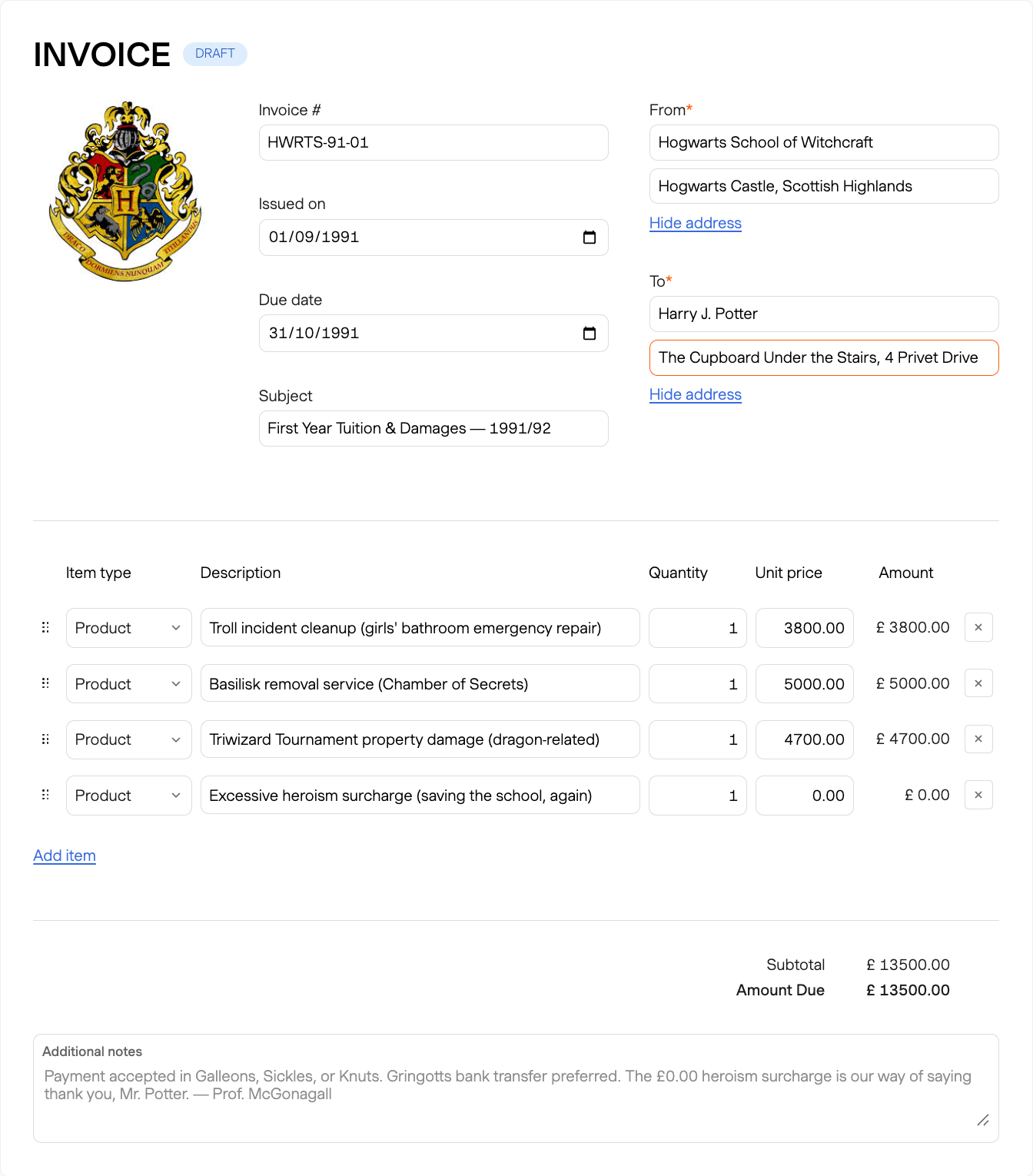
Customizing Your Invoice Template

Tailoring your invoice template within the Turkish e-invoicing framework involves adhering to the mandated UBL-TR 1.2 XML format while incorporating your specific business details. This structured XML format ensures compliance and interoperability with the Turkish Revenue Administration (TRA) system. While the core data fields are standardized, you can customize elements to reflect your brand identity and operational needs.

  • Customizing fields: Ensure all mandatory fields like issuer/recipient details, tax numbers, invoice date, and item descriptions are present, and add any additional internal reference fields your business requires.
  • Adding business logos: While not explicitly detailed in search results, incorporating your company logo is a standard practice for professional branding and can typically be included within the UBL-TR structure or rendered in the visual representation of the XML data.
  • Selecting appropriate formats: The primary format for submission is UBL-TR 1.2 XML. For e-Arşiv Fatura, a PDF version may also be provided to the recipient, alongside the XML for reporting.

Avoiding Noncompliance Penalties

Non-compliance with Turkey's e-invoicing regulations carries significant penalties, making it essential to understand and avoid common pitfalls. A primary pitfall is the failure to issue or receive e-invoices properly, which can result in a fine of 10% of the invoice value, with a minimum penalty of TRY 2,200. Both the issuer and recipient can be held liable for non-compliance.

  • Obtain a Digital Signature: Businesses require a digital certificate and fiscal seal (Mali Mühür), while individuals use a Qualified Electronic Signature (QES). This digital signature must be embedded in the UBL-TR XML.
  • Adhere to Format and Content: All e-invoices must follow the UBL-TR 1.2 XML standard and include mandatory details like a QR code.
  • Timely Reporting and Archiving: E-Arşiv Fatura must be reported to GİB within 24 hours of issuance. All e-invoices must be digitally archived for 10 years by both the issuer and recipient.
  • Monitor Thresholds: Regularly check for updates to annual turnover thresholds, as these determine mandatory e-Fatura and e-Arşiv Fatura obligations.

See Your Turkish Invoice Template in Action

Preview how your invoice will comply with Turkish e-invoicing standards, including e-Fatura requirements and digital signature integration.

Download Invoice for Turkey FAQs

  • In Turkey, the primary format for electronic invoices is the UBL-TR 1.2 XML standard. This format is required for both e-Fatura and e-Arşiv Fatura, ensuring compliance with Turkish regulations. Additionally, for e-Arşiv Fatura, a PDF version may be issued to recipients alongside the XML format for convenience.
  • Yes, you can use an invoice template to meet e-Fatura requirements as long as it adheres to the UBL-TR 1.2 XML format. The template must include all mandatory fields and comply with the standards set by the Turkish Revenue Administration for electronic invoicing.
  • Yes, you can export invoice data from Harvest. Note that bulk UBL export is limited to one invoice at a time.
  • Digital signatures in Turkish invoices must comply with specific standards, such as using a Qualified Electronic Signature (QES) for individuals or a fiscal seal for businesses. A limitation is that without a valid digital signature, invoices are not considered legally valid. Additionally, maintaining the security and integrity of digital certificates is crucial, as any breach could compromise the authenticity of the invoices.
  • Yes, there are penalties for not using compliant invoice formats in Turkey. Noncompliance can result in fines, typically a percentage of the invoice value, with a minimum penalty amount set by the Turkish Revenue Administration. Ensuring that invoices meet the UBL-TR 1.2 XML standard and other regulatory requirements is crucial to avoid such penalties.