Harvest
Invoices
Sign up

Email Invoice for Turkey

Harvest offers robust support for UBL e-invoices, making it a versatile tool for businesses operating in Europe. Ensure your invoicing processes in Turkey comply with local regulations and standards.

INVOICE DRAFT

Add your logo here
Item type
Description
Quantity
Unit price
Tax
Amount
Subtotal
$0.00
Discount
$0.00
Amount Due
$0.00
Get paid via:
Credit card / Debit card
ACH
Wire transfer

Customise invoice

Appearance

Add a logo
Show invoice title

Invoice settings

Tax Add up to 2 tax rates
%
Discount Apply a discount percentage
%

Understanding Electronic Invoicing Regulations in Turkey

Electronic invoicing in Turkey is a sophisticated system overseen by the Turkish Revenue Administration (GİB), legally equating electronic invoices (e-Fatura) with traditional paper invoices since 2010. The system primarily operates with two main types of electronic invoices: e-Fatura and e-Arşiv Fatura. E-Fatura is used for Business-to-Business (B2B) and Business-to-Government (B2G) transactions where both parties are registered with the GİB, requiring real-time clearance by the tax authority. In contrast, e-Arşiv Fatura is utilized for transactions with customers not registered in the e-Fatura system, including Business-to-Consumer (B2C) sales.

The mandate for e-invoicing applies to businesses based on their annual turnover, with the threshold being 3 million Turkish Liras (TRY) as of 2022. For B2G transactions, e-invoicing is mandatory, requiring submission in the UBL 2.1 Turkish standard format with digital e-seals. A crucial update mandates the inclusion of a QR code on all e-Fatura and e-Arşiv invoices since September 2023, enhancing verification and security.
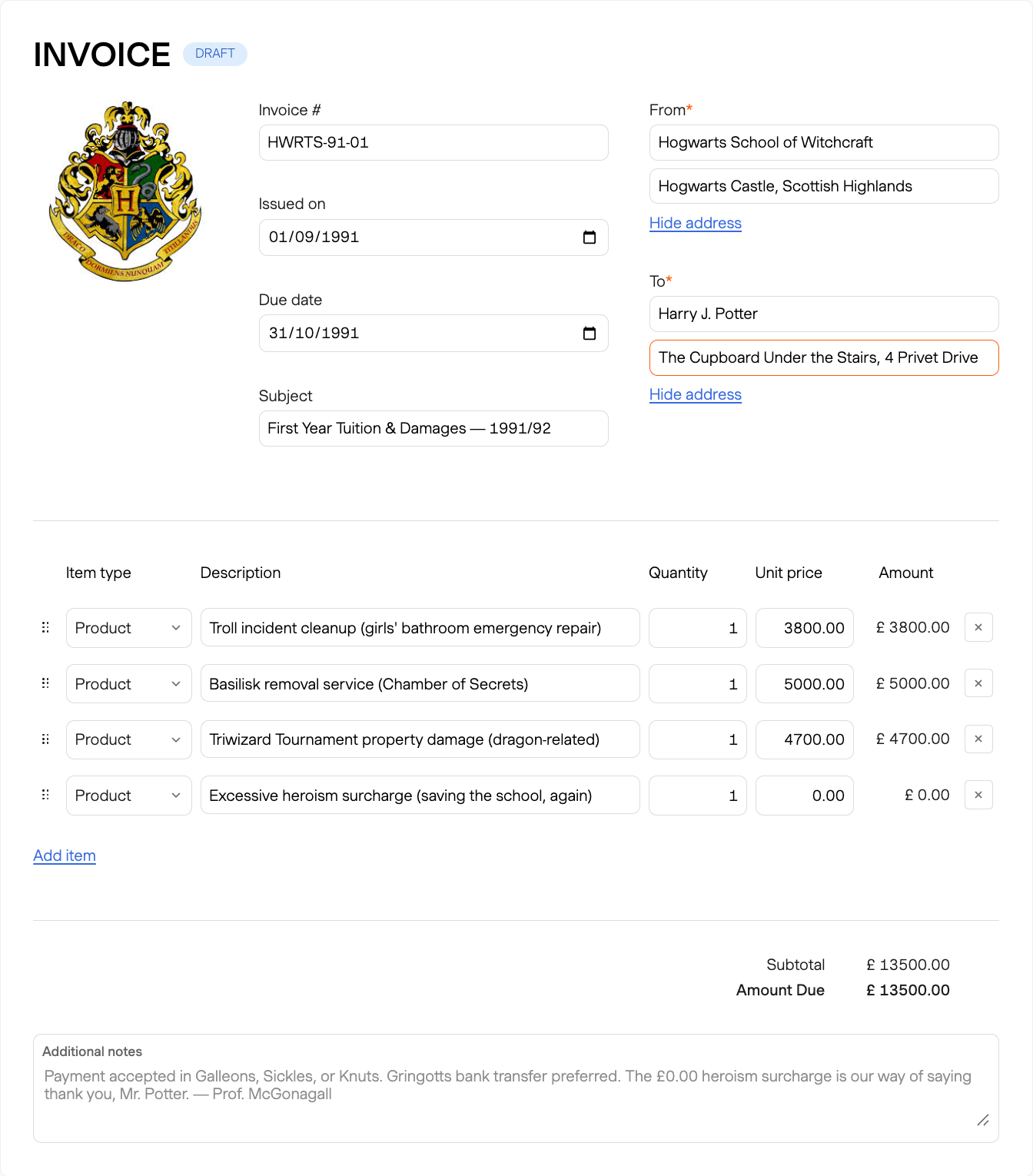
Components of a Compliant Email Invoice in Turkey

To ensure an email invoice is compliant in Turkey, it must contain specific mandatory information and adhere to prescribed formats. The standard format for all electronic invoices is UBL-TR XML, specifically UBL-TR 1.2 or UBL 2.1.

  • Supplier and Client Details: Full name, address, and Tax Identification Number (VKN).
  • Unique Invoice Number and Date: Each invoice must have a unique identifier and the date of issuance.
  • Detailed Description of Goods/Services: Including quantity, unit price, and total amount.
  • Tax Rates and Total Amounts: All applicable tax rates (e.g., VAT) and total amounts.
  • Digital Signature: Using a Financial Seal for legal entities or a Qualified Electronic Signature (QES) for individuals.
  • Mandatory QR Code: All invoices must include a QR code for verification.

While UBL-TR XML is the legal format for submission, the format for exchange with the buyer can be based on their preference.

Best Practices for Sending Email Invoices in Turkey

Sending compliant email invoices in Turkey involves more than just meeting technical requirements; it also requires strategic practices to ensure client acceptance and smooth operations. A primary consideration is determining the correct invoice type to issue, depending on whether your buyer is registered in the e-Fatura system.

  • Understand Client Registration Status: Verify if your client is an e-Fatura registered taxpayer.
  • Leverage Automated Solutions: Use certified e-invoicing providers or integrated systems to automate processes.
  • Ensure Proper Archiving: Digitally archive invoices for a minimum of 10 years.
  • Effective Communication for e-Arşiv: Clearly communicate how clients will receive and access invoices.

Failure to comply with e-invoicing regulations can result in significant penalties, including fines of 10% of the invoice value or a minimum tax penalty of TRY 2,200.

Technical Aspects of E-Invoice Formats

From a technical standpoint, the backbone of Turkey's e-invoicing system is the UBL-TR format, a localized version of the Universal Business Language (UBL) standard. This XML-based format is mandatory for all electronic invoices to ensure compliance with Turkish regulations.

The workflow for e-invoice submission typically involves generating invoice data within an ERP system, transforming it into UBL-TR XML, digitally signing it, and submitting it to the GİB portal. The GİB validates the invoice and routes it to the recipient's electronic mailbox.

Technical updates to the e-invoice and e-archive invoice systems, including new validation rules, are released periodically, with businesses required to upgrade their systems by set deadlines to avoid rejection.

Explore Your Turkish E-Invoice Template

See how your invoice aligns with Turkish regulations, featuring mandatory QR codes and UBL-TR formatting.

Email Invoice for Turkey FAQs

  • Harvest supports UBL e-invoices, which can be exported and included with Harvest invoices.
  • To ensure compliance, your email invoice must include mandatory information like tax numbers, a unique invoice number, detailed descriptions, applicable taxes, and a QR code. It's crucial to use the UBL-TR XML format for submissions and ensure all invoices are digitally signed. Regular updates to your systems to align with the latest regulations are also necessary.
  • You can add your company logo and customize invoice content, but Harvest accounts are limited to one brand per account. Multiple brands require separate accounts.
  • One limitation is that international clients may not be registered in Turkey's e-Fatura system, which requires careful handling of invoice types. Additionally, currency conversions and compliance with both Turkish and international regulations can complicate the invoicing process.
  • Harvest supports UBL e-invoices, which can be exported and included with Harvest invoices.