Harvest
Invoices
Sign up

Email Invoice for United States

Harvest streamlines the invoicing process with customizable templates and automated reminders, ensuring efficient client communication.

INVOICE DRAFT

Add your logo here
Item type
Description
Quantity
Unit price
Tax
Amount
Subtotal
$0.00
Discount
$0.00
Amount Due
$0.00
Get paid via:
Credit card / Debit card
ACH
Wire transfer

Customise invoice

Appearance

Add a logo
Show invoice title

Invoice settings

Tax Add up to 2 tax rates
%
Discount Apply a discount percentage
%

Understanding U.S. Invoicing Standards

In the U.S., while there isn't a single federal law dictating invoice content, businesses are expected to adhere to best practices for validity, professionalism, and compliance with tax and contractual obligations. Unlike many countries with a nationwide Value Added Tax (VAT) system, the U.S. operates without one; instead, sales tax rules are set by individual states and often by local governments. This means that sales tax rates can vary significantly, ranging from 0% to over 10.25% depending on the jurisdiction and the specific product or service.

A compliant U.S. invoice should clearly display the word "Invoice" at the top, along with a unique, sequential invoice number and the date of issue. It must also include the full business name, address, and contact information for both the seller and the buyer. Detailed descriptions of goods or services provided, including quantity, unit price, and total per item, are crucial. Furthermore, the invoice should itemize the subtotal, applicable state and local sales taxes, any discounts, and the total amount due. Payment terms, such as "Net 30" (payment due in 30 days) or "Due upon receipt," and accepted payment methods are also essential. For tax and audit purposes, the Internal Revenue Service (IRS) generally requires businesses to retain invoices and supporting documents for at least three years, though this can extend to seven years in specific cases, such as claiming a loss for bad debt.
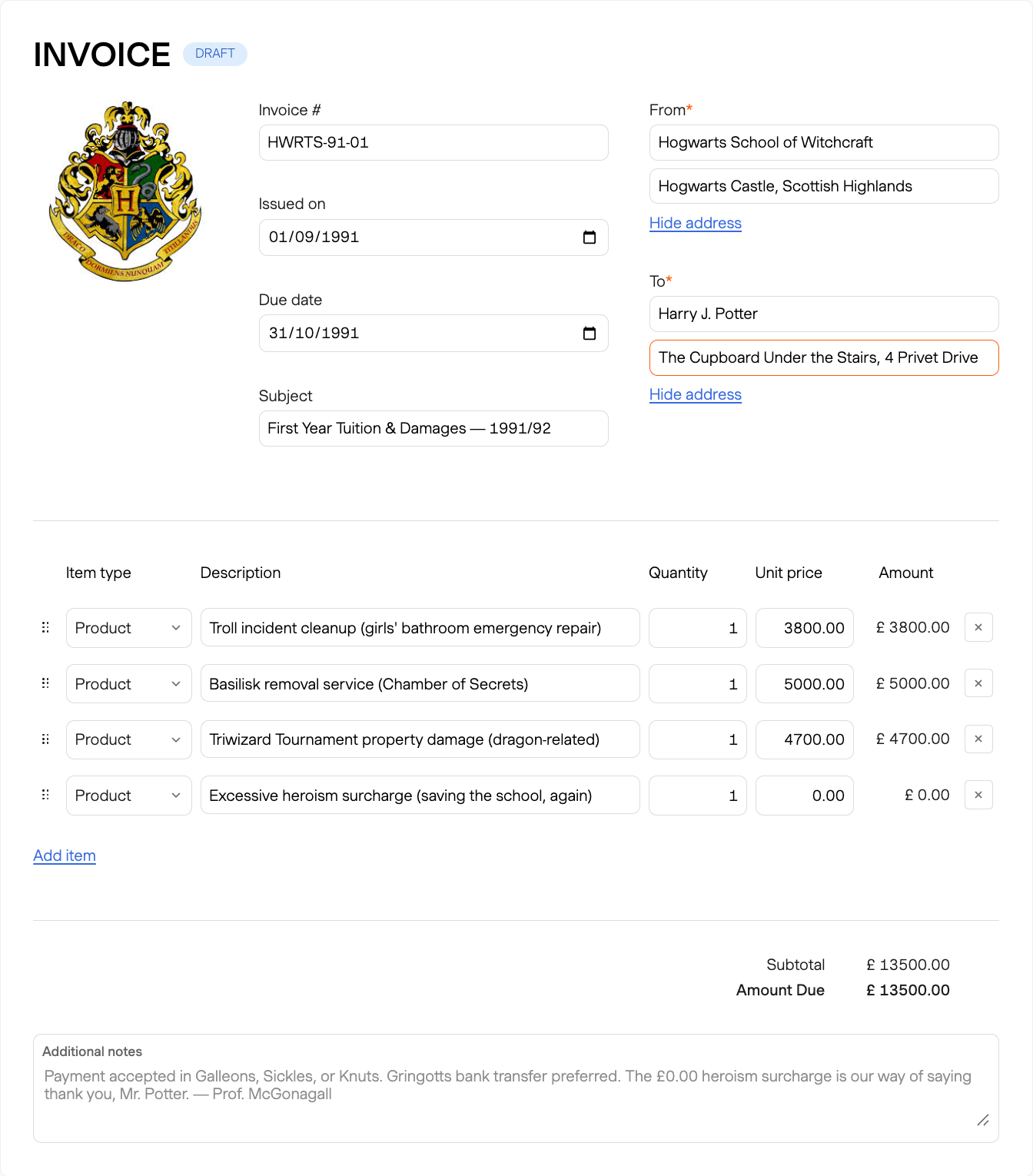
Crafting a Professional Email Invoice

A professional email invoice begins with a clear and concise subject line that immediately informs the recipient of the email's purpose. Effective subject lines often include phrases like "Invoice Attached," the invoice number, and a brief mention of the service or product, for example: "Invoice Attached: #12345 for Website Redesign." This direct approach helps the email stand out in a busy inbox and aids in quick processing.

The body of the email should maintain a professional yet polite tone, starting with a personalized greeting addressing the recipient by name. Immediately after the greeting, state the purpose of the email—that the invoice for specific services or products is attached. It's good practice to summarize key details directly in the email body, such as the invoice number, the total amount due, and the payment due date. This allows the client to quickly grasp the essential information without needing to open the attachment immediately. Keep the message concise, avoiding unnecessary jargon or lengthy explanations. Conclude with a polite closing, expressing gratitude for their business, and include your full signature with your contact information. This structure ensures clarity, professionalism, and encourages prompt action.

Essential Components of an Email Invoice

Beyond the basic contact information, a U.S. email invoice must meticulously detail the services or goods provided and clear payment instructions. Each line item should include a specific description of the service or product, the quantity (e.g., hours worked, number of units), and the unit price, culminating in a total for that item. This transparency helps prevent disputes and ensures the client understands the charges. Payment instructions should be explicit, outlining accepted payment methods (e.g., bank transfer, credit card, check) and providing all necessary details, such as bank account and routing numbers for ACH transfers or a direct payment link.

Including legal disclaimers and accurate tax information is a critical aspect of U.S. invoicing. Sales tax, where applicable, must be listed as a separate line item on the invoice, not bundled into the price. The responsibility for collecting and remitting sales tax falls on the seller, who acts as an agent for the government. Businesses with a tax nexus in a state are required to register for sales tax and charge the correct rate, which can vary significantly by state and even local jurisdiction, typically ranging from 0% to 10.25%. For business-to-business (B2B) transactions, including the Employer Identification Number (EIN) for both seller and buyer is often recommended, though not always legally mandated on the invoice itself, it's crucial for tax compliance. Finally, always attach the invoice as a PDF file. This format is secure, universally accessible, and ensures the document's appearance remains consistent across different devices, providing a professional and tamper-resistant record.

Effective Follow-Up Strategies for Unpaid Invoices

Effective follow-up on unpaid invoices is crucial for maintaining healthy cash flow and client relationships. A proactive approach often begins with a friendly reminder email sent 3-7 days before the invoice due date. If payment isn't received by the due date, the first overdue reminder should be sent within 1-7 days after the deadline. Subsequent reminders can follow a systematic schedule, such as every 7-14 days, with increasing firmness in tone.

When crafting these reminders, maintain a polite yet firm tone. Clearly state the invoice number, the original due date, and the outstanding amount. It's helpful to re-attach the original invoice to each follow-up email, making it easy for the client to access without searching through old correspondence. Offer assistance if there are any questions or difficulties with payment, which can help resolve issues quickly. For invoices that are significantly overdue (e.g., 30+ days), the communication should become more urgent, outlining potential consequences such as late fees, which should have been clearly stated in the initial payment terms.

It's important to understand the legal considerations in follow-up communications. The federal Fair Debt Collection Practices Act (FDCPA) generally does not apply to commercial debt collection between businesses; it is primarily designed to protect consumers from abusive debt collection practices. However, businesses are still expected to conduct themselves professionally and ethically. Some states may have their own laws governing commercial debt collection, so it's wise to be aware of local regulations. Documenting all communication and payment promises is essential, providing a clear audit trail should further escalation become necessary.

See Your U.S. Email Invoice Template in Action

Preview how your email invoice looks with U.S. sales tax fields, legal disclaimers, and payment instructions — ready to send to American clients.

Email Invoice for United States FAQs

  • To ensure compliance with U.S. regulations, include all necessary details such as a unique invoice number, date of issue, and complete contact information for both parties. Clearly itemize services or goods, list applicable sales tax separately, and specify payment terms. Retain all supporting documents for at least three years for tax and audit purposes.

  • Automated invoice follow-ups can sometimes lack the personal touch that may be necessary to resolve certain payment disputes. Additionally, if not configured correctly, they can lead to sending inappropriate reminders to clients who have already paid or who have outstanding queries. It's important to review and adjust automation settings regularly.

  • Yes, Harvest provides mobile apps for both iOS and Android devices, allowing you to track time, log expenses, and manage invoices on the go.
  • Harvest allows you to set a default subject line for invoice emails, ensuring quick identification by clients.

  • Harvest enables you to include detailed components like itemized services and payment instructions in your email invoices.