Harvest
Invoices
Sign up

Freelance Invoice Template in German

For freelancers in Germany, navigating complex invoicing regulations is essential. Harvest's customizable invoicing tools help streamline these processes, ensuring compliance with sequential numbering and flexible fields.

INVOICE DRAFT

Add your logo here
Item type
Description
Quantity
Unit price
Tax
Amount
Subtotal
$0.00
Discount
$0.00
Amount Due
$0.00
Get paid via:
Credit card / Debit card
ACH
Wire transfer

Customise invoice

Appearance

Add a logo
Show invoice title

Invoice settings

Tax Add up to 2 tax rates
%
Discount Apply a discount percentage
%

Understanding German Freelance Invoicing Requirements

Freelancers operating in Germany must navigate complex invoicing requirements to ensure compliance with local regulations. A critical aspect is including mandatory fields such as the freelancer's tax number (Steuernummer) or VAT ID (USt-IdNr.). Additionally, German invoices must feature the full name and address of both parties, the date of issue, a unique invoice number, and a detailed description of services provided. This helps prevent errors that could lead to significant penalties, such as a 15% increase in tax liabilities if missing invoice numbers are discovered during an audit.

For those under the "Kleinunternehmerregelung," freelancers must add a specific note indicating VAT exemption, as they are not required to charge VAT. Harvest allows freelancers to customize invoices with necessary fields, aiding compliance by supporting sequential invoice numbering. However, freelancers should independently verify that their templates meet all legal specifications.
Navigating E-Invoicing Mandates in Germany

Germany is transitioning towards mandatory e-invoicing for B2B transactions, with requirements for all freelancers to receive structured e-invoices by January 1, 2025. By 2028, sending structured electronic invoices will also become mandatory. Until then, traditional PDF invoices remain valid but will eventually be replaced by formats like XRechnung and ZUGFeRD. This move aims to enhance tax compliance and efficiency, reducing the VAT gap by streamlining reporting processes.

Harvest's invoicing tools support freelancers in adapting to these changes by offering flexible template options that can be customized for different clients. While Harvest doesn't guarantee compliance with specific formats like XRechnung, it allows users to easily modify invoice elements to align with evolving standards. Freelancers should ensure that their invoices are formatted according to legal requirements, which may involve additional software solutions for full compliance.

Handling VAT and International Invoicing

Understanding VAT regulations is crucial for freelancers in Germany, particularly those qualifying as "Kleinunternehmer," who are exempt from charging VAT if their turnover is below certain thresholds. However, for clients within the EU, freelancers can apply the reverse charge mechanism, transferring VAT responsibilities to the client. This procedure requires specific invoice statements to avoid legal complications.

Harvest's invoicing system allows for custom tax settings, enabling freelancers to manage VAT charges effectively on their invoices. Nevertheless, it is important for freelancers to familiarize themselves with the applicable VAT rates and reverse charge procedures independently, as Harvest does not provide guidance on these specific legalities. Ensuring accurate VAT handling can prevent costly errors and streamline international transactions.

Optimizing Invoice Practices with Harvest

Freelancers often face challenges with manual invoicing, such as maintaining sequential invoice numbers and tracking payments. These tasks are crucial for compliance and financial health. Harvest simplifies these processes by offering tools that support sequential invoice numbering and customizable fields, which help freelancers meet their unique invoicing requirements.

While Harvest provides a robust platform for creating and managing invoices, freelancers should remain proactive in ensuring that their invoices comply with all applicable legal standards. For example, adding detailed service descriptions and payment terms can enhance clarity and reduce disputes. By leveraging Harvest's flexible invoicing features, freelancers can minimize errors and enhance their invoicing efficiency.

Freelance Invoice Template in German with Harvest

Discover how Harvest helps freelancers in Germany streamline invoicing with customizable templates and VAT management.

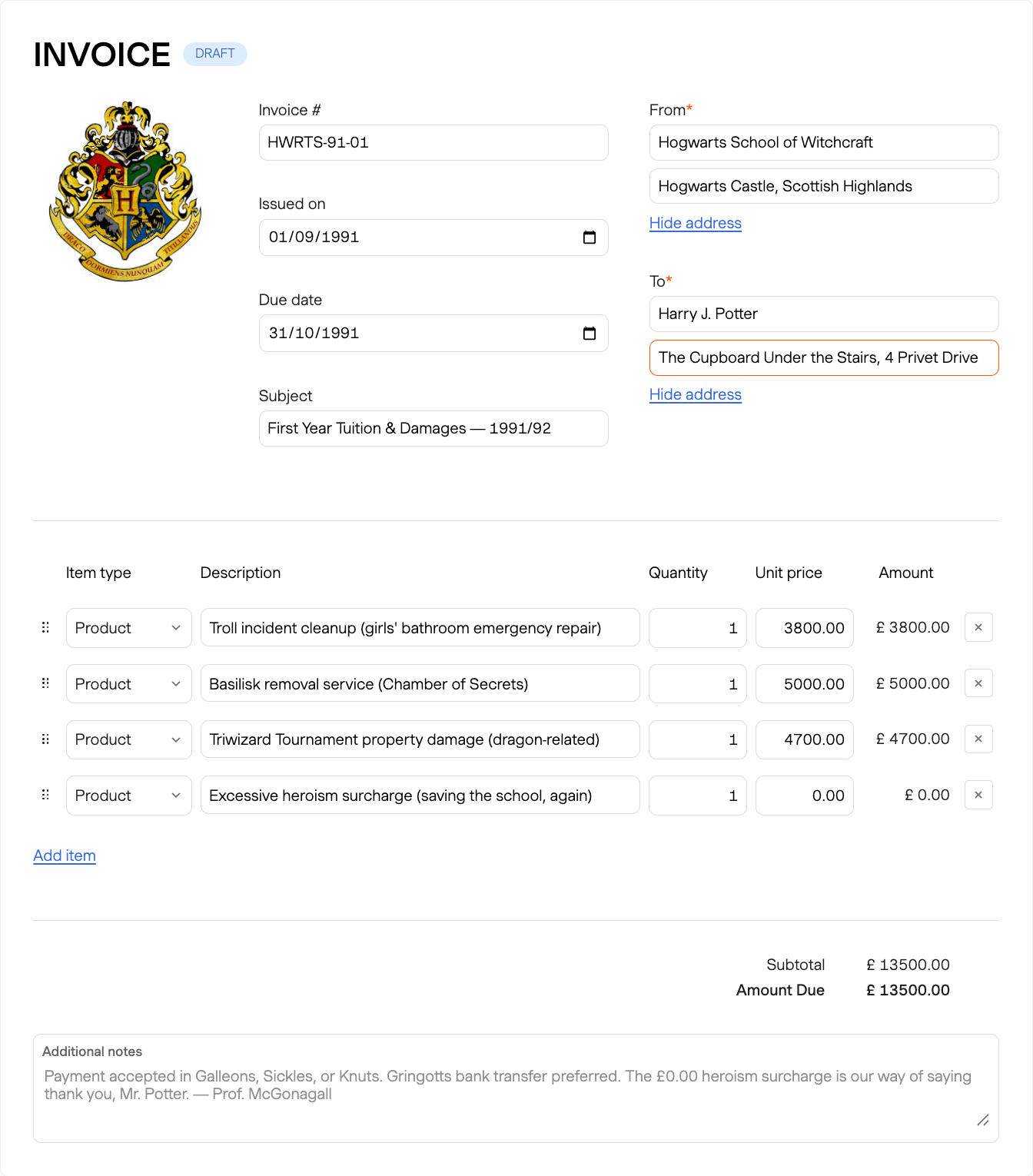
Harvest screenshot showing a German freelance invoice template.

Freelance Invoice Template in German FAQs

  • German law requires several fields on freelance invoices, including the issuer's and recipient's full name and address, the tax number or VAT ID, date of issue, a unique invoice number, service description, net amount, VAT rate, VAT amount, and gross total. For "Kleinunternehmer," a VAT exemption note is also needed.

  • Freelancers in Germany must apply VAT to their invoices unless they qualify as "Kleinunternehmer," who are exempt. For EU clients, the reverse charge mechanism can be used, transferring VAT obligations to the client. It's essential to include the right statements and codes on invoices to ensure compliance.

  • Harvest provides customizable invoice templates that support sequential numbering, aiding in compliance. However, users should ensure that their invoices meet specific German legal requirements independently, such as including mandatory fields and VAT notes.

  • The "Kleinunternehmerregelung" exempts small businesses with a turnover below €25,000 in the previous year from charging VAT. This status must be indicated on invoices with a specific note. It's crucial to monitor turnover to avoid exceeding thresholds, which would require VAT collection.

  • In the EU, the reverse charge mechanism allows freelancers to issue invoices without VAT, shifting the tax obligation to the client. Invoices must indicate that the service is non-domestic taxable and reference the reverse charge, ensuring compliance with EU regulations.

  • Germany mandates the use of XRechnung or ZUGFeRD formats for e-invoicing. These formats facilitate data exchange and compliance with tax reporting. Freelancers should prepare to adopt these formats by 2028 to avoid penalties.

  • Consecutive invoice numbering is critical to prevent gaps that might suggest undeclared income. Tax authorities may impose penalties if missing numbers are detected during an audit, making it essential to maintain a correct sequence.

  • Invoicing software helps freelancers automate repetitive tasks, ensure compliance with German legal standards, and streamline the invoicing process. Features like sequential numbering and customizable fields reduce errors and improve efficiency.