
Harvest
Quotes
Sign up

How to Price a Construction Job

Harvest helps contractors accurately price construction jobs by breaking projects into phases and analyzing past performance, ensuring both profitability and competitiveness.

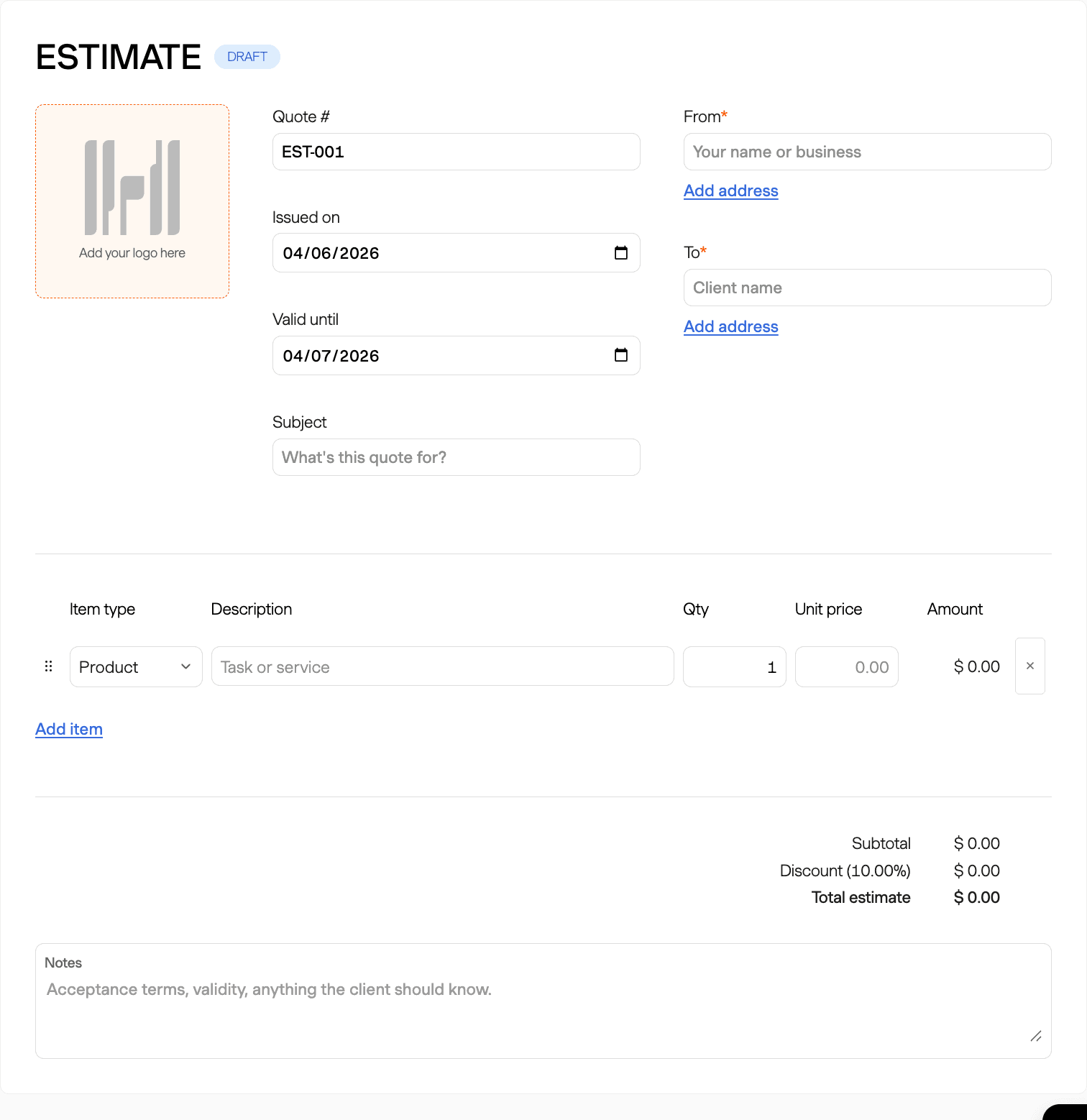
ESTIMATE DRAFT

Add your logo here
Item type
Description
Qty
Unit price
Tax
Amount
Subtotal
$0.00
Discount
$0.00
Total estimate
$0.00
Get paid via:
Credit card / Debit card
ACH
Wire transfer

Customize estimate

Appearance

Add a logo
Show estimate title

Quote settings

Tax Add up to 2 tax rates
%
Discount Apply a discount percentage
%

Understanding Key Cost Factors in Construction Pricing

Pricing a construction job effectively hinges on understanding the various cost components that contribute to the total project budget. "Hard costs," such as labor, materials, and equipment, typically account for 70-80% of the budget, while "soft costs"—including design fees, permits, and insurance—make up the remaining 20-30%. Recognizing these distinctions is crucial for setting competitive rates while maintaining profitability.

Industry benchmarks suggest that a healthy profit margin for construction projects typically ranges between 10% and 20%. Maintaining a net margin of 10-12% is often recommended for long-term business sustainability. Harvest can assist contractors in tracking these costs by breaking down projects into phases, helping ensure accurate budgeting and profitability assessments.

Additionally, it's important to keep abreast of market conditions, as fluctuating labor rates and material prices can significantly impact cost estimates. By utilizing Harvest's tools for detailed project tracking and reporting, contractors can better understand the scope of work and adjust their pricing strategies to reflect current market realities.

Leveraging Technology for Accurate Cost Estimation

Incorporating technology into the cost estimation process is becoming essential in the construction industry, given the complexities and tight margins involved. Tools like Harvest help contractors improve accuracy and speed by facilitating the breakdown of projects into manageable phases with detailed budgets and scheduled hours.

Technology adoption, such as automated quantity takeoff tools, is streamlining the estimation process by reducing the time required to prepare bids and ensuring more competitive pricing. Harvest supports this by providing historical job costing data, which informs future pricing decisions and helps contractors analyze past performance to refine their strategies.

Moreover, industry experts emphasize the importance of using historical data and market trends to enhance cost accuracy. Harvest's profitability reports allow contractors to review past job performance and adjust pricing strategies accordingly, ensuring that each bid is both competitive and profitable.

Choosing the Right Pricing Model for Your Construction Job

Selecting the right pricing model is critical for ensuring a construction project is both competitive and profitable. Common models include Fixed Price, Cost Plus, and Time and Materials (T&M), each with its own advantages and risks. For instance, a Fixed Price model offers a predetermined price for the entire project but places more risk on the contractor if costs overrun.

The Cost Plus model provides transparency, with clients reimbursing all project costs plus an additional fee. This model is beneficial for projects with evolving scopes. T&M contracts, where clients pay for materials and labor at agreed rates, offer flexibility and are suitable for smaller projects. Harvest aids in evaluating these models by tracking project budgets and expenses, providing insights into which pricing strategy may work best for different job types.

Ultimately, the choice of model should align with the project scope and client expectations. By using Harvest to monitor budgets, track expenses, and analyze past job data, contractors can make informed decisions about the most suitable pricing model for each project.

Avoiding Common Pricing Mistakes in Construction

Pricing errors can lead to significant financial losses or lost bids, making it imperative for contractors to avoid common pitfalls. One frequent mistake is relying on outdated cost data, which can lead to inaccurate estimates. Regularly updating pricing information and validating figures against current market trends is essential.

Another challenge is overlooking details in project scope, which can result in costly variations. Thoroughly reviewing all project documents and ensuring comprehensive specifications can prevent such issues. Harvest assists contractors by providing detailed project tracking and reporting, helping ensure that all aspects of the job are accounted for.

Lastly, fragmented communication channels often lead to inefficient bid compilation. By establishing a centralized communication hub, contractors can streamline information flow and reduce errors. Harvest's tools support this by offering organized project management and facilitating clear documentation of all project-related decisions.

Price Construction Jobs with Harvest

See how Harvest tracks project budgets and analyzes past performance to help contractors price construction jobs effectively.

Screenshot of Harvest's project budgeting tool for construction job pricing.

How to Price a Construction Job FAQs

  • When pricing a construction job, consider factors like labor, materials, equipment costs, and overhead. "Hard costs" often account for 70-80% of the budget, while "soft costs" make up the rest. It's crucial to keep profit margins between 10-20% for sustainability.

  • Technology enhances the accuracy and speed of cost estimation by breaking down projects into phases and analyzing historical data. Tools like Harvest provide detailed project tracking and profitability reports to inform pricing strategies.

  • Common pricing models include Fixed Price, Cost Plus, and Time and Materials (T&M). Each model has different advantages and risks. Harvest helps evaluate these models by offering project tracking and budgeting insights.

  • To ensure competitive pricing, regularly update cost data to reflect market trends, consider the appropriate pricing model, and utilize technology for accurate estimation. Harvest's tools assist by tracking budgets and analyzing past job performance.

  • Avoid using outdated cost data, overlooking project scope details, and relying on fragmented communication channels. Harvest helps prevent these mistakes by providing detailed tracking and centralized project management.

  • Yes, Harvest provides profitability reports that allow you to review past job performance, helping you adjust pricing strategies for future projects based on historical data.

  • Harvest supports project budget tracking by allowing contractors to break down projects into phases, track time and expenses, and analyze detailed reports for better budgeting and pricing decisions.