Harvest
Invoices
Sign up

Invoice App for Project Management

Harvest excels in providing detailed project-specific invoicing and tracking project budgets, making it a valuable tool for managing project finances efficiently.

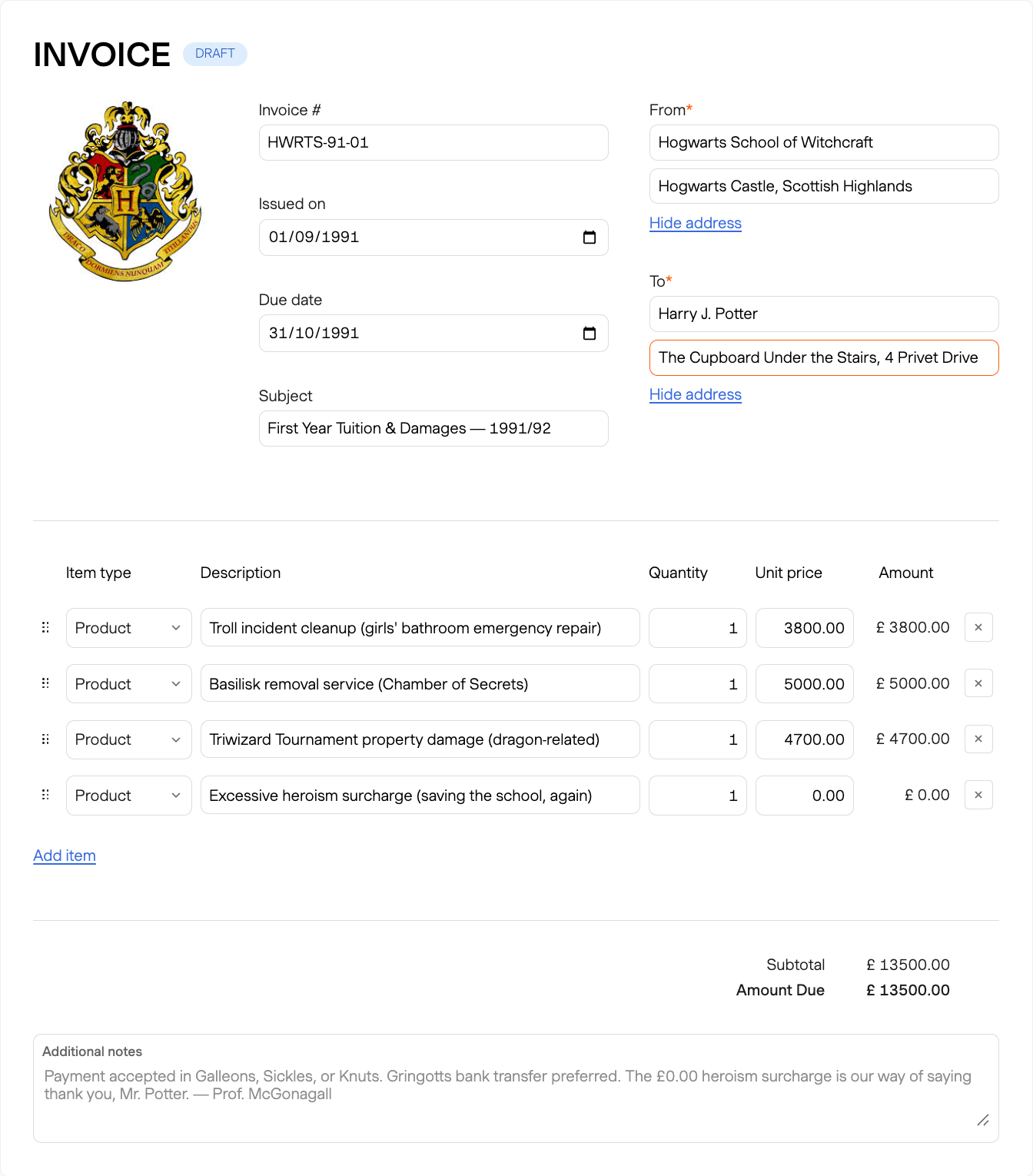
INVOICE DRAFT

Add your logo here
Item type
Description
Quantity
Unit price
Tax
Amount
Subtotal
$0.00
Discount
$0.00
Amount Due
$0.00
Get paid via:
Credit card / Debit card
ACH
Wire transfer

Customise invoice

Appearance

Add a logo
Show invoice title

Invoice settings

Tax Add up to 2 tax rates
%
Discount Apply a discount percentage
%

Key Features to Look for in an Invoicing App for Project Management

To effectively manage project finances, an invoicing app must offer robust features tailored to project workflows. The most crucial capabilities include seamless integration with your existing project management tools, comprehensive project-specific invoicing options, and reliable automated billing and reminders.

When evaluating apps, prioritize these features:

  • Deep Integration with Project Management Tools: Look for direct APIs or robust connectors that sync client, project, task, and time data. This eliminates manual data entry, reducing errors by up to 30% and saving significant administrative time.
  • Project-Specific Invoicing Capabilities: The app should support various billing models like fixed-price, time & materials, retainer-based, and milestone billing. Ensure it handles progress invoicing, where you bill a percentage of completion, and can track expenses against specific projects.
  • Automated Billing and Reminders: Automation is key to cash flow. The app should allow scheduling recurring invoices, automatically sending payment reminders (e.g., 7 days before due, 3 days after due), and applying late fees if necessary.
Common Pitfalls When Choosing an Invoicing App

Selecting an invoicing app without careful consideration can lead to significant operational headaches and wasted resources. A common mistake is overlooking the app's compatibility with your current tech stack, which can result in a fragmented workflow.

Avoid these pitfalls to ensure a smooth transition and effective long-term use:

  • Lack of Integration with Existing Tools: Failing to integrate with your CRM, accounting software, or project management platform creates data silos and forces manual reconciliation, potentially doubling data entry time. Confirm the app's integration capabilities upfront.
  • Insufficient Support for Project-Specific Billing: Many generic invoicing tools lack the granularity needed for project work. If your projects require complex billing (e.g., retainage — the 5-10% of each payment held until final inspection — or detailed expense tracking per task), a basic app will fall short, leading to manual workarounds.
  • Complexity in Setup and Use: An app that's overly complicated to set up or has a steep learning curve will hinder adoption and productivity. Opt for intuitive interfaces and clear onboarding processes to minimize training time and maximize user efficiency.

How to Evaluate the Cost and Value of Invoicing Apps

Evaluating the cost and value of invoicing apps involves more than just looking at the monthly subscription fee; it requires understanding pricing models, assessing the return on investment (ROI), and weighing free versus paid options. The true value comes from how much time and money the app saves you, not just its sticker price.

Consider these points for a balanced evaluation:

  1. Understanding Pricing Models: Most apps use subscription models, often tiered by the number of users, active projects, or features. Some may charge per invoice or transaction. Calculate the total annual cost based on your projected usage, including any hidden fees for premium support or integrations.
  2. Assessing ROI Based on Features and Time Saved: Quantify the time saved on tasks like manual data entry, chasing payments, and generating reports. If an app saves you 5-10 hours per month, that translates directly into cost savings or increased billable time. Consider the value of improved cash flow from automated reminders.
  3. Free vs. Paid Options: Free versions often have limitations on features, invoices, or users. While tempting, they might not scale with your project volume. Paid versions typically offer advanced features, better support, and higher limits, often justifying their cost if they streamline operations significantly. Look for free trials (typically 14-30 days) to test functionality.

Explore a Project-Driven Invoice App in Action

Preview how the invoice app integrates with project management tools to streamline billing for project-specific tasks and expenses.

Invoice App for Project Management FAQs

  • Integration typically involves APIs or built-in connectors that allow data to flow between the invoicing app and project management tools. This includes syncing client information, project details, and time tracking data, which helps streamline the billing process and reduce errors.
  • Yes, Harvest allows you to track project budgets and profitability by linking invoices to specific projects and viewing them on the project analysis page.
  • Harvest allows you to import clients and projects using CSV files, making it easier to transfer existing data into the platform. This feature streamlines the onboarding process for new users.
  • Invoicing apps often face limitations such as lack of customization for complex billing scenarios and integration challenges with certain project management tools. Additionally, some apps may not offer detailed reporting or may have a steep learning curve, which can hinder productivity.
  • Yes, Harvest can send automated reminders to clients for overdue invoices, helping to ensure timely payments.