Harvest
Invoices
Sign up

Invoice Software for Law Firms

Harvest offers flexible invoicing and detailed reporting, making it a valuable tool for law firms seeking to manage billing and payments efficiently.

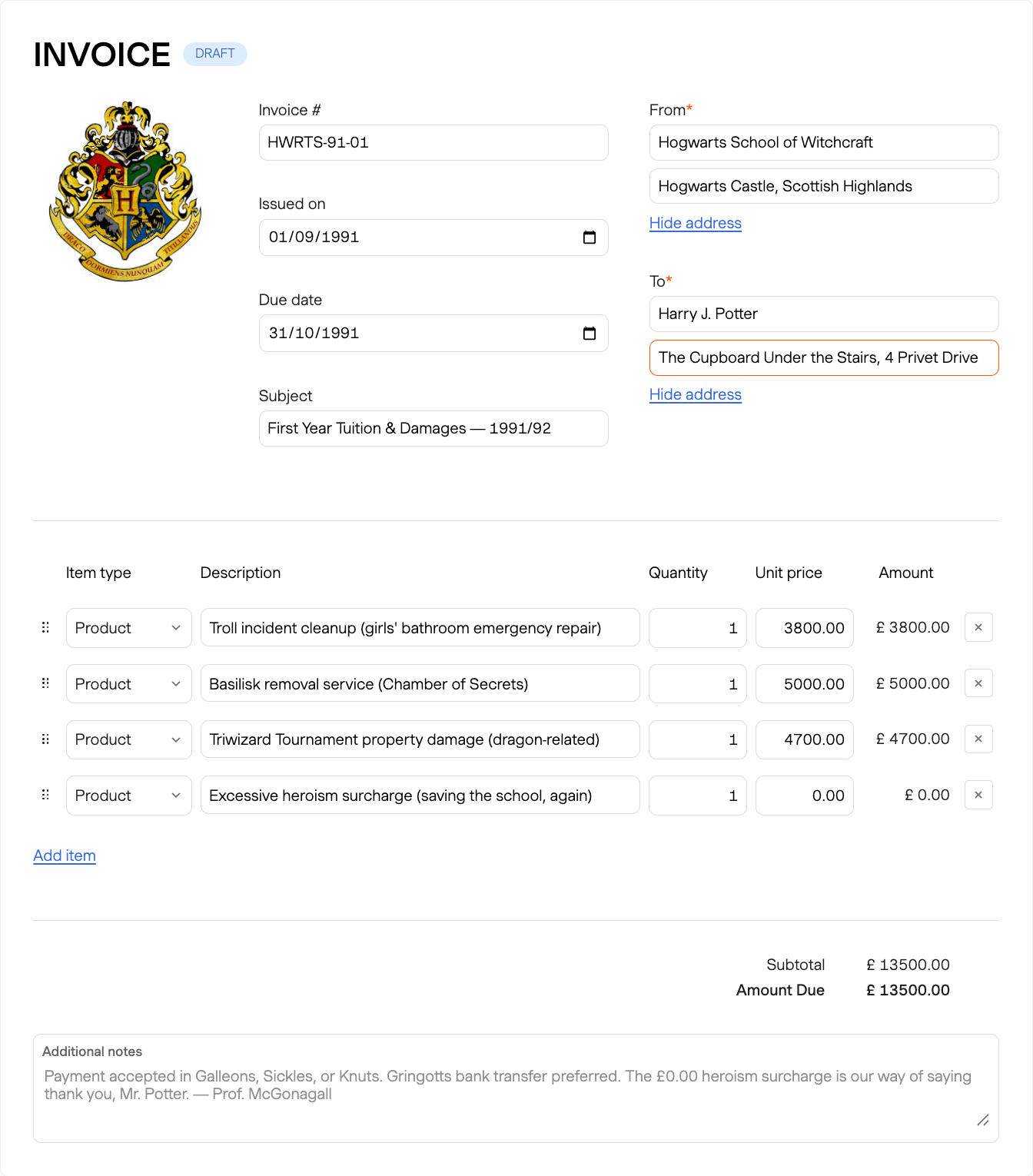
INVOICE DRAFT

Add your logo here
Item type
Description
Quantity
Unit price
Tax
Amount
Subtotal
$0.00
Discount
$0.00
Amount Due
$0.00
Get paid via:
Credit card / Debit card
ACH
Wire transfer

Customise invoice

Appearance

Add a logo
Show invoice title

Invoice settings

Tax Add up to 2 tax rates
%
Discount Apply a discount percentage
%

Key Features to Look for in Legal Invoicing Software

When evaluating legal invoicing software, prioritize features that ensure regulatory adherence and seamless workflow integration. Essential is LEDES billing compliance, which standardizes electronic invoicing for legal services, crucial for many corporate clients and often required for e-billing platforms. Look for robust trust accounting features that strictly adhere to IOLTA (Interest on Lawyers Trust Accounts) regulations, ensuring client funds are managed ethically and compliantly, typically requiring three-way reconciliation. Furthermore, deep integration with legal case management systems is paramount, allowing for automatic time and expense tracking directly from case files, reducing manual data entry by up to 40% and minimizing errors.
Avoiding Common Pitfalls in Legal Billing Software

To avoid common pitfalls, ensure your chosen legal billing software offers extensive flexibility and robust reporting. A significant pitfall is the lack of customization for alternative fee arrangements (AFAs), such as flat fees, blended rates, or success fees; the software should easily adapt to these beyond hourly billing, supporting diverse client agreements. Inadequate reporting capabilities can hinder financial analysis, so seek systems that provide detailed insights into profitability, utilization rates, and client realization, offering at least 10-15 customizable report templates. Finally, poor automation for reminders can lead to delayed payments; effective software should automate payment reminders and follow-ups, potentially reducing accounts receivable by 15-20% through timely communication.

Selection Criteria for the Best Legal Invoicing Software

Selecting the best legal invoicing software involves a careful assessment of its suitability for your firm's operational and financial needs.

  1. Pricing Models: Evaluate whether the software offers pricing models suitable for law firms, such as per-user monthly subscriptions or tiered plans based on features, ensuring scalability and cost-effectiveness.
  2. User Reviews and Testimonials: Consult independent user reviews and testimonials to gauge real-world performance, ease of use, and customer support quality. Look for a satisfaction rating of at least 4 out of 5 stars.
  3. Compliance with Legal Billing Standards: Verify strict adherence to legal billing standards beyond just LEDES, including data security protocols (e.g., SOC 2 compliance) and ethical guidelines for client data handling.
  4. Scalability: Ensure the software can grow with your firm, supporting an increasing number of users, clients, and billing complexities without performance degradation.

Prioritize solutions that offer a free trial, allowing you to test core functionalities before committing.

Preview Your Law Firm's Invoice Template

See how your invoices can reflect compliance with legal billing standards, include alternative fee arrangements, and integrate with case management systems.

Invoice Software for Law Firms FAQs

  • Harvest supports alternative fee arrangements by allowing invoices based on tracked time, expenses, or fixed fees, and can generate recurring invoices.

  • Harvest provides detailed reporting on billable hours and client payment histories through its invoice and payments received reports.

  • Yes, expenses logged against a project can be included as invoice line items. This is useful for billing clients for materials, travel, or other project costs.
  • LEDES billing is a standardized format for electronic invoices used in the legal industry. It facilitates a uniform approach to billing, ensuring clarity and compliance with client requirements and often being a prerequisite for e-billing systems used by large corporate clients.

  • While invoicing software can significantly aid in meeting compliance requirements, it may not cover all legal nuances specific to every jurisdiction or client. Customization and regular updates are necessary to fully align with evolving legal standards and practices.