Harvest
Invoices
Sign up

Invoice Software for Slovakia

Harvest provides robust support for UBL (XML) e-invoicing and Peppol network preparation, aligning with European e-invoicing standards.

INVOICE DRAFT

Add your logo here
Item type
Description
Quantity
Unit price
Tax
Amount
Subtotal
$0.00
Discount
$0.00
Amount Due
$0.00
Get paid via:
Credit card / Debit card
ACH
Wire transfer

Customise invoice

Appearance

Add a logo
Show invoice title

Invoice settings

Tax Add up to 2 tax rates
%
Discount Apply a discount percentage
%

Key Features for Slovak Compliance

When evaluating invoice software for Slovakia, prioritize features that ensure seamless adherence to national e-invoicing mandates, especially with the upcoming changes in 2027. Your chosen solution must support UBL and XML formats, specifically UBL 2.1 or CII D16B XML, which are compliant with the European standard EN 16931 and the Peppol BIS 3.0 UBL XML format. Crucially, look for capabilities enabling real-time e-reporting, as this becomes mandatory for domestic B2B and B2G transactions from January 1, 2027. Finally, consider its integration with the national system. While IS EFA is currently used for B2G, a new Peppol-based infrastructure is expected to replace it for B2B/B2G from 2027, utilizing certified "Digital Postmen" for reporting to the Financial Administration.
Selection Criteria for Invoicing Software

To ensure your invoicing software meets both current and future Slovak e-invoicing standards, several criteria are paramount. First, verify its full compliance with EN 16931, the European standard for e-invoicing, which is essential for all structured electronic invoices. Second, the software must facilitate adherence to invoice archiving requirements, which mandate storing invoices for a minimum of 10 years. Third, prepare for the Peppol network. Slovakia is adopting a 5-corner Peppol model, making Peppol connectivity mandatory for B2B transactions from January 1, 2027. Your software should support connection through certified Peppol Access Points to ensure secure and compliant document exchange.

Avoiding Common Pitfalls

Choosing and implementing invoicing software in Slovakia can present challenges, so be mindful of common pitfalls. A significant risk is non-compliance, which can lead to penalties ranging from EUR 30 to EUR 3,000 for non-monetary offenses, and up to €100,000 for serious breaches. Furthermore, non-compliant invoices may result in the denial of VAT deductions. Be prepared for potential integration challenges, such as adapting existing ERP systems to structured formats and ensuring accurate data transmission to the tax administration, possibly requiring certified "Digital Postman" services. Lastly, watch out for hidden costs. Manual invoice processing, for instance, can incur an average cost of €25-50 per error in corrections, and delays can lead to lost discounts of 2-3% of the invoice amount. Factor in expenses for software updates, integration, and potential transaction fees from service providers.

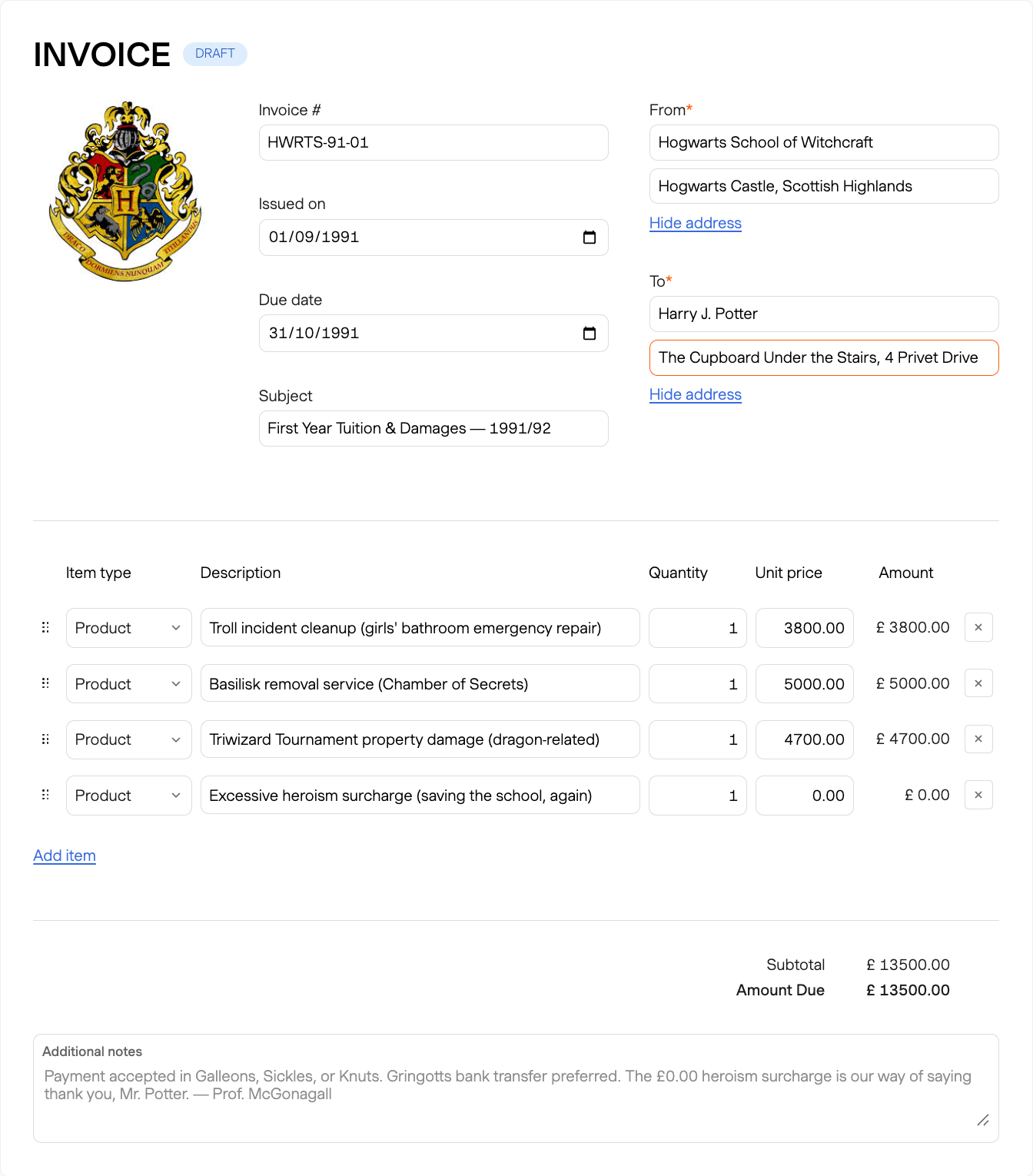
Preview Your Slovak-Compliant Invoice Template

See how your invoice appears with UBL and XML formats, real-time e-reporting, and Peppol network integration — tailored for Slovak regulations.

Invoice Software for Slovakia FAQs

  • Harvest supports the creation and export of e-invoices in UBL (XML) format, which is commonly required by European governments.
  • While Harvest is not a Peppol gateway, it can prepare e-invoices for sending through a Peppol network.
  • Harvest supports multi-user time tracking by allowing team members to log their hours individually against shared projects. This feature enables accurate billing and performance analysis across the team.
  • In 2023, Slovakia mandates that all businesses issuing invoices must adhere to the European standard EN 16931 for e-invoicing. This includes using structured formats like UBL and XML for B2B and B2G transactions. Additionally, invoices must be archived for at least 10 years to meet compliance requirements.
  • Invoicing software may face limitations in fully ensuring compliance due to rapidly changing regulations and the complexity of integrating with existing financial systems. Additionally, software updates might be required to adapt to new legal requirements, which can incur additional costs and require significant time to implement.