
Harvest
Time Tracking
Sign up free

Project Performance Tracking

Harvest is the solution for teams and freelancers seeking effective project performance tracking, offering comprehensive tools to monitor budgets, progress, and resource utilization.

Try Harvest Free

Will this project be profitable?

Estimate your project cost, set the right price, and know exactly how many hours your team can spend before margin disappears.

Total hours across all team members
$
Average rate across all roles on the project
15%
Scope creep is real. Most projects need 10-25% buffer to stay profitable.
Recommended project price $0
Base cost (before buffer) $0
Hours per person per week 0h
Weekly burn rate $0
Max hours before loss 0h

Track project hours with Harvest

Walk through the entire flow below. Start a timer, check your reports, and create a real invoice — all in three clicks.

Go ahead — start tracking!

One click and you're timing. Try it right here: start a timer, add an entry, edit the details. This is exactly how it feels in Harvest.

  • One-click timer from browser, desktop & mobile
  • Works inside Jira, Asana, Trello, GitHub & 50+ tools
  • Duration or start/end — your call
  • Day, week & calendar views to stay on top of it all
  • Friendly reminders so no hour gets left behind
Acme Corp
Website Redesign
Homepage layout revisions
1:24:09
Content Strategy
Blog calendar planning
1:30:00
SEO Audit
Technical audit report
0:45:00
Brand Guidelines
Color system documentation
2:15:00
Logo Concepts
Initial sketches round 1
1:00:00

Defining Project Success: Key Performance Indicators (KPIs)

Understanding and defining project success is essential for effective performance tracking. Key Performance Indicators (KPIs) are crucial metrics that help measure a project's success in terms of cost, schedule, scope, and quality. Establishing clear, quantifiable metrics at the project's inception ensures alignment with objectives. For instance, financial KPIs such as the Cost Performance Index (CPI) indicate budget efficiency, with a CPI greater than 1 suggesting under-budget performance. Similarly, the Schedule Performance Index (SPI) measures schedule efficiency, where an SPI over 1 indicates that the project is ahead of schedule.

Scope and quality KPIs include metrics like defect rates and customer satisfaction scores, which help maintain project standards. Resource utilization is also critical, as it tracks how effectively the resources are being used. Projects with SMART goals — Specific, Measurable, Attainable, Realistic, and Time-bound — tend to have clearer performance targets, reducing the risk of failure, which affects around 15% of projects. By leveraging these KPIs, project managers can ensure their projects stay on course and meet their intended outcomes.
Methodologies and Tools for Effective Tracking

Utilizing the right methodologies and tools is fundamental to effective project performance tracking. Earned Value Management (EVM) is a prominent approach that integrates scope, schedule, and cost, providing a comprehensive view of project health. It allows project managers to compare planned versus actual performance, identifying deviations and enabling corrective measures. The Critical Path Method (CPM) helps pinpoint the longest sequence of dependent tasks, ensuring projects are completed in the shortest time possible.

Modern project management software, like Harvest, offers dashboards, Gantt charts, and time-tracking features that provide real-time visibility and facilitate data collection. These tools are enhanced by predictive analytics and AI, which utilize historical data to forecast future performance and identify risks. With 54% of workers lacking access to real-time project data, integrating such technologies can significantly improve tracking accuracy and decision-making processes.

Reporting and Communication: Translating Data into Action

Effective reporting and communication are vital to turning data insights into actionable strategies. Various types of performance reports, such as status, progress, and variance reports, serve different purposes and audiences. Tailoring these reports to stakeholders is crucial for maintaining transparency and ensuring informed decision-making. For instance, executive summaries might highlight key achievements and hurdles, while detailed operational reports provide in-depth analysis.

Harvest excels in generating insightful reports and facilitating communication. By providing project analysis with progress graphs and summary reports, Harvest ensures that stakeholders are kept informed about project performance. Regular communication, including meetings and feedback sessions, reinforces clarity and prevents misunderstandings. This data-driven approach empowers project managers to adjust plans proactively, reallocating resources to keep projects on track and aligned with goals.

Best Practices for Sustained Project Performance

Maintaining sustained project performance requires adherence to best practices throughout the project lifecycle. Establishing a clear baseline for scope, schedule, and budget is the foundation for measuring actual performance against expectations. Continuous monitoring and control are essential, involving regular tracking, evaluation, and corrective actions to address any deviations promptly.

Risk management is also integral to project performance, with proactive identification and mitigation of potential risks. Engaging stakeholders from the beginning ensures their commitment and facilitates the collection of valuable feedback. Documenting lessons learned from completed projects contributes to continuous improvement, enhancing processes for future initiatives. By implementing these best practices, project managers can significantly reduce the risk of project failure, which affects up to 15% of projects, and ensure that their projects deliver desired outcomes.

Project Performance Tracking with Harvest

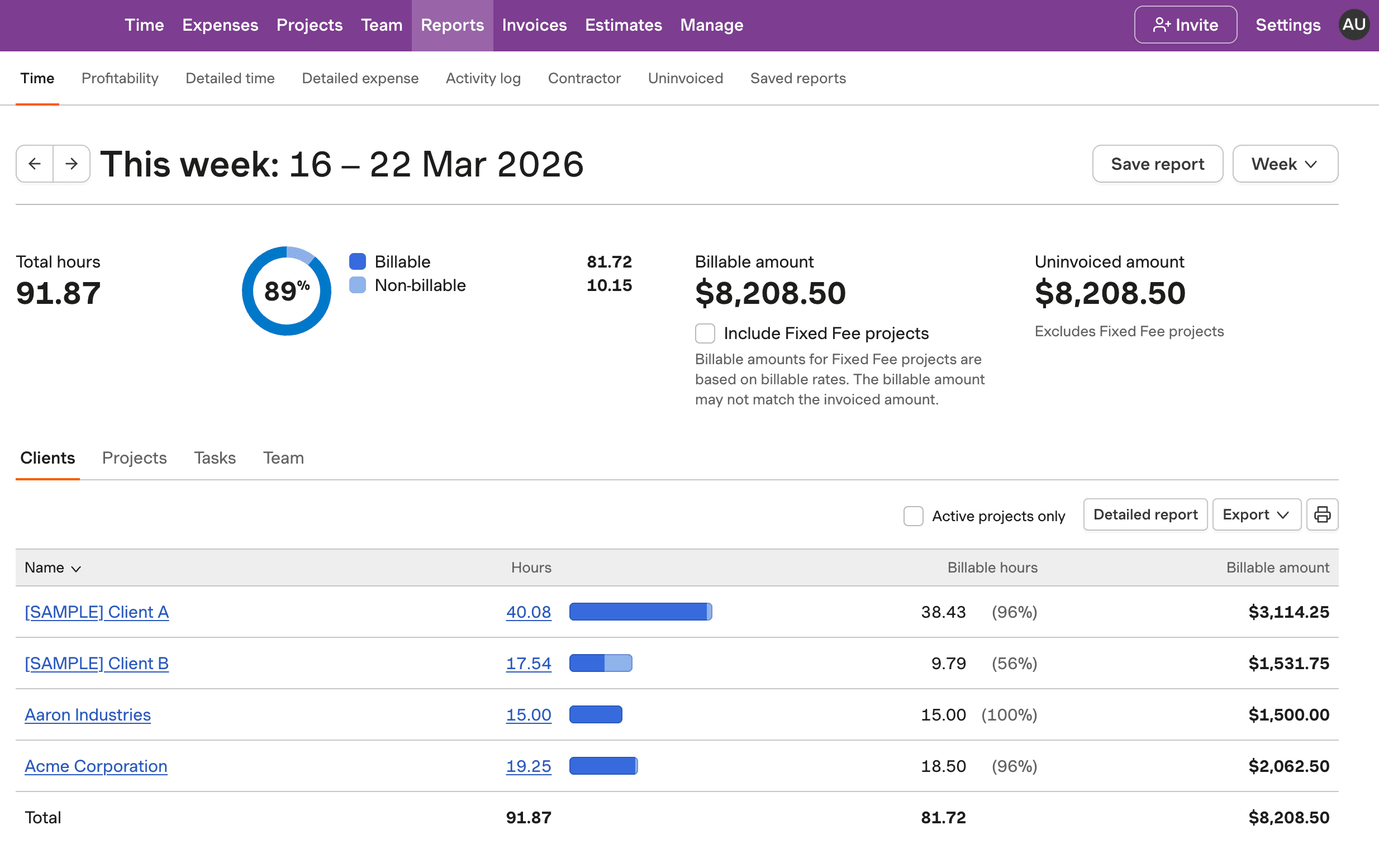
See how Harvest helps track project performance with detailed reports on budgets, progress, and resource utilization.

Screenshot of Harvest's project performance tracking dashboard.

Project Performance Tracking FAQs

  • Key Performance Indicators (KPIs) for project performance include financial metrics like the Cost Performance Index (CPI) and Schedule Performance Index (SPI). These metrics help measure budget and schedule efficiency. Other important KPIs are scope changes, defect rates, and resource utilization, all of which provide insights into project health and success.

  • To create various types of project performance reports, start by defining the purpose and audience of each report. Common reports include status, progress, milestone, and variance reports. Tools like Harvest offer features to generate these reports, complete with progress graphs and summaries, ensuring comprehensive communication with stakeholders.

  • Project performance tracking is enhanced by tools like Harvest, which provide integrated dashboards, Gantt charts, and time-tracking features. These tools offer real-time visibility into project data, facilitating effective monitoring and decision-making. Such solutions can significantly improve project outcomes by providing comprehensive insights into performance metrics.

  • Analyzing project performance data effectively involves using methodologies like Earned Value Management (EVM) and the Critical Path Method (CPM). These methods help compare planned versus actual performance, identify deviations, and predict future outcomes. Additionally, project management software can automate data analysis, offering insights through predictive analytics and AI.

  • To keep your project on track, continuously monitor performance metrics using KPIs such as CPI and SPI. Employ tools like Harvest for real-time tracking and reporting. Regularly review reports, communicate with stakeholders, and adjust plans as needed to address any issues or risks identified through performance data.

  • Harvest helps with project performance tracking by providing detailed reports and tools to monitor budgets, progress, and resource utilization. Its project analysis features include progress graphs and summary reports, facilitating effective performance monitoring and communication with stakeholders.

  • Yes, Harvest tracks resource utilization effectively with team utilization reports. These reports help identify over- or under-utilization, allowing for better resource management and optimization to ensure project efficiency.