Harvest
Invoices
Sign up

Invoice Software for Transportation

Harvest excels in providing centralized management and visibility into invoice status, enhancing financial control for transportation businesses.

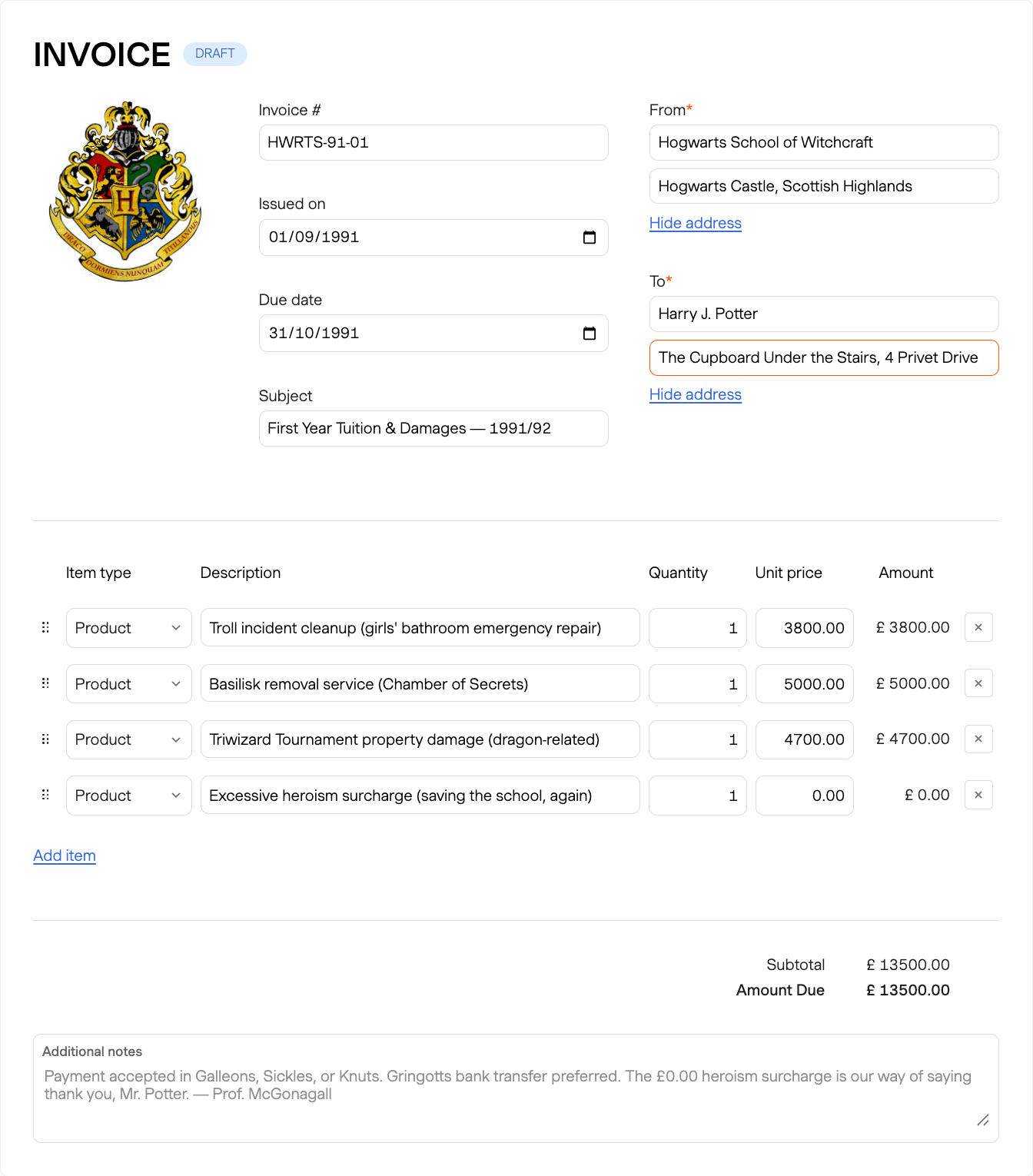
INVOICE DRAFT

Add your logo here
Item type
Description
Quantity
Unit price
Tax
Amount
Subtotal
$0.00
Discount
$0.00
Amount Due
$0.00
Get paid via:
Credit card / Debit card
ACH
Wire transfer

Customise invoice

Appearance

Add a logo
Show invoice title

Invoice settings

Tax Add up to 2 tax rates
%
Discount Apply a discount percentage
%

Key Features to Look for in Transportation Invoice Software

When evaluating transportation invoice software, prioritize features that streamline operations and handle industry-specific complexities. Look for automated freight invoice processing to significantly reduce manual data entry and errors, often cutting processing time by 30-50%. Seamless integration with Electronic Data Interchange (EDI) is crucial for exchanging documents like bills of lading and freight invoices directly with partners, ensuring data accuracy and faster settlements. The software must support complex billing structures, including multi-leg shipments, accessorial charges, fuel surcharges, and retainage, which can represent 5-10% of a payment held until service completion. Finally, real-time tracking of shipment statuses directly linked to invoicing helps ensure accurate billing based on delivery milestones and provides immediate visibility into payment triggers.
Common Pitfalls in Choosing Transportation Invoice Software

Choosing the wrong transportation invoice software can lead to significant operational hurdles and financial losses. A primary pitfall is a lack of integration capabilities with existing Transport Management Systems (TMS) or accounting platforms, forcing duplicate data entry and creating data silos. Another common issue is inadequate compliance features, failing to meet regional transport taxes, fuel tax reporting (e.g., IFTA), or specific regulatory requirements, which can result in hefty fines. Companies often overlook poor user interface (UI) design, leading to steep learning curves, increased training costs, and decreased productivity among staff. An unintuitive system can negate the benefits of advanced features, making daily tasks cumbersome and error-prone.

Selection Criteria for the Best Transportation Invoice Software

Selecting the best transportation invoice software requires a balanced approach, considering both functionality and practical implications.

  • Pricing considerations should extend beyond the initial license to include implementation costs, ongoing maintenance, support fees, and potential per-transaction charges. A total cost of ownership (TCO) analysis over 3-5 years is recommended.
  • Thoroughly examine user reviews and feedback from other transportation companies to gauge real-world performance, reliability, and customer support quality. Pay attention to comments regarding system stability and responsiveness.
  • Ensure robust compliance with regional transport taxes and other regulatory mandates specific to your operating areas, such as IFTA for fuel taxes or varying state/provincial sales taxes on services. Verify the software's ability to generate compliant reports and adapt to future regulatory changes.

Explore Your Transportation Invoice Template

See how your invoices integrate with EDI, support multi-leg billing, and reflect real-time shipment tracking for the transportation sector.

Invoice Software for Transportation FAQs

  • Harvest enables centralized management of invoices by allowing you to link invoices to specific projects, providing a consolidated view of all related invoices. This helps in managing freight invoices across multiple carriers effectively, streamlining the entire invoicing process.

  • Harvest provides visibility into invoice status and financial details through comprehensive invoice reports. This visibility aids in better financial control by allowing transportation businesses to track expenses, identify cost-saving opportunities, and ensure timely payments.

  • Harvest doesn't charge its own transaction fees. Stripe and PayPal charge their standard processing fees — check their pricing pages for current rates.
  • Transportation companies should prioritize features such as automated invoice processing to reduce errors, integration with existing systems like TMS, support for complex billing to handle multi-leg shipments, and real-time tracking to align invoicing with delivery milestones.

  • While invoice software can automate many tasks, there are limitations. It may not fully automate tasks that require human judgment, such as dispute resolution or handling exceptions in billing due to unexpected service changes. Also, not all software can seamlessly integrate with every existing system, which might require additional manual workarounds.