Harvest
Invoices
Sign up

Invoicing App for Brazil

Harvest transforms tracked time and expenses into invoices, offering a streamlined solution for managing your business finances. However, it is not specifically tailored for Brazilian tax compliance.

INVOICE DRAFT

Add your logo here
Item type
Description
Quantity
Unit price
Tax
Amount
Subtotal
$0.00
Discount
$0.00
Amount Due
$0.00
Get paid via:
Credit card / Debit card
ACH
Wire transfer

Customise invoice

Appearance

Add a logo
Show invoice title

Invoice settings

Tax Add up to 2 tax rates
%
Discount Apply a discount percentage
%

Essential Features for Brazilian Invoicing Compliance

A compliant invoicing app for Brazil must integrate directly with government systems for real-time validation and support specific document types. Brazilian e-invoicing operates on a "clearance model," where the tax authority (SEFAZ) reviews and authorizes invoices in XML format before transactions are finalized. Therefore, direct integration with SEFAZ for real-time validation is non-negotiable for documents like NF-e (Nota Fiscal Eletrônica for goods) and CT-e (Conhecimento de Transporte Eletrônico for freight). The app should also support NFS-e (Nota Fiscal de Serviço Eletrônica), which varies by municipality, and the newer NFCom for telecommunications, mandatory from November 1, 2025. All these electronic documents require a mandatory digital signature using a certificate issued by ICP-Brasil to ensure authenticity and integrity. Finally, automated compliance checks are crucial to verify data against fiscal rules before transmission, preventing costly errors.
Selection Criteria for Choosing an Invoicing App

Beyond compliance, an effective invoicing app should seamlessly integrate with existing systems, offer a user-friendly experience, and provide robust local support. Consider the ease of integration with your existing ERP systems, as many Brazilian businesses rely on specific local ERPs that need to interface with external tax platforms for e-invoicing and digital bookkeeping. A user-friendly interface is vital to minimize training time and reduce operational errors, enhancing overall efficiency. The availability of customer support in Portuguese is paramount; given the intricate and frequently updated nature of Brazilian tax laws, generic international support often lacks the specific expertise needed for quick and accurate problem resolution. Evaluate pricing models (e.g., per document, per user, or subscription) and look for trial options to thoroughly test the app's suitability for your operations before committing.

Common Pitfalls to Avoid When Selecting an Invoicing App

When choosing an invoicing app for Brazil, avoid common mistakes like neglecting long-term archiving requirements or underestimating the need for local, real-time support. A significant pitfall is overlooking the mandatory archiving requirements for fiscal documents, which typically range from five to ten years, depending on the document type and purpose. The app must facilitate secure and accessible storage for audit purposes. Ignoring real-time validation capabilities is another critical error; Brazil's clearance model means that invoices must be validated by tax authorities before a transaction is finalized. Relying on post-factum corrections can lead to fines and operational disruptions, as rejected invoices can halt business operations. Lastly, underestimating the importance of local support can be costly. Brazil's tax system is exceptionally complex and subject to frequent changes, making specialized, in-country support invaluable for navigating compliance challenges effectively.

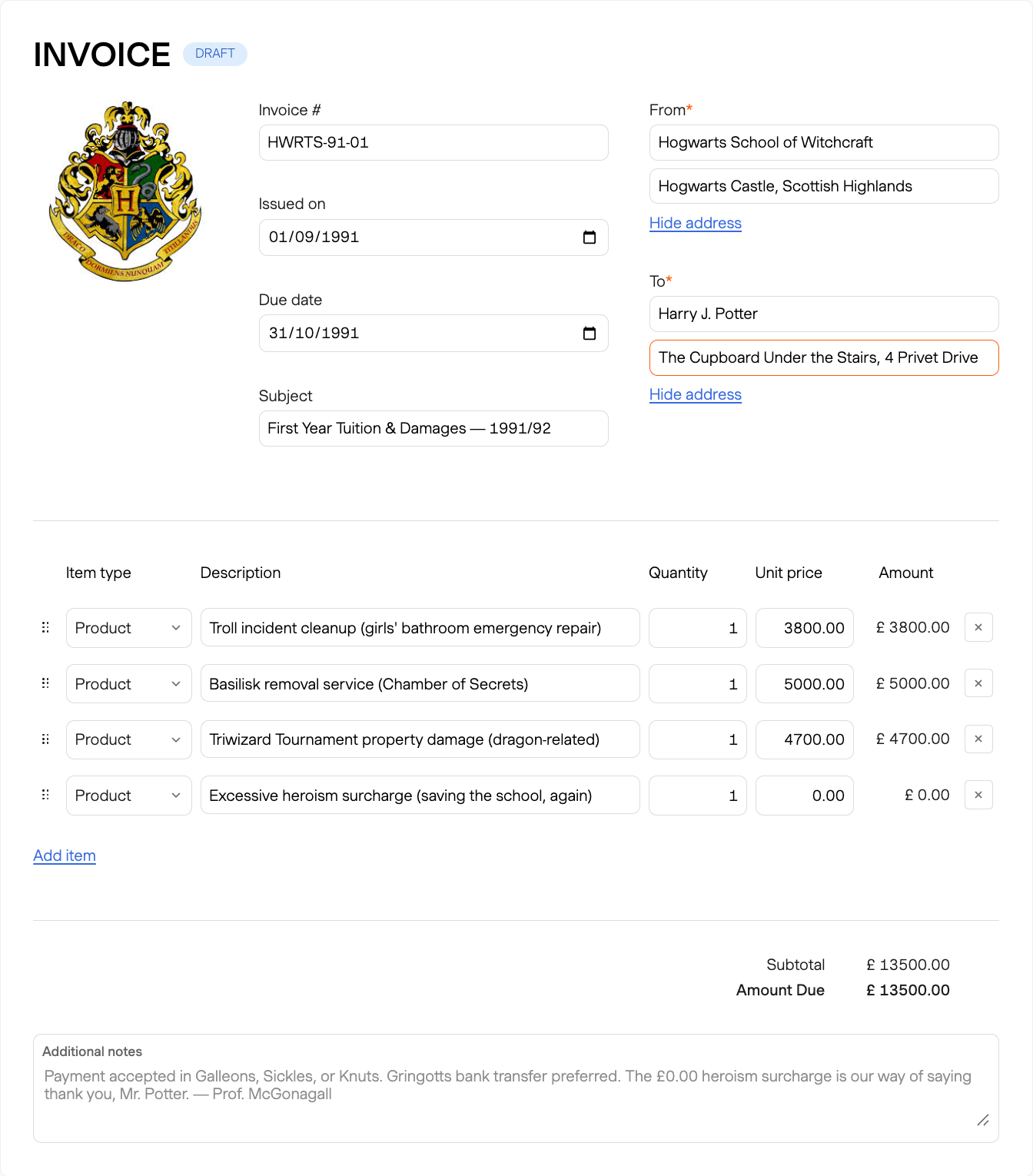
Preview Your Brazilian Tax-Compliant Invoice Template

See how your invoice integrates with SEFAZ, supports NF-e and NFS-e, and includes digital signatures to meet Brazilian regulations.

Invoicing App for Brazil FAQs

  • In Brazil, electronic invoicing requires integration with SEFAZ for real-time validation, support for various fiscal document types such as NF-e, NFS-e, and CT-e, and the use of mandatory digital signatures issued by ICP-Brasil. Compliance checks are necessary to ensure data accuracy before submission to prevent errors and fines.

  • While many invoicing apps offer features to help automate compliance, they often require ongoing configuration and updates to align with Brazil's complex and frequently changing tax laws. Full automation is challenging due to the need for manual oversight and regular adjustments based on new regulations.

  • Harvest offers various support options, including a comprehensive help center with articles and guides, email support, and live chat assistance during business hours. Users can access resources tailored to their questions and issues.
  • Invoicing apps integrate with SEFAZ by establishing a direct connection that allows for the real-time submission and validation of invoices. This integration is essential for ensuring that all invoices comply with the clearance model and are approved before transactions are completed.

  • Invoicing apps may face limitations such as difficulty in keeping up with frequent regulatory changes, challenges in integrating with all necessary local systems, and providing adequate local support. These limitations can hinder complete compliance, necessitating additional manual oversight.