Harvest
Invoices
Sign up

Invoicing Software for Architecture Firms

Harvest provides flexible invoicing solutions with customizable formats and retainer management, ideal for architecture firms needing tailored billing arrangements.

INVOICE DRAFT

Add your logo here
Item type
Description
Quantity
Unit price
Tax
Amount
Subtotal
$0.00
Discount
$0.00
Amount Due
$0.00
Get paid via:
Credit card / Debit card
ACH
Wire transfer

Customise invoice

Appearance

Add a logo
Show invoice title

Invoice settings

Tax Add up to 2 tax rates
%
Discount Apply a discount percentage
%

Key Features to Look for in Invoicing Software for Architecture Firms

When evaluating invoicing software, prioritize features that directly address the unique complexities of architectural projects. Look for robust support for custom billing arrangements, allowing you to easily manage diverse contract types, from fixed fees to hourly rates and percentage-based billing. Seamless integration with project management tools is crucial, enabling real-time data flow between project progress and financial tracking, minimizing manual data entry and errors. This integration should also facilitate real-time budget tracking, providing immediate insights into project profitability and expenditure against allocated budgets. Furthermore, ensure the software supports milestone-based billing, a common practice where payments are tied to specific project completion stages, such as design development or construction documentation, ensuring timely cash flow aligned with project progress.
Common Pitfalls When Choosing Invoicing Software

Architecture firms often stumble by selecting software that lacks the necessary flexibility for their specialized billing needs. A significant pitfall is choosing a solution with lack of customization, which can force your firm to adapt its established billing processes to the software rather than the other way around, leading to inefficiencies and frustration. Another common issue is poor integration capabilities; software that doesn't connect with your existing project management, CRM, or accounting systems creates data silos and requires redundant data entry, wasting valuable time. Finally, inadequate support for complex billing structures, such as retainage — the 5-10% of each payment held until final inspection — or multi-phase projects, can lead to compliance issues and significant administrative overhead, hindering accurate financial reporting.

Selection Criteria for the Best Invoicing Software

To make an informed decision, evaluate potential invoicing software against several key criteria. First, prioritize ease of use; the interface should be intuitive for your team, minimizing training time and maximizing adoption. Second, consider scalability; the software must be able to grow with your firm, handling an increasing number of projects, clients, and users without performance degradation. Third, assess the quality of customer support, looking for responsive and knowledgeable assistance, ideally with architectural industry experience. Finally, thoroughly understand the pricing structure, including any hidden fees, user-based charges, or tiered features, to ensure it aligns with your budget and provides clear value for money, avoiding unexpected costs as your firm evolves.

See Your Architecture Invoice Template in Action

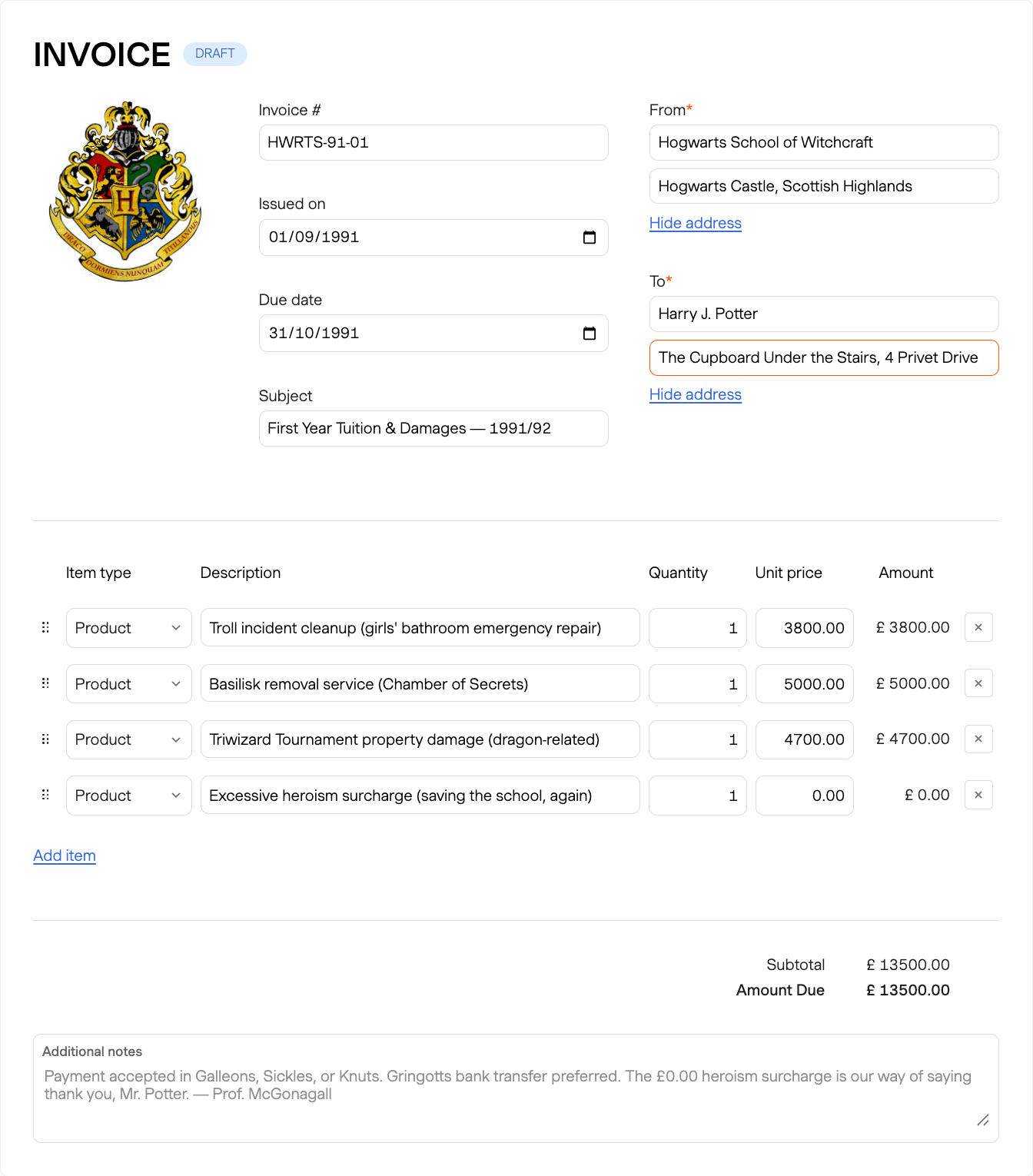
Preview how your invoice will look with custom billing arrangements and professional design elements, tailored for architecture projects.

Invoicing Software for Architecture Firms FAQs

  • Harvest supports custom billing arrangements, allowing you to invoice based on hourly rates, flat fees, or other project-specific billing structures. This flexibility ensures that your billing aligns with the unique demands of each architectural project.

  • Harvest allows customization of invoice formats, including company details and logos, to maintain a professional appearance. This helps architecture firms project a polished and tailored image to their high-end clients.

  • Yes, expenses logged against a project can be included as invoice line items. This is useful for billing clients for materials, travel, or other project costs.
  • Milestone-based billing involves tying payments to specific stages of project completion. This is important for architecture projects as it aligns cash flow with project progress, reduces financial risk, and ensures accountability in meeting project deadlines.

  • Invoicing software can significantly streamline the billing process but may not fully automate it. Complex billing structures and the need for human oversight in project-specific adjustments often require some manual intervention to ensure accuracy and compliance.