Harvest
Invoices
Sign up

Simple Invoice Template

Harvest provides customizable invoice templates that integrate seamlessly with accounting software, enhancing your financial workflow.

INVOICE DRAFT

Add your logo here
Item type
Description
Quantity
Unit price
Tax
Amount
Subtotal
$0.00
Discount
$0.00
Amount Due
$0.00
Get paid via:
Credit card / Debit card
ACH
Wire transfer

Customise invoice

Appearance

Add a logo
Show invoice title

Invoice settings

Tax Add up to 2 tax rates
%
Discount Apply a discount percentage
%

Key Features of a Simple Invoice Template

A simple invoice template should offer essential features to streamline your billing process and maintain professionalism. Look for templates that provide customizable fields for your business name, logo, contact information, and client details, ensuring each invoice reflects your brand identity. Crucially, the template should include automated calculations for line item totals, subtotals, applicable taxes (e.g., sales tax often ranges from 0% to over 10% depending on jurisdiction), and the grand total, significantly reducing manual effort and potential errors. Common formats available include Microsoft Word for basic text editing, Excel for robust calculation capabilities, and PDF for final, uneditable distribution. Prioritizing these features ensures efficiency and accuracy in your invoicing.
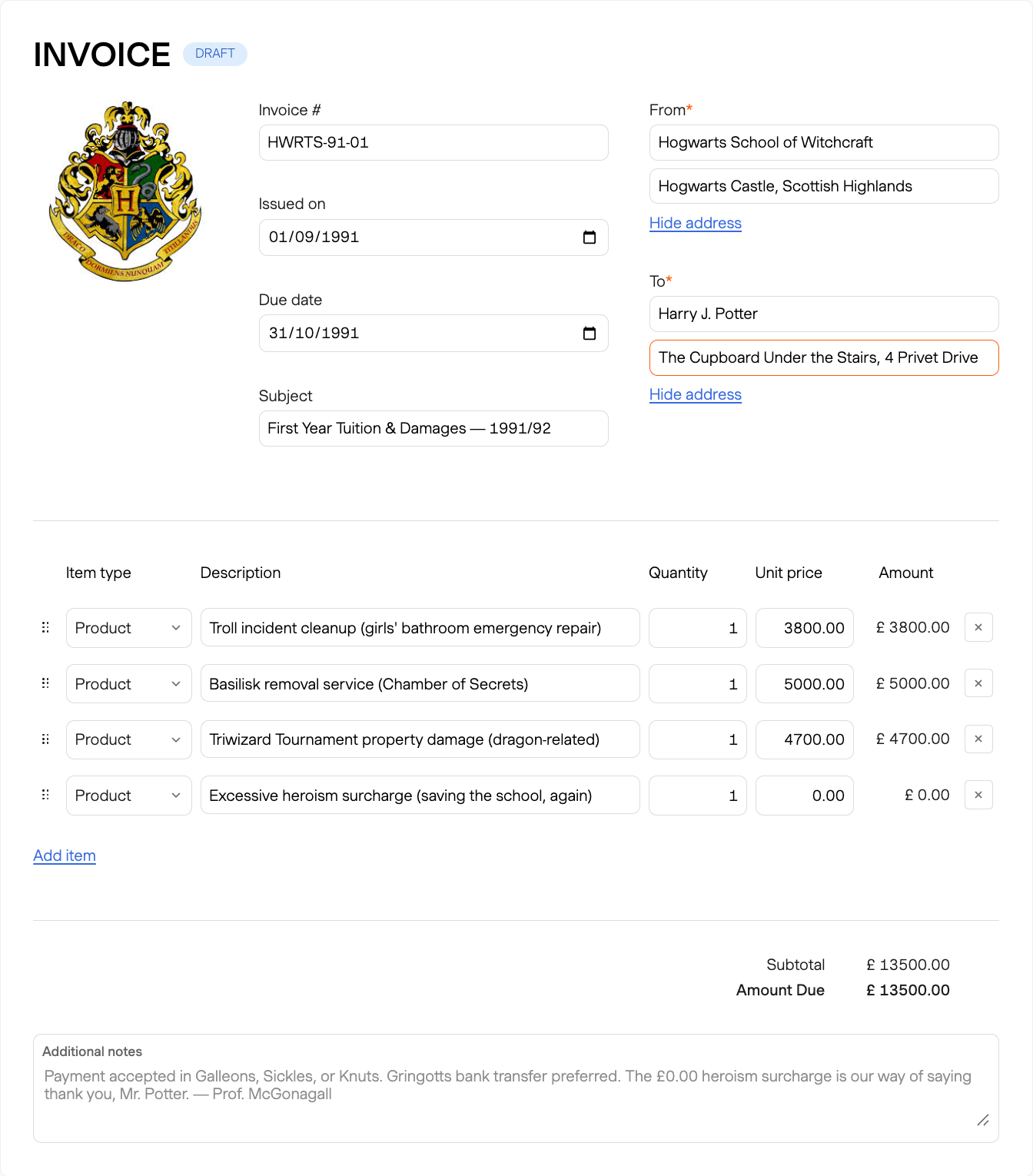
Selecting the Right Format for Your Invoice Template

Choosing the correct invoice template format depends heavily on your specific business needs and technical comfort. Microsoft Word templates are excellent for those who prioritize ease of text editing and basic customization, ideal for service-based businesses with straightforward billing. However, they typically lack advanced automated calculation features. Excel templates are superior for businesses requiring complex calculations, itemized lists, and robust data management, as they inherently support formulas for tax, discounts, and totals. They offer high flexibility but require some familiarity with spreadsheets. PDF templates are best for final distribution, providing a professional, uneditable document that maintains its formatting across different devices, making them perfect for sending to clients once all details are finalized. Consider your primary use case: editing, calculating, or sending.

Common Pitfalls to Avoid When Using Invoice Templates

When utilizing simple invoice templates, several common pitfalls can undermine your professionalism and efficiency. One frequent mistake is overcomplicating the template design with excessive graphics, fonts, or unnecessary fields, which can make invoices appear cluttered and unprofessional. Another critical error is failing to align the template with your brand identity; ensure your logo, brand colors, and consistent typography are incorporated to reinforce your business image. Most importantly, always remember to test automated calculations thoroughly, especially in Excel-based templates. Input dummy data to verify that all formulas for totals, taxes, and discounts are functioning correctly before sending any live invoices, preventing embarrassing and costly errors.

Explore a Simple Invoice Template in Action

Preview how a simple invoice template offers customizable fields, automated calculations, and formats like PDF for professional client billing.

Simple Invoice Template FAQs

  • Harvest allows you to customize invoice templates by adding your company information, logo, and setting up default values to reflect your brand identity.
  • Simple invoice templates are commonly available in Word, Excel, and PDF formats. Word is ideal for basic text editing and customization, Excel offers robust calculation capabilities, and PDF is best for final distribution due to its uneditable nature.
  • Yes, expenses logged against a project can be included as invoice line items. This is useful for billing clients for materials, travel, or other project costs.
  • Harvest integrates with accounting software like Xero and QuickBooks Online to streamline your financial management by copying invoices and payments.
  • Simple invoice templates may struggle with complex billing needs, as they often lack features for handling multi-currency transactions, advanced project tracking, and comprehensive reporting. Businesses with intricate billing requirements might require more sophisticated invoicing systems.