
Harvest
Contracten
Registreer nu

Nda Template in German

Harvest offers a practical solution for time tracking and invoicing, essential tools for managing business operations efficiently. While not providing NDA templates, Harvest supports your business needs with robust time management capabilities.

Begin met een sjabloon

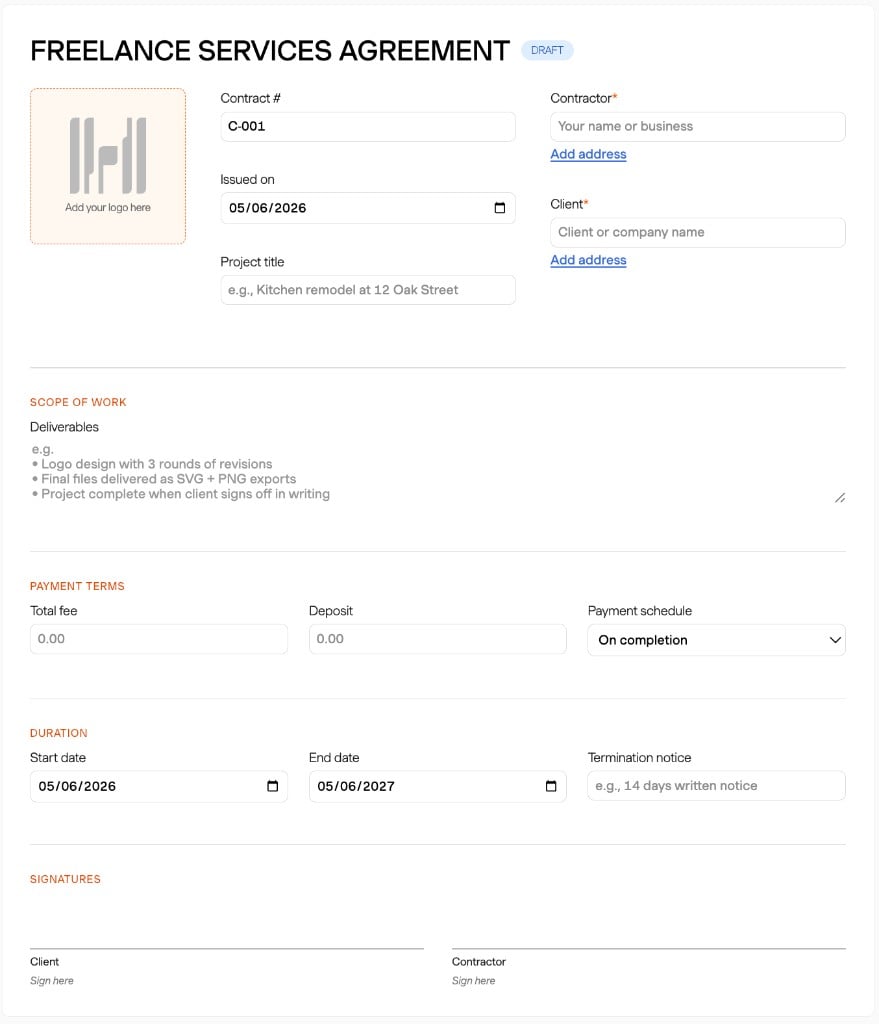
OVEREENKOMST CONCEPT

Voeg hier je logo toe

Omvang van het werk

Betalingsvoorwaarden

Duur

Handtekeningen

Klant

Hier ondertekenen

Aannemer

Hier ondertekenen

Betaal via:
Creditcard / Debitkaart
ACH
Bankoverschrijving

Contract aanpassen

Uiterlijk

Voeg een logo toe
Toon contracttitel

Contractinstellingen

Betalingsvoorwaarden opnemen Totaalbedrag, aanbetaling en schema
Opzegclausule opnemen Vereiste kennisgeving om het contract te beëindigen
Handtekeningblokken opnemen Beide partijen ondertekenen onderaan

Understanding NDAs in Germany

Non-disclosure agreements (NDAs) play a crucial role in safeguarding sensitive business information in Germany. With the introduction of the German Trade Secrets Act (GeschGehG) and the EU Know-how-Richtlinie, the legal landscape for NDAs has evolved significantly. These regulations ensure that business and trade secrets are comprehensively protected, fostering trust among parties involved. However, an NDA is only effective if it adheres to these legal standards, emphasizing the importance of using a well-crafted NDA template.

One of the key challenges in drafting an NDA in Germany is ensuring compliance with the German Civil Code (BGB). Unlike other contracts, NDAs do not require a specific form, allowing flexibility in their creation. However, they must align with the provisions set out by the BGB and the General Terms and Conditions (AGB) law, which scrutinizes clauses for transparency and fairness. Failure to comply can result in invalidation of certain terms, underlining the importance of a legally sound NDA template.

Recent trends indicate a surge in the use of NDAs to protect trade secrets, especially in sectors like mergers and acquisitions and product development. Given the complexity of these transactions, it is crucial to have an NDA that clearly defines confidential information and outlines the obligations of the parties involved. With these considerations in mind, an NDA template tailored to German legal requirements is indispensable for businesses wanting to safeguard their sensitive information effectively.
Essential Components of a German NDA Template

A comprehensive NDA template in Germany should include several key components to ensure its enforceability and effectiveness. Firstly, it must clearly identify all contracting parties and define the purpose of the agreement. This clarity helps prevent misunderstandings and sets the stage for a successful collaboration. Additionally, the NDA must provide a precise definition of what constitutes "confidential information," listing specific examples such as technical data, business plans, and customer lists.

The obligations of the receiving party should be explicitly outlined, including the handling, protection, and non-disclosure of confidential information. It is essential to specify that the information can only be used for the agreed-upon purpose, thereby preventing misuse. The duration of confidentiality is another critical aspect; while typically set for three years, post-contractual obligations for trade secrets may extend beyond this period.

Incorporating remedies for breaches, such as contractual penalties and claims for damages, is crucial for deterring violations. German NDAs often include penalties between €5,000 and €25,000, which are considered permissible by courts. Finally, the NDA should specify the governing law and jurisdiction, typically set to the Federal Republic of Germany, to provide a clear legal framework for resolving disputes. By including these components, an NDA template can provide robust legal protection for all parties involved.

Legal and Compliance Considerations

When drafting an NDA in Germany, legal compliance is paramount. The German Trade Secrets Act (GeschGehG) mandates that information qualifies as a trade secret only if it meets specific criteria: it must be secret, hold economic value, and be subject to reasonable secrecy measures. This means simply having an NDA is not enough; the information must genuinely be protected as a trade secret under these standards.

Moreover, the agreement must adhere to the GDPR and the German Federal Data Protection Act (BDSG) if personal data is involved. The importance of this compliance has been emphasized by recent legal developments, such as the 2023 German Whistleblower Protection Act, which prohibits using NDAs to silence whistleblowers who report criminal activities. Companies with over 50 employees must establish internal reporting channels to comply with this act, further highlighting the need for a well-structured NDA.

German courts have also clarified the limitations of "catch-all" confidentiality clauses, ruling them invalid if they unreasonably disadvantage employees. This emphasizes the need for specificity in NDAs. Additionally, contractual penalties are permissible but must be fair and proportional, typically ranging from €5,000 to €25,000. By considering these legal and compliance factors, businesses can ensure their NDAs are both effective and enforceable under German law.

Practical Tips for Customizing Your NDA

Customizing an NDA to fit the specific needs of a business project is vital for its effectiveness. Start by identifying all parties and the purpose of the agreement, which sets a clear foundation. Defining "confidential information" with precision, including examples and exclusions, is crucial to avoid ambiguity and strengthen enforceability. This step ensures that all parties understand what is protected under the NDA.

Outline the obligations of the receiving party in handling and protecting the confidential information. Specify that the information is to be used solely for the agreed purpose, preventing any unauthorized use. Additionally, determine the duration of the confidentiality obligation, keeping in mind that while three years is common, trade secrets may require longer protection.

Incorporating remedies for breaches, such as contractual penalties, can serve as a strong deterrent against violations. Ensure these penalties are realistic and proportionate, as excessive penalties risk being reduced by courts. Finally, include a provision for the return or destruction of confidential information after the agreement ends, and specify the governing law and jurisdiction. By customizing your NDA with these practical tips, you can create a legally sound document that effectively protects your business interests in Germany.

Explore NDAs with Harvest

Harvest offers robust tools for managing time and invoicing, essential for businesses needing efficiency alongside legal solutions.

NDA template in German preview in Harvest tool.

Nda Template in German FAQs

  • An NDA in Germany should include clear identification of parties, a precise definition of "confidential information," obligations of the receiving party, permitted use, term of confidentiality, remedies for breach, and governing law.

  • Yes, NDAs must comply with the German Trade Secrets Act, GDPR, and BDSG. They must ensure information is secret, valuable, and protected by adequate measures. The German Whistleblower Protection Act also impacts NDA use.

  • Customize by defining parties and purpose, detailing "confidential information," outlining obligations, specifying use and duration, and including penalties for breaches. Tailor the template to fit the specific business context.

  • Breaching an NDA can lead to contractual penalties, liability for damages, and legal action under the German Trade Secrets Act. Penalties range from €5,000 to €25,000, serving as strong deterrents.

  • De Duitse Wet op Klokkenluiders verbiedt het gebruik van NDAs om klokkenluiders het zwijgen op te leggen. Bedrijven moeten interne meldkanalen hebben en kunnen onthullingen van criminele activiteiten niet voorkomen.

  • In Duitsland wordt de vertrouwelijkheidstermijn vaak vastgesteld op drie jaar, maar verplichtingen met betrekking tot handelsgeheimen kunnen langer duren om voortdurende bescherming te waarborgen.