
Harvest
Time Tracking
Sign up free

Ad Agencies Timesheet

Harvest empowers ad agencies to tackle revenue loss by offering precise time tracking and client project management, ensuring no billable hour is overlooked.

Try Harvest Free

How much revenue is your team leaving on the table?

Most agencies run at 55-60% utilization. Even a small improvement means significant revenue. See what closing the gap looks like for your team.

Number of people who track billable time
$
Blended rate across roles (junior, senior, lead)
55%
Percentage of total hours that are billable. Industry average is 55-60%.
75%
A realistic target for service businesses is 70-80%.
Monthly revenue gap $0
Revenue at current utilization $0/mo
Revenue at target utilization $0/mo
Extra billable hours needed per person/day 0h
Annual revenue opportunity $0

Start tracking team utilization

Walk through the entire flow below. Start a timer, check your reports, and create a real invoice — all in three clicks.

Go ahead — start tracking!

One click and you're timing. Try it right here: start a timer, add an entry, edit the details. This is exactly how it feels in Harvest.

  • One-click timer from browser, desktop & mobile
  • Works inside Jira, Asana, Trello, GitHub & 50+ tools
  • Duration or start/end — your call
  • Day, week & calendar views to stay on top of it all
  • Friendly reminders so no hour gets left behind
Acme Corp
Website Redesign
Homepage layout revisions
1:24:09
Content Strategy
Blog calendar planning
1:30:00
SEO Audit
Technical audit report
0:45:00
Brand Guidelines
Color system documentation
2:15:00
Logo Concepts
Initial sketches round 1
1:00:00

The Indispensable Role of Timesheets in Ad Agencies

Ad agencies can experience a 15-25% loss in billable revenue due to inconsistent time tracking, making accurate timesheets essential for profitability. Timesheets help distinguish between billable hours — time spent directly on client projects like strategy calls and design work — and non-billable hours, such as admin tasks and internal meetings. This distinction enhances transparency with clients and ensures accurate billing.

Effective time management through timesheets also improves resource utilization by visualizing employee workload, allowing for adjustments that can increase efficiency. By consistently tracking billable hours, agencies can optimize their utilization rate, a critical factor in maximizing revenue. Furthermore, timesheets help agencies comply with regulations like the Fair Labor Standards Act (FLSA), ensuring all employees' hours are accurately recorded.
Choosing and Customizing Your Free Timesheet Template

Selecting the right timesheet template is crucial for ad agencies looking to streamline time tracking. Popular formats include Excel and Google Sheets, which are free and easily customizable. Agencies can choose templates based on their specific needs, whether for daily, weekly, or monthly tracking.

When customizing a template, it's important to include fields specific to advertising work, such as client names, project descriptions (e.g., "Writing digital ad copy"), and task details. Templates should also distinguish between billable and non-billable hours. Customization can extend to adding project columns or renaming task fields to better fit unique project requirements, ensuring the timesheet aligns with the agency's workflow.

Step-by-Step Guide to Effective Time Tracking

Setting up and using a timesheet template effectively is key to accurate time tracking. Begin by entering essential details like client and project names, team leaders, and hourly rates. Populate the main table with a breakdown of tasks, including descriptions and estimated hours, and log time entries daily or weekly to maintain accuracy.

Best practices for time entry include tracking time in real-time, using consistent increments such as 6 or 15 minutes, and categorizing tasks clearly by client and project. Regularly reviewing timesheets can prevent errors from accumulating and provide insights into project progress and budget health, allowing agencies to adjust before overruns occur.

Maximizing Agency Benefits and Overcoming Challenges

Timesheets offer comprehensive benefits to ad agencies, including improved billing accuracy, optimized resource utilization, and enhanced project estimation. By tracking both billable and non-billable time, agencies gain insights into project profitability and capacity management, reducing the risk of overservicing.

Challenges, such as encouraging team adoption and ensuring data accuracy, can be addressed by making timesheet tools easy to use and setting clear expectations. For larger or more complex agencies, transitioning from manual templates to automated solutions can enhance efficiency, allowing seamless integration with project management tools for streamlined operations and compliance with regulations like FLSA.

Streamline Time Tracking with Harvest

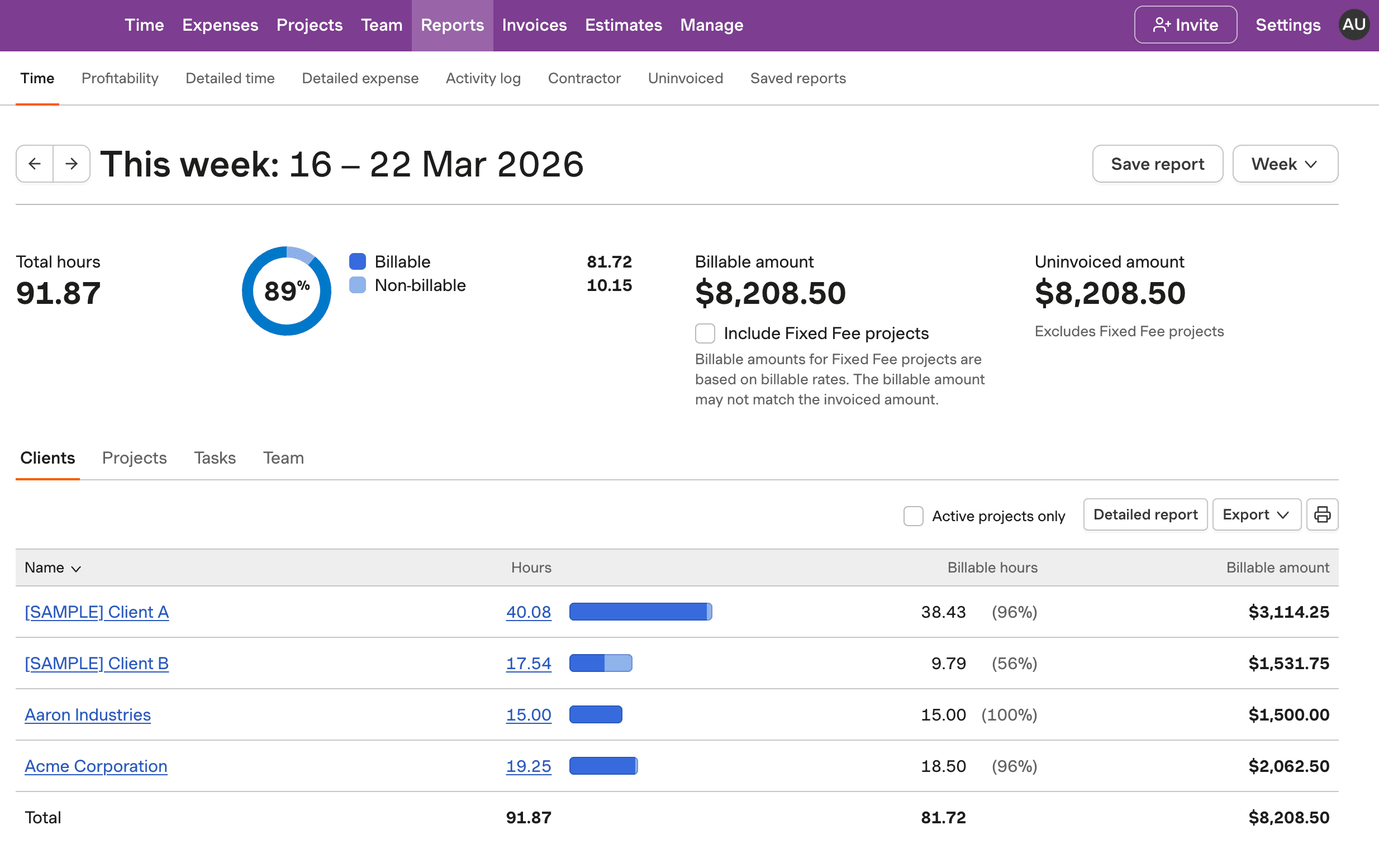
The preview showcases Harvest's time tracking dashboard for ad agencies, highlighting features like billable hour tracking and project management.

Harvest time tracking dashboard for ad agencies

Ad Agencies Timesheet FAQs

  • Ad agencies track billable hours by recording time spent on client-specific tasks such as strategy calls and design work. Hours are logged into timesheets or tracking tools like Harvest, which can then calculate the total billable amount based on the agreed hourly rate.

  • Using timesheets allows ad agencies to streamline time tracking, ensure accurate billing, and optimize resource utilization. It also aids in improving project estimation, managing capacity, and gaining visibility into project profitability, helping avoid overservicing.

  • Yes, timesheets can be customized to suit different projects. Agencies can modify templates by adding specific fields like client names, project descriptions, and task details. This customization ensures the timesheet aligns with each project's unique requirements.

  • Timesheet templates for ad agencies are available in various formats, including Excel and Google Sheets. These formats are free, easy to customize, and allow for straightforward tracking of billable and non-billable hours.

  • Harvest integrates seamlessly with popular project management tools such as Asana, Trello, and Jira. These integrations streamline time tracking by allowing users to log hours directly from the tools they already use, ensuring accurate and efficient resource management.

  • Agencies can ensure accurate time tracking by using real-time logging, consistent time increments, and clear task categorization. Regular reviews of timesheets help catch errors early, while training staff ensures everyone follows the same procedures.

  • Billable hours are those spent directly on client projects, such as design work or client meetings, and are charged to the client. Non-billable hours include tasks like administrative work or training, which are not directly charged to clients.

  • Harvest offers ad agencies robust features for tracking billable vs. non-billable hours, detailed reporting on project profitability, and seamless integration with tools like Asana and Trello. These capabilities enhance efficiency and accuracy in managing client projects.

  • To set up a timesheet template, start by downloading or copying the template, filling in basic details like client names and hourly rates, listing all project-related tasks, and logging time entries consistently. Regular monitoring ensures accurate time tracking and project budget management.