
Harvest
Time Tracking
Sign up free

Time Tracking App for Hubspot

Harvest is a leading time tracking and invoicing tool that helps teams and freelancers efficiently capture all billable hours, reducing revenue loss from poor time management.

Try Harvest Free

How much revenue is your team leaving on the table?

Most agencies run at 55-60% utilization. Even a small improvement means significant revenue. See what closing the gap looks like for your team.

Number of people who track billable time
$
Blended rate across roles (junior, senior, lead)
55%
Percentage of total hours that are billable. Industry average is 55-60%.
75%
A realistic target for service businesses is 70-80%.
Monthly revenue gap $0
Revenue at current utilization $0/mo
Revenue at target utilization $0/mo
Extra billable hours needed per person/day 0h
Annual revenue opportunity $0

Start tracking team utilization

Walk through the entire flow below. Start a timer, check your reports, and create a real invoice — all in three clicks.

Go ahead — start tracking!

One click and you're timing. Try it right here: start a timer, add an entry, edit the details. This is exactly how it feels in Harvest.

  • One-click timer from browser, desktop & mobile
  • Works inside Jira, Asana, Trello, GitHub & 50+ tools
  • Duration or start/end — your call
  • Day, week & calendar views to stay on top of it all
  • Friendly reminders so no hour gets left behind
Acme Corp
Website Redesign
Homepage layout revisions
1:24:09
Content Strategy
Blog calendar planning
1:30:00
SEO Audit
Technical audit report
0:45:00
Brand Guidelines
Color system documentation
2:15:00
Logo Concepts
Initial sketches round 1
1:00:00

The Strategic Imperative of Time Tracking in CRM

Time tracking is crucial for maximizing the efficiency and profitability of projects managed through CRM platforms. Poor time management is a leading cause of project failures, affecting 43% of cases. For professional services firms, inefficient time tracking can result in a staggering 15-25% loss in billable hours. For a mid-sized firm with 50 employees billing at $200 per hour, this inefficiency can equate to a loss of $780,000 to $1.3 million annually. Accurate time tracking not only helps capture these lost hours but also enhances forecasting and resource allocation.

By integrating time tracking with CRM systems, businesses can improve client transparency and project profitability. Such integration provides real-time insights into project progress, allowing firms to adjust strategies and resource distribution promptly. Moreover, it enhances client billing accuracy, reducing disputes and fostering stronger client relationships. The benefits extend beyond financial gains, as businesses achieve better operational efficiency and a competitive edge in their industry.
Essential Features of a CRM-Integrated Time Tracking Solution

When selecting a time tracking app for integration with CRM platforms like HubSpot, certain features are indispensable. Automated timers and manual entry options provide the flexibility needed to accommodate various workflows. Seamless integration with CRM tasks, deals, and client records ensures that time tracking data is accurate and contextualized, enhancing reporting and analysis capabilities.

Robust reporting tools are vital, offering insights into project profitability, team utilization rates, and overall performance. Mobile accessibility is another critical feature, enabling tracking on-the-go for remote teams and field employees. Additionally, customizable billing rates and invoice generation capabilities streamline the billing process, ensuring that all tracked time is accounted for and billed accurately. Together, these features empower businesses to manage their time effectively, driving increased profitability and efficiency.

Implementing and Optimizing Time Tracking for CRM Success

Successful implementation of a time tracking system in a CRM environment begins with enabling the necessary features and creating records linked to CRM entities. It's important to establish consistent categorization for tasks and define what constitutes billable versus non-billable activities to ensure clarity and accuracy. Automated timers should be employed to capture time in real-time, minimizing reliance on manual inputs and memory.

Adopting best practices can significantly improve the system's effectiveness. For instance, setting realistic deadlines for time entries and regularly reviewing reports can help identify inefficiencies, allowing businesses to optimize their processes. Fostering team adoption is equally important; emphasizing the benefits of time tracking over perceived surveillance can enhance buy-in and accountability. Regularly reviewing the data collected will provide valuable insights into operational efficiencies and inform strategic decision-making.

Navigating Industry-Specific Needs and Compliance

Different industries have unique time tracking needs and compliance requirements that must be considered. Professional services firms often deal with multiple clients and complex billing structures, necessitating precise time tracking to maintain profitability. Legal firms, for example, typically track time in 6-minute increments and require robust systems to integrate with legal CRMs.

Compliance with regulations such as GDPR and CCPA is crucial, as time tracking systems handle sensitive client and employee data. Ensuring data security and maintaining comprehensive audit trails are essential to meet these regulatory demands. By tailoring time tracking solutions to meet industry-specific requirements, businesses can not only enhance compliance but also improve efficiency and client satisfaction.

Time Tracking with Harvest

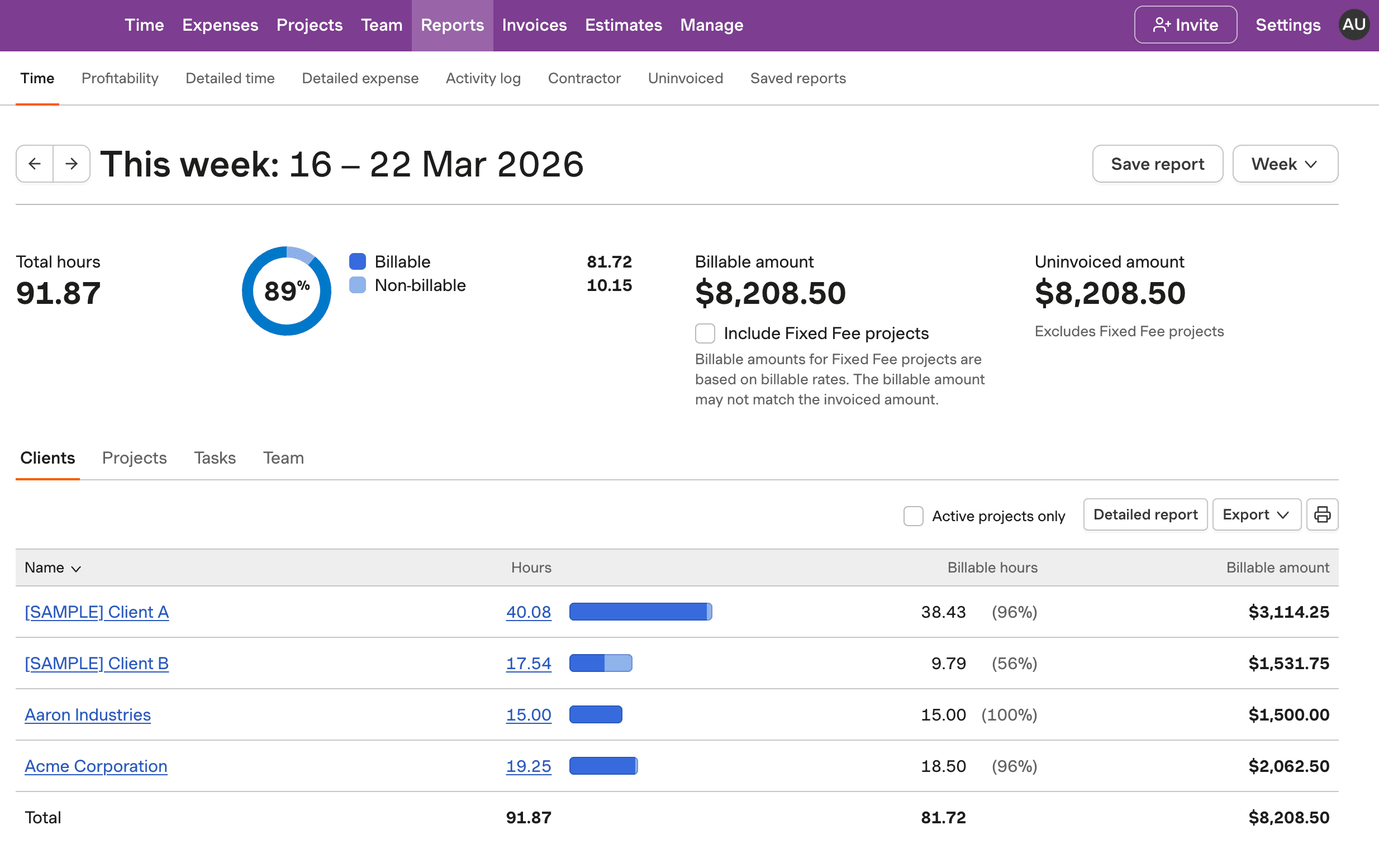
See how Harvest integrates with CRM tasks to track time effortlessly and boost productivity. Capture every billable hour with precision.

Screenshot of Harvest time tracking app integrated with CRM tasks

Time Tracking App for Hubspot FAQs

  • While Harvest does not currently integrate directly with HubSpot, it offers flexible time tracking features that can complement HubSpot's CRM capabilities. Users can explore other apps designed for direct integration or use Harvest alongside HubSpot for enhanced billing and reporting.

  • To track billable hours with a CRM-integrated solution, ensure that your time tracking system links directly to CRM tasks and client records. Use automated timers to capture time in real-time and categorize tasks clearly to distinguish between billable and non-billable activities.

  • Look for features like automated timers, manual entry options, seamless CRM integration, robust reporting tools, and mobile accessibility. Customizable billing rates and invoice generation are also vital for accurate client billing and streamlined financial operations.

  • While there are free time tracking apps available, finding one with direct HubSpot integration may require research. Consider evaluating apps that offer free trials or basic features at no cost, and assess how well they can integrate with your existing workflows.

  • Time tracking enhances project management by providing real-time insights into task progress, helping to identify inefficiencies and adjust strategies. It supports accurate billing, improves client transparency, and aids in better resource allocation, boosting overall project success.

  • Integrating time tracking with CRM improves productivity by aligning time data with client and project records, enhancing billing accuracy and transparency. It also provides insights into team performance, aiding in better decision-making and resource management.

  • To set up time tracking in a CRM, enable the feature through your admin settings, create time tracking records, and link these to specific CRM tasks or client accounts. Consistent categorization of tasks and regular data review help optimize the system's effectiveness.