
Harvest
Time Tracking
Sign up free

Time Tracking Adoption Rates by Industry

Time tracking adoption rates vary by industry, but Harvest excels at providing tailored solutions that enhance efficiency and compliance across sectors like IT, healthcare, and construction.

Try Harvest Free

How much revenue is your team leaving on the table?

Most agencies run at 55-60% utilization. Even a small improvement means significant revenue. See what closing the gap looks like for your team.

Number of people who track billable time
$
Blended rate across roles (junior, senior, lead)
55%
Percentage of total hours that are billable. Industry average is 55-60%.
75%
A realistic target for service businesses is 70-80%.
Monthly revenue gap $0
Revenue at current utilization $0/mo
Revenue at target utilization $0/mo
Extra billable hours needed per person/day 0h
Annual revenue opportunity $0

Start tracking team utilization

Walk through the entire flow below. Start a timer, check your reports, and create a real invoice — all in three clicks.

Go ahead — start tracking!

One click and you're timing. Try it right here: start a timer, add an entry, edit the details. This is exactly how it feels in Harvest.

  • One-click timer from browser, desktop & mobile
  • Works inside Jira, Asana, Trello, GitHub & 50+ tools
  • Duration or start/end — your call
  • Day, week & calendar views to stay on top of it all
  • Friendly reminders so no hour gets left behind
Acme Corp
Website Redesign
Homepage layout revisions
1:24:09
Content Strategy
Blog calendar planning
1:30:00
SEO Audit
Technical audit report
0:45:00
Brand Guidelines
Color system documentation
2:15:00
Logo Concepts
Initial sketches round 1
1:00:00

The Rise of Time Tracking: Market Overview and Key Drivers

The global time tracking software market is booming, projected to grow from USD 6.1 billion in 2025 to USD 11.43 billion by 2030, with a CAGR of 13.38%. This growth is driven by the increasing need for productivity, compliance, and the management of distributed workforces. Cloud-based solutions dominate the market, accounting for 77.8% of total share in 2024, while hybrid models are fast gaining traction with a 16.2% CAGR. Small and Medium Enterprises (SMEs) lead in adoption, making up 62.8% of the market size in 2024, while large enterprises leverage these tools for complex workforce management.

Harvest addresses these market needs by offering seamless integrations and flexible time tracking solutions tailored to various industry requirements, ensuring compliance and enhancing efficiency. With a robust platform accessible via web, macOS, Windows, iOS, and Android, Harvest supports both on-premise security and cloud mobility, catering to diverse organizational needs.
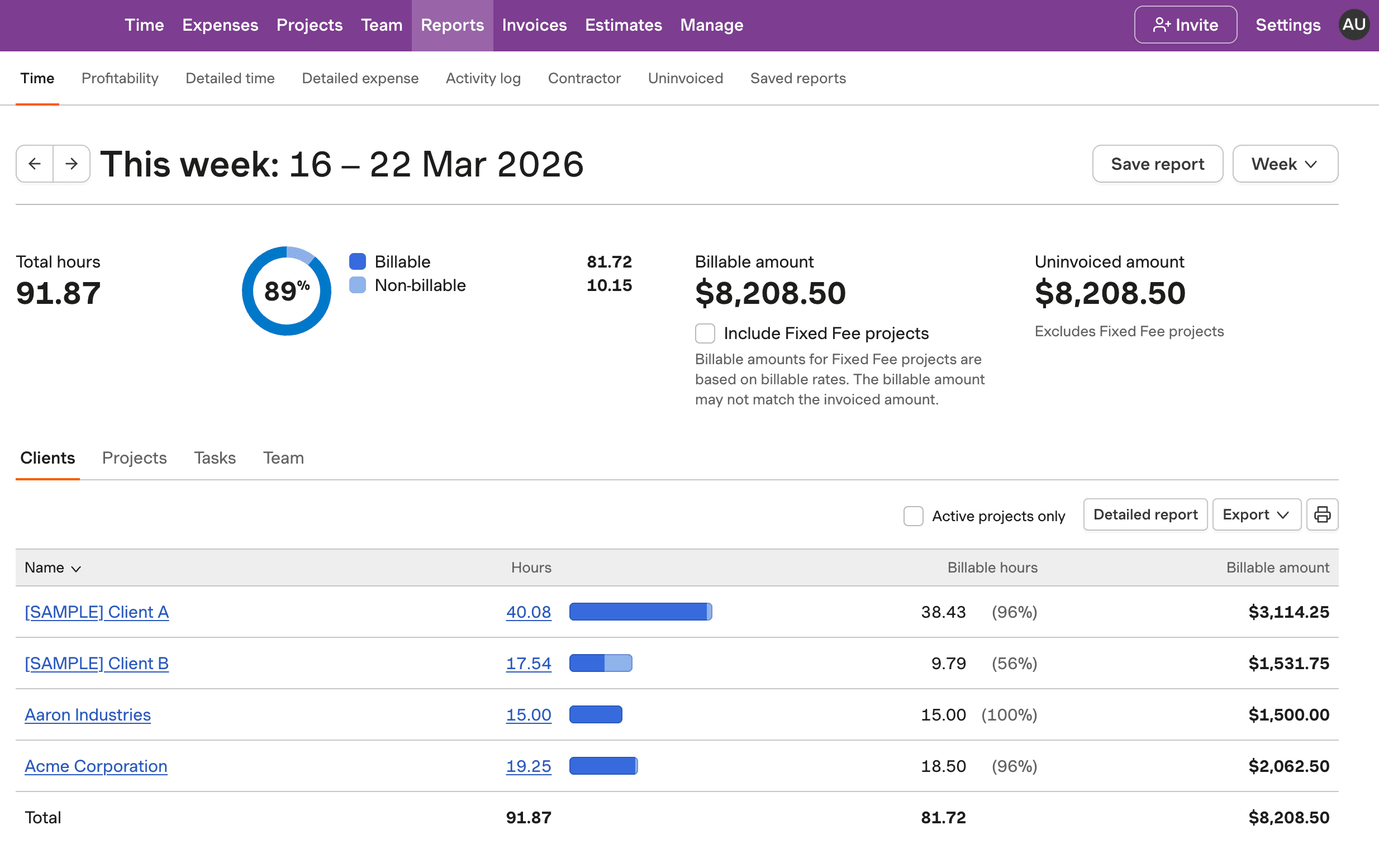
Industry-Specific Adoption: Leaders, Laggards, and Unique Needs

The IT and Telecom industry spearheads time tracking adoption, holding a 28.3% market share, primarily due to the demand for accurate resource billing in agile environments. Manufacturing follows with an 18% share, driven by the need for shift management and labor efficiency. Healthcare is the fastest-growing sector, with a 15.1% CAGR, necessitating audit-ready scheduling and labor tracking. Meanwhile, construction and engineering employ time tracking for field labor management and project cost controls.

Harvest's tailored tools cater to these industry-specific needs. For IT services, Harvest integrates with project management tools like Jira and Trello, facilitating resource billing accuracy. In healthcare, Harvest’s robust reporting features support compliance by linking labor to patient-care KPIs. In construction, Harvest’s budgeting and alert systems optimize project costs and labor allocation, highlighting its versatility across industries.

The Remote Work Revolution and Time Tracking's Pivotal Role

Remote work models have drastically impacted time tracking adoption, particularly post-2020. The demand for digital solutions that prioritize performance over presence has grown, with remote teams facing challenges in ensuring consistent tracking and accountability. Studies show that remote workers can be up to 13% more productive, yet the need for robust tracking systems remains to manage potential distractions and focus issues.

Harvest offers mobile-first and desktop apps that facilitate time tracking for remote teams, ensuring seamless tracking across locations. By integrating with communication tools like Slack and GitHub, Harvest supports professional services in maintaining productivity and transparency, making it an ideal choice for businesses navigating the remote work landscape.

Compliance, Challenges, and Best Practices for Effective Implementation

Compliance with federal laws such as the Fair Labor Standards Act (FLSA) is crucial, as non-compliance can lead to significant penalties. In 2023, U.S. employers paid over $230 million in back wages due to wage and hour violations. Common challenges in implementing time tracking include employee resistance, integration complexities, and manual tracking inaccuracies.

Harvest addresses these challenges by offering user-friendly, scalable solutions with seamless integration capabilities. Detailed time reports and team utilization analytics enhance strategic decision-making, while comprehensive onboarding sessions alleviate employee concerns. By ensuring compliance and optimizing resource allocation, Harvest empowers businesses to implement effective time tracking practices.

Discover Harvest's Industry-Specific Solutions

Harvest offers tailored time tracking solutions for industries like IT, healthcare, and construction, enhancing efficiency and compliance.

Harvest time tracking dashboard showcasing industry-specific features.

Time Tracking Adoption Rates by Industry FAQs

  • Time tracking software adoption varies by industry, with IT and Telecom leading at a 28.3% market share. Manufacturing follows at 18%, and Construction and Engineering hold 16%. Healthcare is the fastest-growing sector, projected to grow at a 15.1% CAGR.

  • Harvest seamlessly integrates with popular project management platforms like Jira, Trello, and Asana, allowing IT services to track time efficiently and ensure accurate resource billing.

  • Factors influencing adoption include the complexity of workforce management, compliance requirements, and the need for accurate billing and productivity insights. Industries with complex schedules or extensive fieldwork, like healthcare and construction, see higher adoption rates.

  • Remote work has significantly increased the adoption of time tracking solutions, as businesses seek to manage distributed teams effectively. This shift emphasizes performance over presence and requires robust, mobile-friendly tracking systems.

  • In the U.S., the Fair Labor Standards Act (FLSA) mandates accurate record-keeping of hours worked and overtime for non-exempt employees. Employers must retain these records for specific periods to ensure compliance.

  • Yes, Harvest offers project budgeting and alerts that aid in managing costs and labor allocation in construction projects, ensuring projects remain profitable and on schedule.

  • Time tracking in healthcare improves compliance and labor tracking, critical for managing complex staffing and linking labor to patient-care KPIs. Harvest's detailed reports and approval features support these needs effectively.