
Harvest
Time Tracking
Sign up free

Timesheet App for Software Developers

Software developers often face the challenge of accurately tracking coding hours. Harvest offers a seamless solution with integrations tailored to developers' needs.

Try Harvest Free

How much revenue is your team leaving on the table?

Most agencies run at 55-60% utilization. Even a small improvement means significant revenue. See what closing the gap looks like for your team.

Number of people who track billable time
$
Blended rate across roles (junior, senior, lead)
55%
Percentage of total hours that are billable. Industry average is 55-60%.
75%
A realistic target for service businesses is 70-80%.
Monthly revenue gap $0
Revenue at current utilization $0/mo
Revenue at target utilization $0/mo
Extra billable hours needed per person/day 0h
Annual revenue opportunity $0

Start tracking team utilization

Walk through the entire flow below. Start a timer, check your reports, and create a real invoice — all in three clicks.

Go ahead — start tracking!

One click and you're timing. Try it right here: start a timer, add an entry, edit the details. This is exactly how it feels in Harvest.

  • One-click timer from browser, desktop & mobile
  • Works inside Jira, Asana, Trello, GitHub & 50+ tools
  • Duration or start/end — your call
  • Day, week & calendar views to stay on top of it all
  • Friendly reminders so no hour gets left behind
Acme Corp
Website Redesign
Homepage layout revisions
1:24:09
Content Strategy
Blog calendar planning
1:30:00
SEO Audit
Technical audit report
0:45:00
Brand Guidelines
Color system documentation
2:15:00
Logo Concepts
Initial sketches round 1
1:00:00

The Strategic Value of Time Tracking for Developers

Time tracking is an essential tool for software developers, offering more than just basic logging of hours. It empowers teams by providing insights that enhance productivity and project management. Studies show that 69% of employees do not accurately track their time, which can lead to significant inefficiencies. By leveraging time tracking data, developers can improve project estimates and forecast accuracy, refining timelines based on historical data.

Moreover, accurate time logs are crucial for client-facing projects as they directly feed into invoicing systems, enhancing billing precision and reducing administrative workload. Time tracking also fosters transparency and accountability within development workflows, helping identify tasks that take longer than expected, such as when a four-hour task consistently takes eight hours. This can highlight issues like unclear requirements or skill gaps, allowing for targeted improvements.

Beyond productivity, time tracking plays a pivotal role in promoting work-life balance. By systematically managing tasks and deadlines, developers can reduce burnout and improve overall job satisfaction. This strategic use of time tracking can transform how developers approach their work, making it an indispensable tool in the software development process.
Key Features of Developer-Friendly Timesheet Apps

For software developers, a timesheet app must cater to their unique workflow needs. One critical feature is automated time capture, which minimizes manual entry errors and ensures that all coding hours are accurately logged. Apps like Harvest provide seamless integration with popular development and project management tools such as Jira, GitHub, and Trello, streamlining the tracking process and ensuring no disruption to the development flow.

Additionally, robust reporting and analytics are vital for both individual and team performance evaluations. These features allow developers to analyze productivity and time spent on various coding tasks, offering insights that drive continuous improvement. Harvest's customizable timesheets and flexible tracking methods, like timers and manual entry, further enhance its suitability for diverse project types.

Another essential feature is the ability to categorize time entries by project phases, such as development, testing, and deployment. This granularity helps developers and project managers understand where time is being spent and identify potential bottlenecks. With Harvest, tracking billable versus non-billable hours is straightforward, ensuring accurate billing and resource allocation for software development projects.

Integrating Time Tracking into Agile Workflows

Integrating time tracking into agile workflows can significantly enhance project management and team efficiency. Harvest supports tracking time against specific coding tasks and sprints, aligning well with agile development practices. This integration allows teams to leverage time data for sprint planning and retrospectives, identifying bottlenecks and optimizing resource allocation.

In agile projects, transparency and communication are key. Time tracking tools provide enhanced stakeholder visibility, ensuring that everyone is aligned on project progress and potential challenges. Harvest excels in this area by offering detailed reports and analytics that facilitate open communication and data-driven decision-making.

For remote and distributed teams, time tracking is particularly crucial. Harvest supports these teams with features that allow for collaborative time tracking across different time zones, maintaining transparency and accountability. This capability ensures that agile methodologies are upheld, even when team members are spread across various locations.

Best Practices for Successful Time Tracking Adoption

Adopting time tracking successfully requires clear communication and strategic implementation. It's crucial to discuss the purpose of time tracking openly with the team, emphasizing its role in enhancing workflows and supporting project planning rather than as a tool for micromanagement. Harvest's user-friendly interface and seamless integrations make it an ideal choice for promoting trust and avoiding resistance.

Choosing the right tool is essential, and Harvest offers a balance of features, ease of use, and integration capabilities that align with software development needs. Establishing consistent habits, such as regular time logging, is vital for accurate data capture and accountability. Encouraging granular tracking at the task level can provide deeper insights into workload distribution and highlight areas for improvement.

Regularly reviewing data is another best practice, as it allows teams to identify trends, pinpoint inefficiencies, and make data-driven decisions for process optimization. Incorporating time tracking data into sprint planning and retrospectives further demonstrates its value, ensuring continuous improvement and alignment with agile methodologies.

Track Coding Hours with Harvest

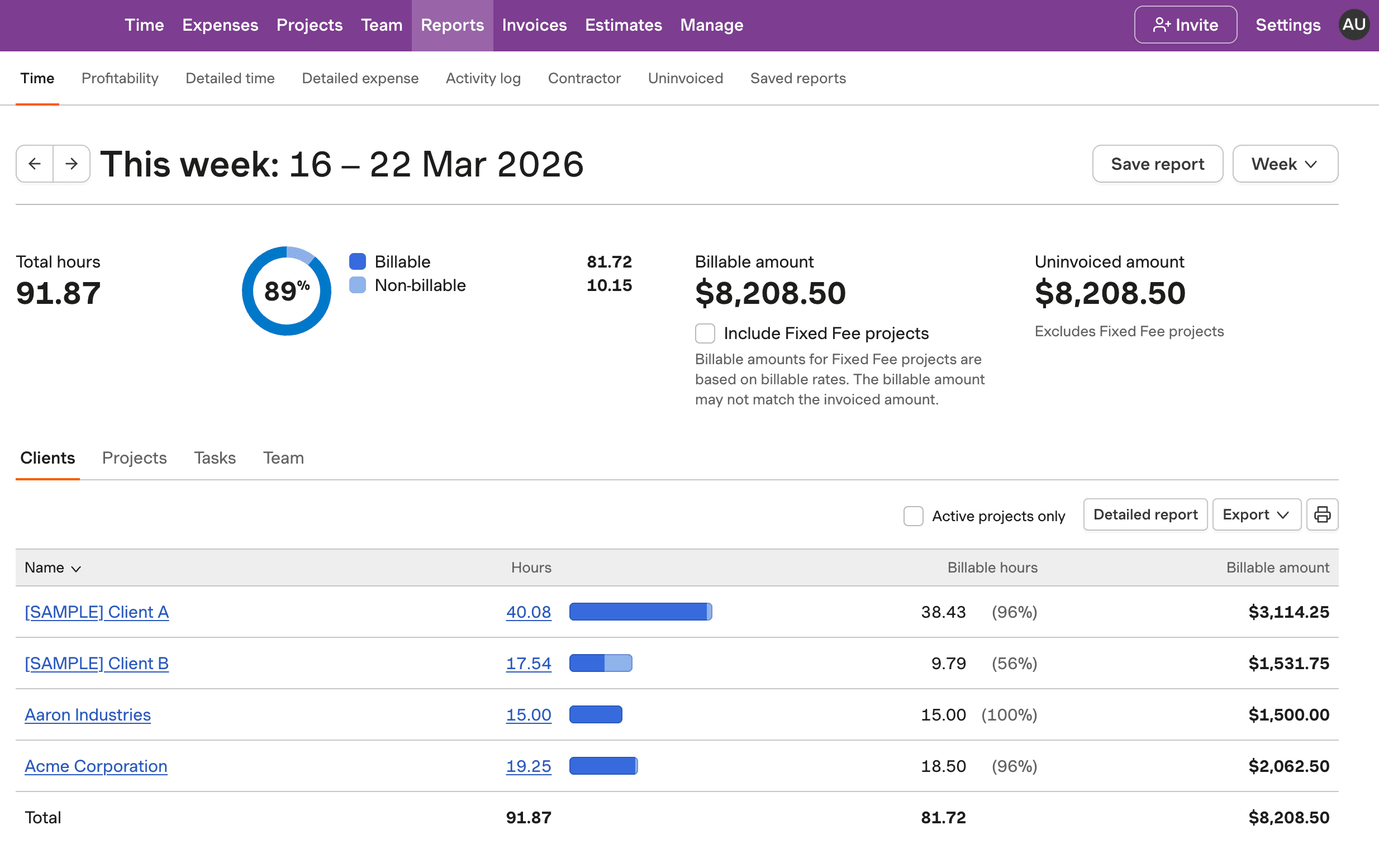
See how Harvest helps developers track coding hours with integrations like Jira and GitHub, making project management seamless.

Harvest timesheet app interface for developers tracking coding hours

Timesheet App for Software Developers FAQs

  • A timesheet app for software developers should offer features like automated time capture, integration with tools such as Jira and GitHub, robust reporting, and flexible tracking methods. Harvest excels in these areas, providing seamless time tracking for coding tasks.

  • Harvest integrates with development tools such as GitHub, Jira, and Trello, allowing developers to track time seamlessly within their existing workflows. This integration helps maintain productivity without disrupting the development process.

  • Yes, Harvest supports tracking time against specific coding tasks and sprints, making it well-suited for agile development practices. It provides insights that enhance sprint planning and retrospectives.

  • Many time tracking apps, including Harvest, offer free trials or basic versions that allow developers to explore core features. This can be a cost-effective way to evaluate the tool's suitability for your needs.

  • Time tracking improves project estimates by providing historical data that refines timelines and enhances forecasting accuracy. For example, identifying tasks that take longer than expected allows for better planning and resource allocation.

  • Time tracking enhances transparency and accountability for remote teams, ensuring alignment across different locations. Harvest supports collaborative tracking, making it easier to manage distributed development teams effectively.

  • Harvest enables precise billing by tracking billable and non-billable hours, directly feeding time logs into invoicing systems. This capability reduces administrative work and ensures fair compensation for software development projects.