
Harvest
Time Tracking
Sign up free

Legal Industry Timesheet

In the legal industry, missing billable hours can lead to significant revenue loss. Harvest provides precise timesheet solutions to ensure accurate billing and compliance.

Try Harvest Free

How much revenue is your team leaving on the table?

Most agencies run at 55-60% utilization. Even a small improvement means significant revenue. See what closing the gap looks like for your team.

Number of people who track billable time
$
Blended rate across roles (junior, senior, lead)
55%
Percentage of total hours that are billable. Industry average is 55-60%.
75%
A realistic target for service businesses is 70-80%.
Monthly revenue gap $0
Revenue at current utilization $0/mo
Revenue at target utilization $0/mo
Extra billable hours needed per person/day 0h
Annual revenue opportunity $0

Start tracking team utilization

Walk through the entire flow below. Start a timer, check your reports, and create a real invoice — all in three clicks.

Go ahead — start tracking!

One click and you're timing. Try it right here: start a timer, add an entry, edit the details. This is exactly how it feels in Harvest.

  • One-click timer from browser, desktop & mobile
  • Works inside Jira, Asana, Trello, GitHub & 50+ tools
  • Duration or start/end — your call
  • Day, week & calendar views to stay on top of it all
  • Friendly reminders so no hour gets left behind
Acme Corp
Website Redesign
Homepage layout revisions
1:24:09
Content Strategy
Blog calendar planning
1:30:00
SEO Audit
Technical audit report
0:45:00
Brand Guidelines
Color system documentation
2:15:00
Logo Concepts
Initial sketches round 1
1:00:00

The Foundation of Legal Practice: Understanding Attorney Timesheets

Attorney timesheets are critical tools for maintaining the financial health and operational efficiency of legal practices. They are designed to record every billable hour accurately, ensuring that law firms can meet their financial targets and maintain client trust. Key components of an attorney timesheet include client/matter details, date, activity description, time spent, and billable status. In a typical eight-hour workday, lawyers might bill only about 2.9 hours, highlighting the importance of capturing every billable minute to meet annual targets of 1,700 to 2,300 hours.

Accurate timesheets are not just about billing; they are also about compliance and ethical practice. Legal professionals must adhere to stringent ethical guidelines, ensuring transparency and accuracy in billing. For instance, billing in six-minute increments is a standard practice in the industry, allowing for precision that clients expect. Harvest supports this precision with features that allow tracking in standardized increments, ensuring billing accuracy and compliance.
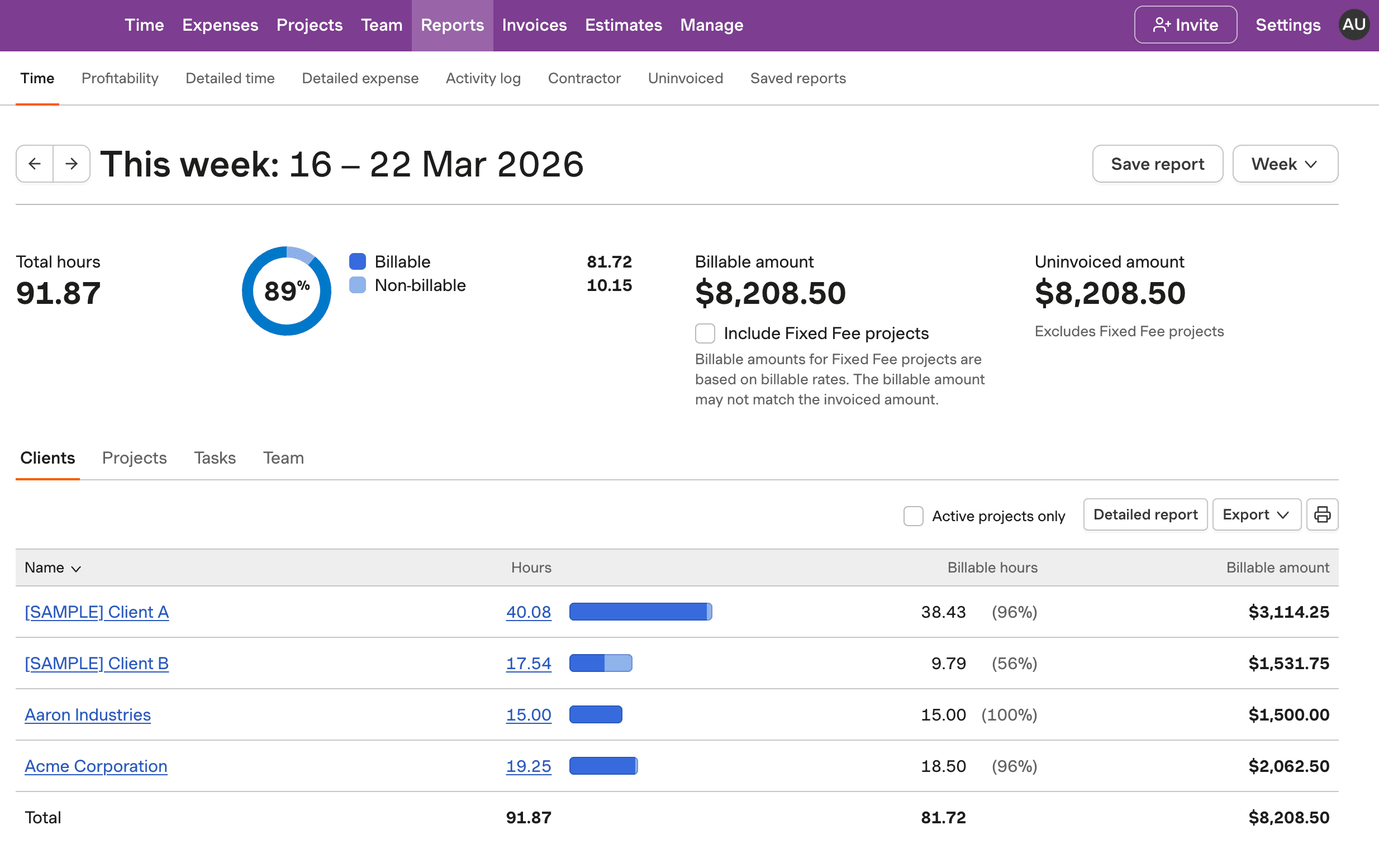
Billable vs. Non-Billable Hours: A Clear Distinction

Understanding the difference between billable and non-billable hours is crucial for any legal practice. Billable hours refer to time spent on client-related tasks, such as drafting documents, conducting research, or attending court. In contrast, non-billable hours encompass internal tasks like administrative duties, which account for about 48% of a lawyer’s day, and business development activities.

Tracking both types of hours is essential for profitability and operational insights. Harvest aids in this process by allowing users to easily categorize time as either billable or non-billable, ensuring accurate invoicing and internal cost calculations. This distinction is vital, as failing to capture all billable hours can lead to significant revenue losses—up to 25% if time entry is delayed for just 24 hours.

Mastering Time Tracking: Best Practices for Lawyers

Effective time tracking is a skill that can significantly enhance a law firm's efficiency and revenue. Best practices include real-time tracking of tasks, which can prevent under-billing by as much as 15%. Lawyers should aim to log tasks as they occur rather than at the end of the day or week. Providing detailed task descriptions using action verbs helps in creating precise records that foster client trust.

Standardizing time tracking across the firm is also crucial. By establishing firm-wide guidelines, including consistent use of billing codes, firms can ensure that all team members adhere to best practices. Regular audits of time entries can further enhance accuracy and accountability. Harvest facilitates these practices with its automated time tracking, detailed reporting, and the ability to integrate seamlessly with billing systems.

Leveraging Technology: Automating Legal Time Tracking

Incorporating technology into time tracking can significantly reduce errors and increase billable hours captured. Legal time tracking software, like Harvest, offers features such as automatic timers, mobile access, and integration with practice management systems. These features streamline the timekeeping process, reducing the administrative burden and allowing lawyers to focus more on billable work.

Automation not only improves accuracy but also enhances efficiency by enabling seamless creation of invoices from tracked time. Harvest stands out by providing a comprehensive suite of tools that integrate time tracking with invoicing, thereby improving the overall workflow and reducing the risk of underbilling. This integration is crucial as it helps firms optimize their operations and ensure that no billable hour is overlooked.

Free Resources and Templates for Efficient Time Management

For legal professionals starting with time tracking, free attorney timesheet templates available in formats like Excel, Google Sheets, and PDF can be invaluable. These templates offer a straightforward way to begin tracking both daily and weekly hours, helping to establish a foundational understanding of time management.

As needs evolve, transitioning to more automated solutions like Harvest can offer greater flexibility and efficiency. Harvest’s free 30-day trial allows legal professionals to experience its comprehensive features, such as automated time tracking and seamless invoicing, which can significantly enhance time management practices. By starting with templates and moving to tools like Harvest, firms can progressively improve their timekeeping and billing processes.

Track Legal Billable Hours with Harvest

See how Harvest tracks legal billable hours with automated timers and detailed reporting, ensuring precise billing and compliance.

Screenshot of Harvest's legal industry timesheet feature for tracking billable hours.

Legal Industry Timesheet FAQs

  • An attorney timesheet typically includes client/matter details, the date of service, a detailed activity description, time spent, and the billable status. These components ensure precise tracking and billing, essential for meeting financial targets and client expectations.

  • To track billable vs. non-billable hours, clearly define which tasks are chargeable to clients and which are internal. Harvest allows you to categorize time entries, ensuring accurate invoicing and better insight into operational costs.

  • Yes, free templates for legal timesheets are available in formats such as Excel, Google Sheets, and PDF. These templates provide a basic framework for tracking time, which can be customized to fit specific needs.

  • Software like Harvest automates time tracking with features such as one-click timers and integration with billing systems. This reduces the risk of under-billing and streamlines the invoicing process, allowing lawyers to focus on billable work.

  • Ensuring accuracy in time tracking involves logging tasks in real-time, providing detailed descriptions, and conducting regular audits. Harvest supports accurate tracking with automated timers and detailed reports, reducing manual errors.

  • In the legal industry, it is standard to bill in six-minute increments (0.1 hour). This practice ensures precision and aligns with client expectations for detailed billing. Harvest accommodates this standard with its flexible time tracking settings.

  • Harvest supports tracking multiple clients with different rates by allowing you to set specific hourly rates for each client and project. This functionality provides flexibility and ensures accurate billing across various engagements.