
Harvest
Time Tracking
Sign up free

Time Tracking for Fixed Price Projects

Harvest empowers teams managing fixed-price projects to protect profit margins and optimize efficiency with robust time tracking and reporting capabilities.

Try Harvest Free

Will this project be profitable?

Estimate your project cost, set the right price, and know exactly how many hours your team can spend before margin disappears.

Total hours across all team members
$
Average rate across all roles on the project
15%
Scope creep is real. Most projects need 10-25% buffer to stay profitable.
Recommended project price $0
Base cost (before buffer) $0
Hours per person per week 0h
Weekly burn rate $0
Max hours before loss 0h

Track project hours with Harvest

Walk through the entire flow below. Start a timer, check your reports, and create a real invoice — all in three clicks.

Go ahead — start tracking!

One click and you're timing. Try it right here: start a timer, add an entry, edit the details. This is exactly how it feels in Harvest.

  • One-click timer from browser, desktop & mobile
  • Works inside Jira, Asana, Trello, GitHub & 50+ tools
  • Duration or start/end — your call
  • Day, week & calendar views to stay on top of it all
  • Friendly reminders so no hour gets left behind
Acme Corp
Website Redesign
Homepage layout revisions
1:24:09
Content Strategy
Blog calendar planning
1:30:00
SEO Audit
Technical audit report
0:45:00
Brand Guidelines
Color system documentation
2:15:00
Logo Concepts
Initial sketches round 1
1:00:00

The Hidden Costs of Fixed-Price Projects: Why Time Tracking is Non-Negotiable

Time tracking is essential for managing fixed-price projects as it unveils hidden costs that can erode profit margins. While fixed-price contracts provide clients with predictability, they transfer the financial risk to service providers. Without accurate time tracking, projects initially estimated to yield a $60 per hour margin can result in negative profitability due to unforeseen time expenditures. For instance, a project estimated at 50 hours might unexpectedly extend to 70 hours, impacting the bottom line significantly.

Understanding the true cost of delivering services is crucial. Time tracking allows for real-time comparison of internal labor costs against fixed fees. For example, if a project has a fixed fee of $25,000 and labor costs reach $17,000, it leaves an $8,000 margin. Such insights are invaluable for maintaining profitability and informing future pricing strategies.
Boosting Your Bottom Line: How Time Tracking Drives Profitability

Effective time tracking is a cornerstone for driving profitability in fixed-price projects. By leveraging time data, businesses can accurately assess job costing and set appropriate future pricing. Harvest’s detailed time tracking tools allow managers to optimize resource allocation by identifying over-utilized or under-utilized team members, helping to prevent burnout and distribute workloads fairly.

Efficiency gains are another benefit, as time tracking helps pinpoint inefficient processes or tasks that consume excessive time. With Harvest, teams can use historical data to create more accurate estimates and develop competitive, profitable fixed-price proposals. This strategic use of time tracking data not only boosts profitability but also enhances overall project management efficiency.

Practical Strategies for Effective Time Tracking on Fixed-Price Contracts

Implementing effective time tracking strategies can significantly enhance management of fixed-price contracts. Cultivating a culture of transparency is key; communicating the purpose of time tracking clearly helps gain team buy-in and avoids perceptions of micromanagement. Harvest facilitates this with user-friendly features that streamline the tracking process.

Granular tracking provides deeper insights into project execution. By breaking down projects into tasks and sub-tasks, teams can capture detailed time entries that reflect actual workflows. Regular data review and analysis should be a consistent practice, allowing managers to compare actual time against estimates and identify deviations early. Harvest’s integrations and budgeting features make this process seamless and efficient.

Identifying and Addressing Unprofitable Client Relationships

Identifying unprofitable clients is crucial for optimizing resource allocation and profitability. Through Harvest’s detailed time reports, businesses can conduct a thorough cost-benefit analysis for each client, factoring in all associated costs such as production, service, marketing, and sales. If a client consistently demands more resources than the revenue they generate, they may be deemed unprofitable.

Recognizing red flags like excessive revisions, constant communication, or scope creep is vital. These behaviors consume disproportionate resources and can negatively impact profitability. With Harvest, businesses can take actionable steps to renegotiate terms, adjust service offerings, or, if necessary, disengage from unprofitable clients to focus on more lucrative opportunities.

Time Tracking for Fixed Price Projects with Harvest

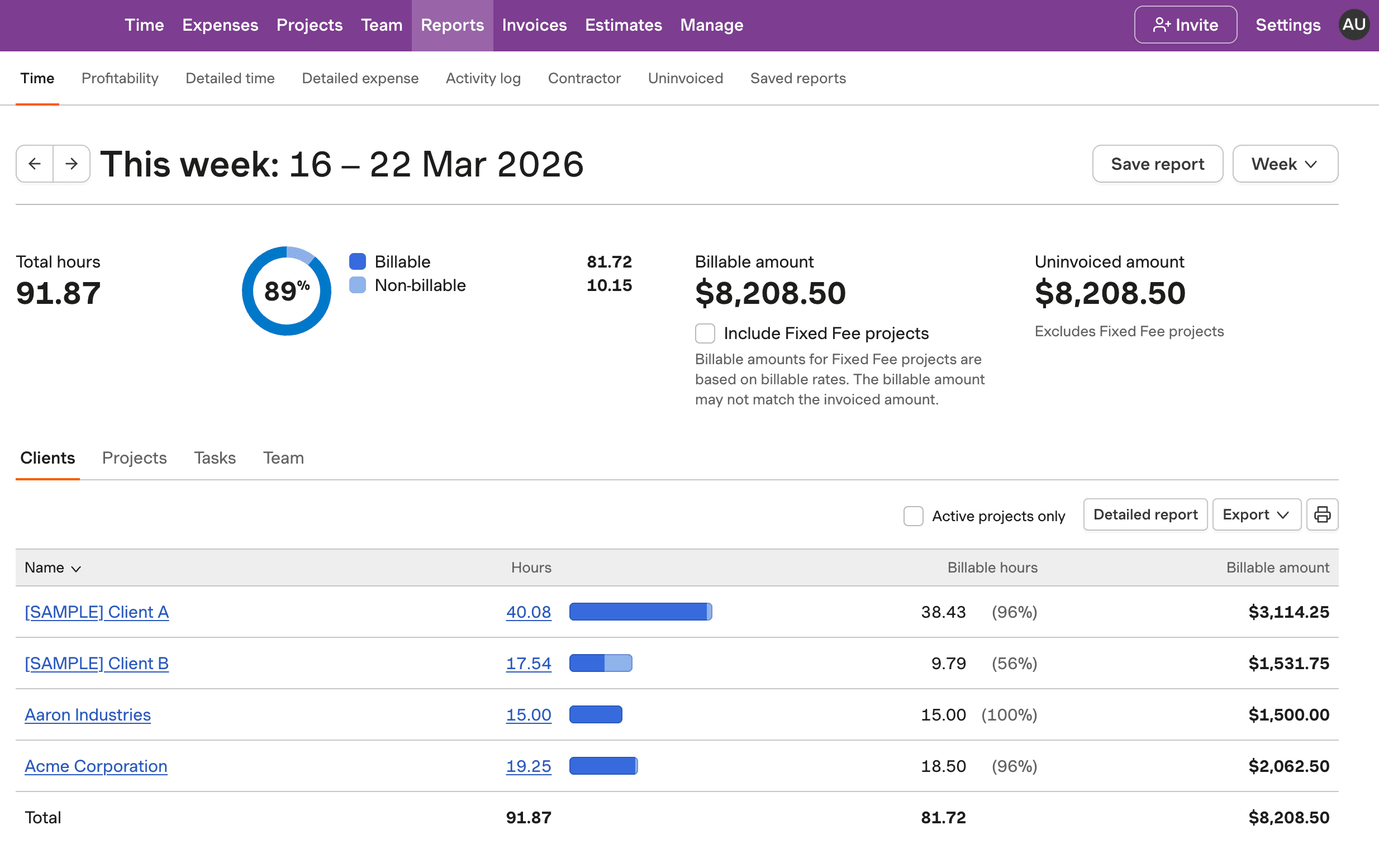
See how Harvest's time tracking tools help manage fixed price projects efficiently, ensuring profitability with detailed reports and insights.

Screenshot of Harvest time tracking for fixed price projects

Time Tracking for Fixed Price Projects FAQs

  • Time tracking is crucial for fixed-price projects as it helps determine actual costs, preventing profit erosion. Without it, projects can exceed expected hours, negatively impacting profitability. For instance, a project initially estimated at 50 hours might extend to 70, causing financial strain.

  • Harvest enhances profitability by providing detailed time tracking and reporting. This allows businesses to analyze budget and internal costs, ensuring projects remain profitable. Managers can use insights to adjust pricing strategies and resource allocation effectively.

  • Key features include detailed reporting, budget alerts, ease of use, and integrations with other project management tools. Harvest offers all these, along with flexible tracking options like one-click timers and manual entries, making it ideal for managing fixed-price projects.

  • Time tracking helps manage scope creep by providing insights into actual vs. estimated hours. This allows managers to identify deviations early and take corrective actions. Regular analysis of tracked time helps in maintaining project scope and controlling extra costs.

  • Yes, Harvest's detailed time reports include filtering by client, which helps identify unprofitable relationships. Businesses can conduct cost-benefit analyses to determine if a client consistently demands more resources than the revenue they generate.

  • Improving estimates involves using reliable historical time tracking data to base forecasts on actual performance rather than guesswork. Harvest provides the necessary data to create accurate budgets, which helps in setting realistic deadlines and pricing.

  • Ensuring team buy-in involves clear communication about the purpose and benefits of time tracking. Emphasize how it leads to fairer workloads and realistic deadlines. Harvest's user-friendly interface encourages adoption and minimizes the perception of micromanagement.