Sign up free
The Indispensable Role of Time Tracking in Billable Projects
Accurate time tracking is crucial for the financial health of service-based businesses, freelancers, and agencies. Without structured time tracking, businesses risk underbilling for quick calls, follow-up messages, and small adjustments, which can lead to a 10% loss in potential billable hours. This leakage ultimately impacts revenue and client trust. By using a dedicated time tracking application, businesses can effectively manage resources, generate precise invoices, and forecast revenue.
Understanding the difference between billable and non-billable hours is essential. Billable hours directly contribute to revenue, while non-billable hours reflect internal tasks that do not generate income. Tracking both types allows businesses to analyze operational efficiency and set realistic utilization targets. For instance, aiming for a 70-80% utilization rate means approximately 30 billable hours per week, which is a common benchmark in professional services.
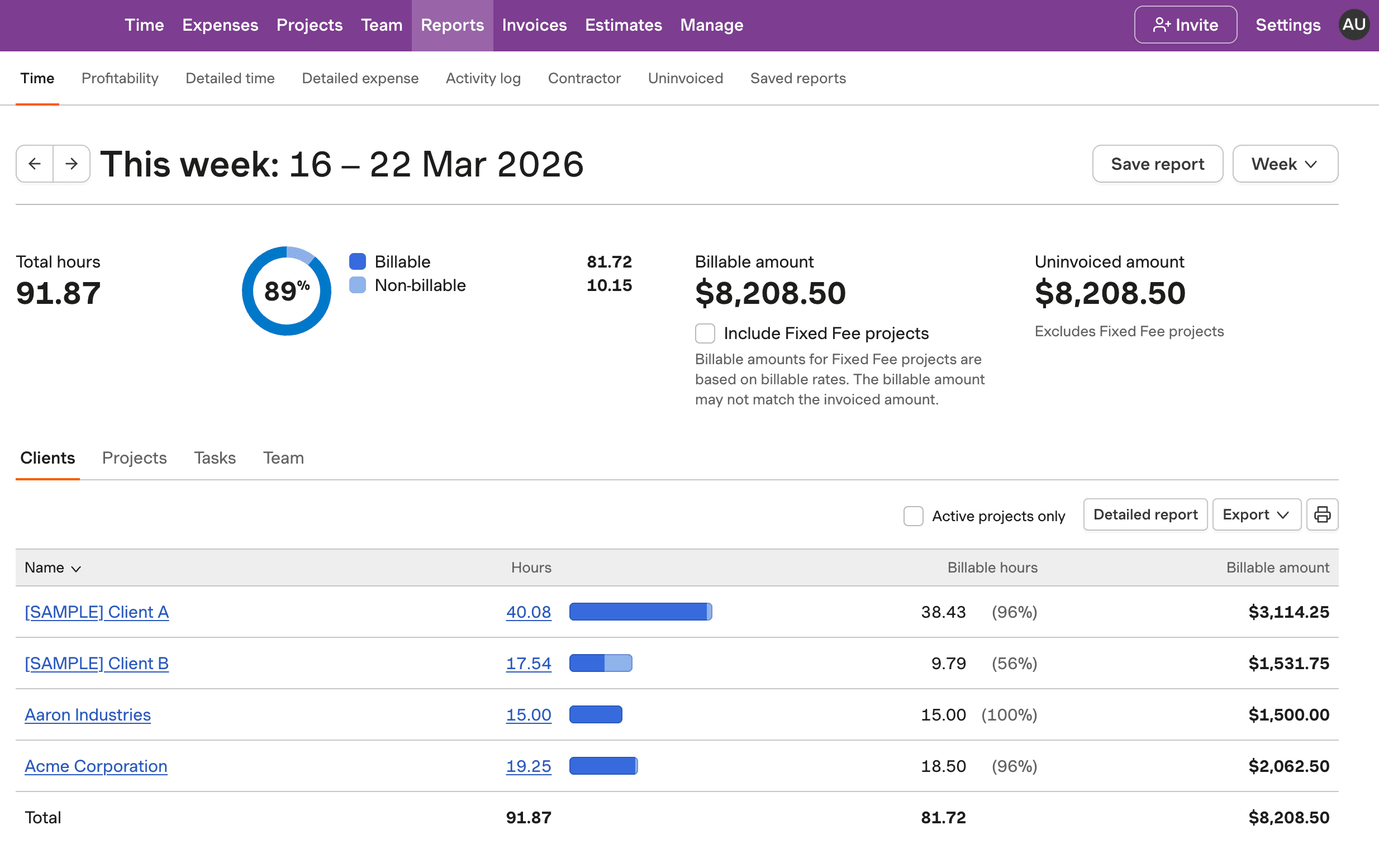
Harvest offers detailed reporting on billable versus non-billable hours, providing insights into financial oversight. These reports help businesses maintain clarity with clients and minimize disputes, enhancing long-term relationships and profitability.