
Harvest
Time Tracking
Sign up free

Billable Hours Calculator in Bangladesh

Struggling with accurate time tracking for payroll in Bangladesh? Harvest offers a comprehensive solution with its billable hours calculator, ensuring compliance with local labor laws.

Try Harvest Free

How much revenue is your team leaving on the table?

Most agencies run at 55-60% utilization. Even a small improvement means significant revenue. See what closing the gap looks like for your team.

Number of people who track billable time
$
Blended rate across roles (junior, senior, lead)
55%
Percentage of total hours that are billable. Industry average is 55-60%.
75%
A realistic target for service businesses is 70-80%.
Monthly revenue gap $0
Revenue at current utilization $0/mo
Revenue at target utilization $0/mo
Extra billable hours needed per person/day 0h
Annual revenue opportunity $0

Start tracking team utilization

Walk through the entire flow below. Start a timer, check your reports, and create a real invoice — all in three clicks.

Go ahead — start tracking!

One click and you're timing. Try it right here: start a timer, add an entry, edit the details. This is exactly how it feels in Harvest.

  • One-click timer from browser, desktop & mobile
  • Works inside Jira, Asana, Trello, GitHub & 50+ tools
  • Duration or start/end — your call
  • Day, week & calendar views to stay on top of it all
  • Friendly reminders so no hour gets left behind
Acme Corp
Website Redesign
Homepage layout revisions
1:24:09
Content Strategy
Blog calendar planning
1:30:00
SEO Audit
Technical audit report
0:45:00
Brand Guidelines
Color system documentation
2:15:00
Logo Concepts
Initial sketches round 1
1:00:00

Understanding Billable Hours in Bangladesh: The Basics

Billable hours represent the time spent on tasks for which a client is charged, crucial for freelancers and businesses in Bangladesh to ensure accurate billing and revenue tracking. The distinction between billable and non-billable hours is important; billable tasks often include client meetings, project work, and research, while non-billable tasks might involve administrative duties or internal meetings. Under the Bangladesh Labour Act, 2006 (amended 2018), standard working hours are set at 8 hours per day and 48 hours per week, with provisions for overtime compensation at twice the regular rate for any hours exceeding these limits.

Accurate time tracking is vital for compliance and client trust. Missed time entries or inaccuracies can lead to a 15-20% loss in billable income. Therefore, adopting efficient time-tracking practices is essential. Employing tools or methods that allow for real-time capture of work activities can mitigate common errors, as 80% of timesheets are found to contain inaccuracies. These practices help ensure that all billable work is accounted for, supporting both revenue generation and transparency in client relationships.
Legal and Regulatory Landscape for Billing

The legal framework in Bangladesh, particularly the Bangladesh Labour Act, outlines specific requirements for work hours and overtime. Standard working hours are capped at 8 hours per day and 48 hours per week, with a maximum of 10 hours per day and 60 hours per week permissible under certain conditions. Overtime pay is mandated at twice the regular hourly rate, which applies to all hours worked beyond the standard limits, including weekends and public holidays.

Tax considerations also play a crucial role. Bangladesh employs a progressive income tax system with rates ranging from 10% to 30% for residents and a flat 30% for non-residents. Notably, income derived from software development and IT services is tax-exempt until June 30, 2024, providing significant incentives for the tech industry. The standard VAT rate is 15%, although reduced rates and exemptions apply to specific goods and services, affecting how businesses calculate their billable rates and overall pricing strategies.

Setting Your Rates: Industry Benchmarks and Pricing Strategies

Determining appropriate billing rates is critical for freelancers and businesses operating in Bangladesh. For freelancers, rates vary significantly based on experience: beginners may charge between $10 and $20 per hour, while experienced professionals can command rates exceeding $50 per hour. In the IT sector, outsourcing rates are competitive, typically ranging from $15 to $25 per hour for software development, with web development averaging around ৳375 BDT per hour.

Legal services often utilize diverse billing models, including hourly rates, flat fees, and retainers. Typical hourly rates for legal professionals in Bangladesh range from Tk. 2000 ($25) for associates to Tk. 4000 ($45) for heads of chambers. Pricing is influenced by factors such as skill level, project complexity, and market demand, making it essential for service providers to understand these dynamics to set competitive and profitable rates.

Practical Steps for Calculating and Managing Billable Hours

Calculating billable hours efficiently requires a structured approach. First, define which activities are billable and agree on rates with clients, ideally documented in a contract. Next, choose a reliable time-tracking method, whether manual logs, spreadsheets, or software, to ensure real-time and accurate recording of work hours.

Tracking should include detailed descriptions and categorization by project and task type, distinguishing clearly between billable and non-billable hours. At the end of each billing period, review all entries for accuracy, calculate the total billable amount, and generate detailed invoices, incorporating any applicable taxes. This systematic approach helps prevent discrepancies, enhances billing accuracy, and strengthens client trust.

Industry-Specific Nuances and Future Outlook

Bangladesh's IT sector, buoyed by government incentives like the "Digital Bangladesh" initiative, presents significant opportunities due to its cost-effectiveness and tax exemptions for software development income until June 30, 2024. This has positioned Bangladesh as a competitive destination for IT outsourcing, with rates considerably lower than many Western countries.

The legal sector also reflects diverse billing practices, with firms often setting annual billable hour targets for associates, ranging from 1,700 to 2,200 hours. The freelance economy continues to grow, leveraging platforms like Fiverr and Upwork, which influence rate benchmarks. Understanding these industry-specific nuances is essential for businesses and professionals aiming to optimize their services and pricing strategies in Bangladesh's evolving economic landscape.

Billable Hours Calculator with Harvest

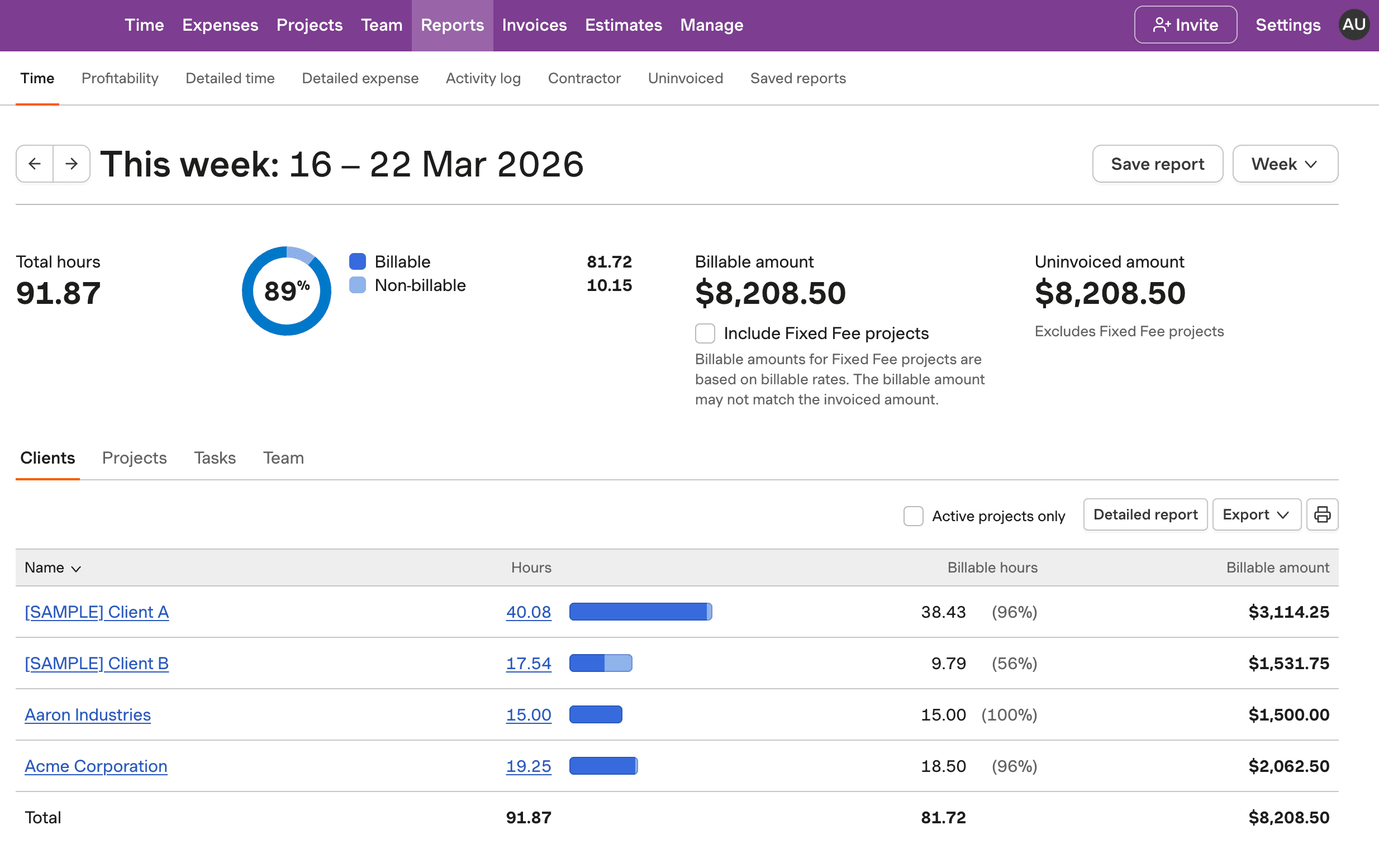
See how Harvest's calculator helps track billable hours, complying with Bangladesh's labor laws for accurate payroll and project management.

Harvest billable hours calculator tailored for Bangladesh

Billable Hours Calculator in Bangladesh FAQs

  • A billable hours calculator for Bangladesh should accommodate the local labor laws, including standard and overtime hours. It should also allow for tracking in increments and provide detailed reports to ensure compliance with the Bangladesh Labour Act.

  • To ensure compliance, use a calculator that adheres to Bangladesh's standards of 8-hour workdays and 48-hour workweeks. Include overtime calculations at twice the ordinary rate and ensure accurate time tracking with detailed descriptions of work activities.

  • Freelance rates in Bangladesh vary by experience and industry. Beginners may charge $10-$20 per hour, while experienced freelancers often charge over $50 per hour. IT services typically range from $15-$25 per hour.

  • Harvest integrates seamlessly with tools like Asana, Trello, Slack, and QuickBooks, among others. This ensures you can track time without disrupting your established workflows, making it easy to manage projects and billable hours efficiently.

  • Yes, Harvest supports tracking of both regular and overtime hours. You can set different rates for overtime work to ensure accurate billing and compliance with Bangladesh's labor regulations, which require overtime to be paid at twice the normal rate.

  • Yes, income from software development and IT services in Bangladesh is tax-exempt until June 30, 2024. This exemption supports the growing tech industry and positions Bangladesh as a competitive outsourcing destination.

  • Harvest offers mobile apps for both iOS and Android, allowing you to track time on-the-go. This flexibility ensures that you can maintain accurate time records, whether you're in the office or working remotely.