
Harvest
Time Tracking
Sign up free

Billable Hours Calculator in China

Struggling with China's labor laws for billable hours? Harvest offers a global solution for tracking time and managing billable hours efficiently.

Try Harvest Free

What should you charge per hour?

Most freelancers and consultants dramatically undercharge. This calculator accounts for what most people miss: non-billable time, taxes, and overhead.

$
Accounting for vacation, holidays, sick days
60%
Most freelancers can bill 50-70% of their time. The rest goes to admin, marketing, proposals, and learning.
$
Software, insurance, equipment, accounting, taxes beyond income tax, etc.
Your break-even rate $0
Recommended rate (+20% buffer) $0
Billable hours per week 0h
Equivalent daily rate $0

Start tracking your billable hours

Walk through the entire flow below. Start a timer, check your reports, and create a real invoice — all in three clicks.

Go ahead — start tracking!

One click and you're timing. Try it right here: start a timer, add an entry, edit the details. This is exactly how it feels in Harvest.

  • One-click timer from browser, desktop & mobile
  • Works inside Jira, Asana, Trello, GitHub & 50+ tools
  • Duration or start/end — your call
  • Day, week & calendar views to stay on top of it all
  • Friendly reminders so no hour gets left behind
Acme Corp
Website Redesign
Homepage layout revisions
1:24:09
Content Strategy
Blog calendar planning
1:30:00
SEO Audit
Technical audit report
0:45:00
Brand Guidelines
Color system documentation
2:15:00
Logo Concepts
Initial sketches round 1
1:00:00

Understanding Billable Hours in China

Billable hours in China are governed by stringent labor laws that dictate working hours and overtime compensation. According to China's Labor Law, employees can work a maximum of 8 hours per day and 40 hours per week. Overtime is capped at 3 hours per day and 36 hours per month. Compensation for overtime is structured as 150% of the normal rate on regular days, 200% on rest days if no compensatory time off is provided, and 300% on statutory holidays. These regulations ensure fair compensation and work-life balance for employees across various industries.

For businesses and professionals navigating these regulations, understanding the correct application of these laws is crucial to compliance and efficient billing. The legal services industry in China, for instance, often employs project-based or fixed-fee models instead of hourly billing, which is more popular with foreign clients. In 2021, hourly rates in legal services ranged from RMB 1,200 for junior lawyers to RMB 10,000 for senior partners, illustrating the diverse billing practices within the sector.
Calculating Overtime Pay in Compliance with Chinese Law

Calculating overtime pay in China requires adherence to specific statutory guidelines. Under the standard working hour system, overtime should not exceed 36 hours per month. Employees are entitled to overtime pay at 150% of their regular hourly rate on standard workdays, 200% on rest days if no alternative time off is arranged, and 300% on statutory holidays. This ensures that employees are compensated fairly for additional hours worked beyond the standard 40-hour work week.

For companies operating in China, especially those with flexible or comprehensive working hour systems, it's essential to secure prior approval from local labor authorities to remain compliant. These systems can accommodate non-standard hours but must still adhere to overarching labor laws. By understanding these requirements, businesses can better manage their workforce and avoid potential legal pitfalls.

Professional Service Billing Models in China

The billing models for professional services in China vary significantly across industries and client types. While hourly billing is common internationally, Chinese firms often prefer project-based or fixed fees. For example, the average hourly rate for legal services was RMB 3,010 (USD 472) in 2021, showing an increase from previous years. Consulting services also reflect diverse pricing, with average hourly rates estimated at ¥165, and IT consulting ranging from $25 to $300 per hour, depending on expertise.

Cultural preferences play a significant role in these billing choices, with foreign clients more inclined towards hourly rates. For instance, about 70-80% of foreign clients prefer hourly billing compared to only 20-30% of domestic clients. Understanding these dynamics is essential for service providers aiming to align their pricing strategies with client expectations while ensuring compliance with local billing practices.

Navigating China's E-invoicing and Fapiao System

China's Fapiao system is a crucial component of its tax and invoicing landscape. Serving as both an invoice and proof of tax payment, Fapiaos are required for all business transactions. With the ongoing shift to digital invoices, businesses must issue them in XML format through China's Golden Tax System to ensure real-time validation and compliance. This transition aims to enhance transparency and fraud prevention.

For international businesses, understanding the Fapiao system is critical when dealing with Chinese clients. The system requires digital signatures for authentication, and invoices must be archived for a minimum of five years. These regulations not only facilitate tax compliance but also help businesses maintain accurate financial records, which are essential for audits and financial planning.

Billable Hours in China with Harvest

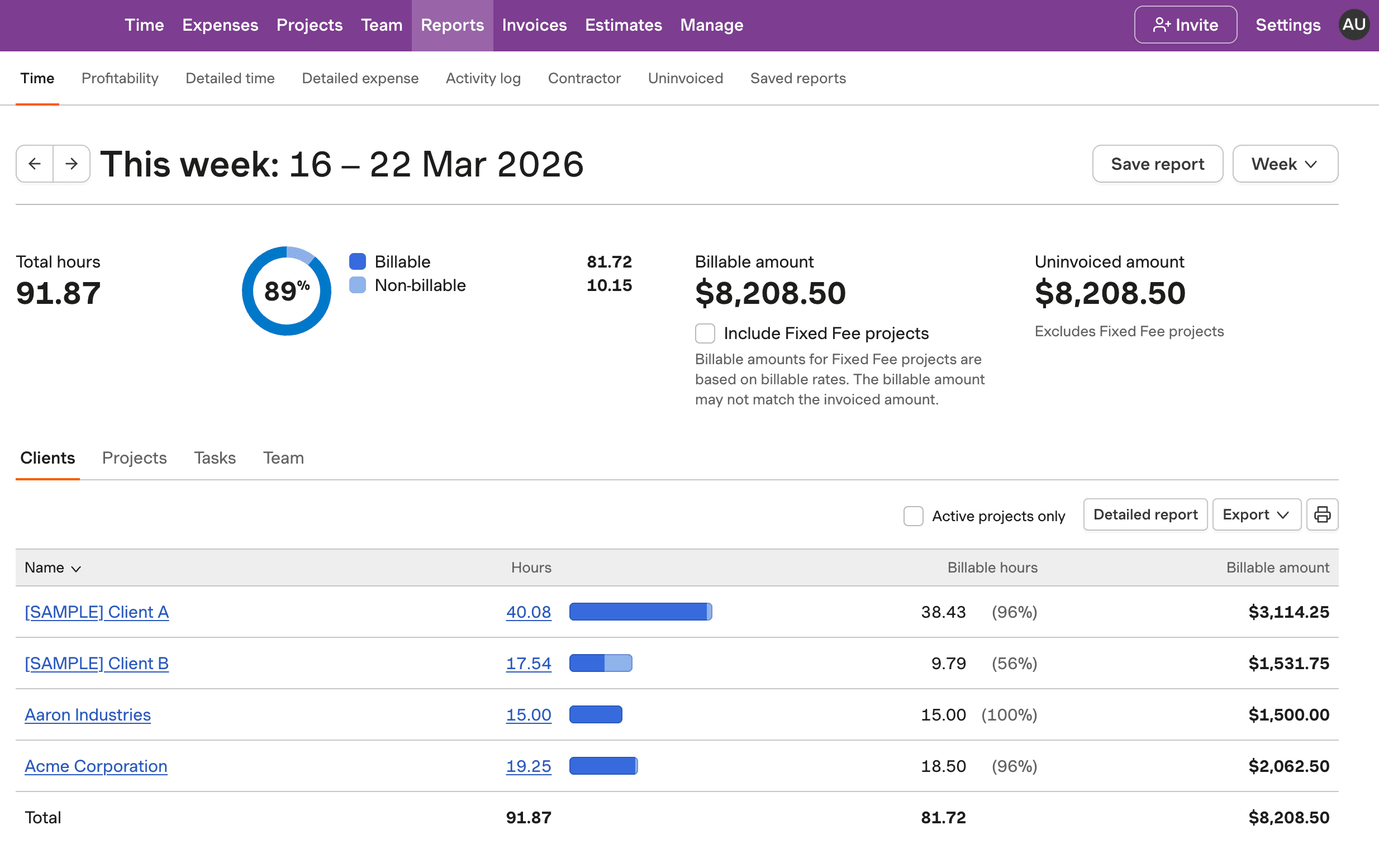
See how Harvest calculates billable hours, helping you navigate China's labor laws efficiently.

Harvest screenshot showing billable hours calculation in China context.

Billable Hours Calculator in China FAQs

  • To calculate overtime pay in China, apply the statutory rates: 150% of the hourly rate for regular days, 200% for rest days if no time off, and 300% for holidays. Overtime should not exceed 36 hours per month.

  • In China, the standard working hours are capped at 8 hours per day and 40 hours per week. Employees must also have at least one day off per week to ensure work-life balance.

  • The average hourly rate for legal services in China was RMB 3,010 (USD 472) in 2021. Rates vary by seniority, with junior lawyers starting at RMB 1,200 and senior partners reaching up to RMB 10,000 per hour.

  • The Fapiao system in China is an invoicing method used for tax compliance. Businesses issue digital invoices through the Golden Tax System, ensuring real-time validation and requiring digital signatures for authenticity.

  • In China, project-based and fixed fees are common billing models, especially in legal and consulting services. Hourly billing is less prevalent, but more accepted by foreign clients, particularly in legal services.

  • Flexible working hour systems in China must be approved by local labor authorities. These systems allow for non-standard hours but must comply with overall labor laws, including overtime limits and compensation rates.