
Harvest
Time Tracking
Sign up free

Billable Hours Calculator in the Middle East

Harvest provides a comprehensive solution for freelancers in the Middle East, addressing common challenges with flexible time tracking and customizable invoicing formats.

Try Harvest Free

What should you charge per hour?

Most freelancers and consultants dramatically undercharge. This calculator accounts for what most people miss: non-billable time, taxes, and overhead.

$
Accounting for vacation, holidays, sick days
60%
Most freelancers can bill 50-70% of their time. The rest goes to admin, marketing, proposals, and learning.
$
Software, insurance, equipment, accounting, taxes beyond income tax, etc.
Your break-even rate $0
Recommended rate (+20% buffer) $0
Billable hours per week 0h
Equivalent daily rate $0

Start tracking your billable hours

Walk through the entire flow below. Start a timer, check your reports, and create a real invoice — all in three clicks.

Go ahead — start tracking!

One click and you're timing. Try it right here: start a timer, add an entry, edit the details. This is exactly how it feels in Harvest.

  • One-click timer from browser, desktop & mobile
  • Works inside Jira, Asana, Trello, GitHub & 50+ tools
  • Duration or start/end — your call
  • Day, week & calendar views to stay on top of it all
  • Friendly reminders so no hour gets left behind
Acme Corp
Website Redesign
Homepage layout revisions
1:24:09
Content Strategy
Blog calendar planning
1:30:00
SEO Audit
Technical audit report
0:45:00
Brand Guidelines
Color system documentation
2:15:00
Logo Concepts
Initial sketches round 1
1:00:00

Understanding Billable Hours in the Middle Eastern Context

In the Middle East, understanding and calculating billable hours is crucial for freelancers and professional service providers. Billable hours refer to the time spent on tasks directly related to client projects that can be charged. In regions like Dubai, law firms are expected to achieve an average of 6.2 billable hours per day by 2025, emphasizing the need for precise time tracking. Besides, cultural factors such as reduced working hours during Ramadan must be considered, making accurate tracking indispensable.

The move from hourly billing to value-based models is gaining traction in the Middle East. This shift reflects a focus on the value delivered per hour, rather than just the time spent. Understanding these nuances helps freelancers align their billing practices with local expectations, enhancing client satisfaction and ensuring competitive positioning.
Key Regulations and Compliance for Time Tracking and Billing

Freelancers in the Middle East must navigate a complex landscape of regulations to ensure compliance in time tracking and billing. For example, Kuwait's Resolution No. 15 of 2025 mandates electronic time tracking for private sector employees, highlighting the importance of automated systems. Similarly, the UAE's Federal Decree-Law No. 33 of 2021 requires precise tracking of working hours and overtime, necessitating reliable tools for adherence.

Moreover, understanding VAT implications is critical, as the UAE imposes a standard 5% VAT on most professional services. Upcoming e-invoicing mandates require careful preparation, with large businesses in the UAE needing to adopt the Peppol network by 2027. Compliance with these regulations is essential for avoiding legal penalties and maintaining smooth business operations.

Average Rates and Fee Structures Across Industries

Billing rates in the Middle East vary significantly across industries and locations, reflecting the diverse economic landscape. In Dubai, legal fees range from AED 500 to AED 5,000 per hour, with junior associates billing around AED 800 per hour. In the consulting sector, IT consultants in Dubai can charge between USD 150-300 per hour, while management consultants may have daily rates as high as USD 15,000 depending on their expertise and firm size.

The choice of billing model, whether hourly, fixed fee, or retainer, can significantly impact income. Factors such as experience, specialization, and regional demand play a pivotal role in determining competitive rates. Understanding these dynamics helps freelancers and consultants set rates that reflect their value and market position.

Best Practices for Accurate Billable Hour Calculation and Management

Accurate calculation and management of billable hours are vital for maximizing revenue and maintaining client trust. Implementing automated timekeeping solutions can greatly enhance precision, reducing the risk of manual errors and ensuring real-time tracking. Immediate entry of time can prevent a 10-25% loss of billable hours, a common issue with delayed reporting.

Harvest offers a robust solution with one-click timers and mobile access, enabling easy tracking of billable hours across different projects. Categorizing tasks as billable or non-billable helps in accurate billing and resource allocation. Additionally, integrating time tracking with invoicing and payroll systems streamlines operations, reducing administrative burdens and improving financial accuracy.

Overcoming Challenges and Regional Specificities

Freelancers in the Middle East face unique challenges in time tracking and billing. Manual tracking errors and employee resistance can hinder accuracy, but tools like Harvest address these issues with user-friendly interfaces and seamless integrations. Adapting to local labor laws, such as the UAE's strict enforcement of overtime compensation, is crucial to avoid legal pitfalls.

Moreover, the expatriate workforce dynamics and cultural nuances, such as a Sunday-Thursday workweek, influence service rates and billing practices. By leveraging Harvest's customizable invoicing and comprehensive reporting features, freelancers can navigate these complexities, ensuring compliance and optimizing profitability.

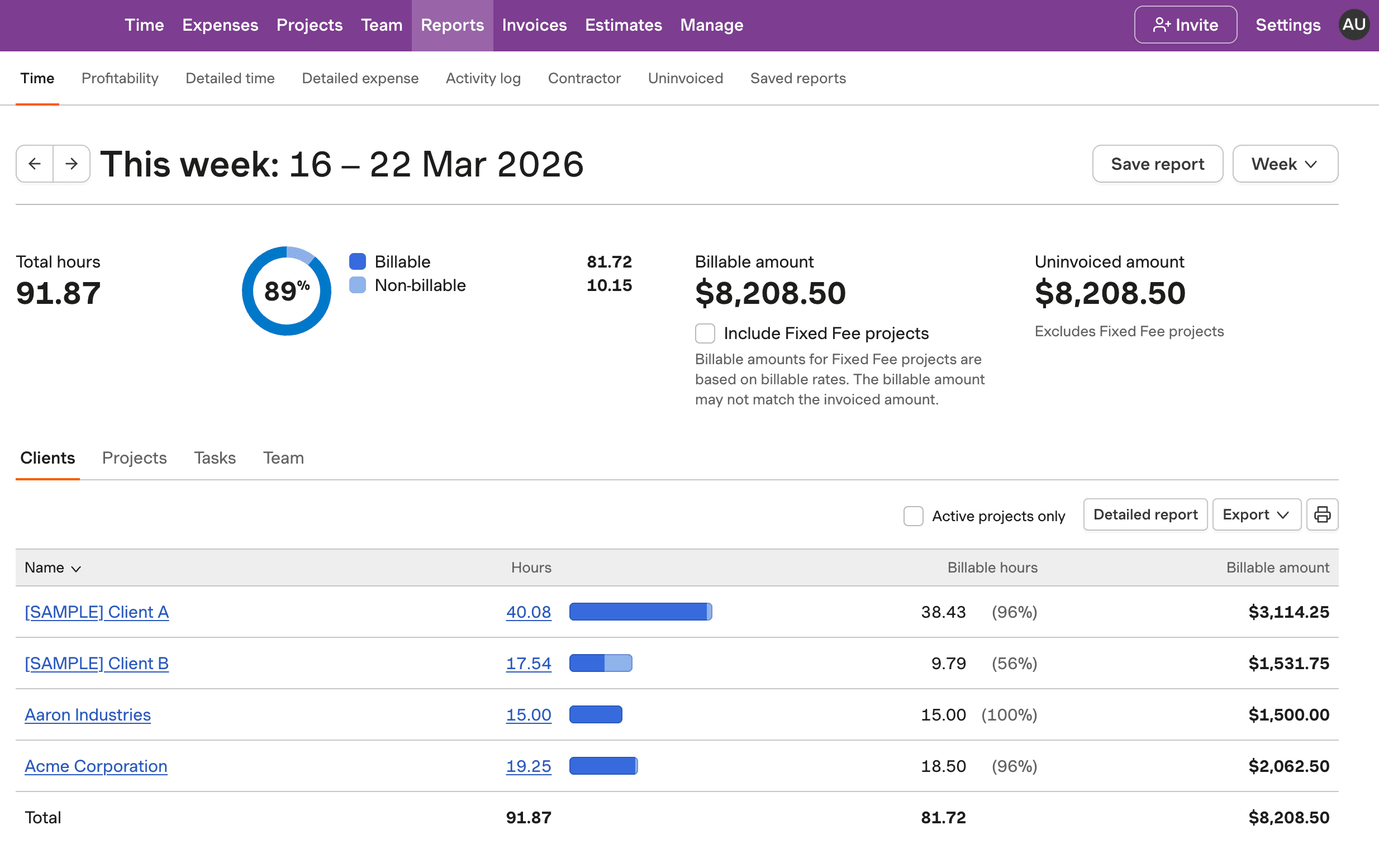
Track Billable Hours with Harvest

See how Harvest captures billable hours and customizes invoices to meet Middle Eastern regulations, enhancing your freelance operations.

Screenshot of Harvest time tracking and invoicing features tailored to the Middle East.

Billable Hours Calculator in the Middle East FAQs

  • Freelancers in the Middle East can track billable hours using tools like Harvest, which offer one-click timers and manual time entry. These features help maintain accuracy and align with regional workweek structures, such as the Sunday to Thursday workweek.

  • Consultants in the Middle East charge varying rates depending on their location and expertise. For example, IT consultants in Dubai charge between USD 150-300 per hour, while management consultants may have daily rates ranging from USD 1,000 to USD 15,000.

  • In the UAE, a standard VAT rate of 5% applies to most professional services. Businesses with annual turnover exceeding AED 375,000 must register for VAT, making compliance with invoicing and tax collection crucial.

  • Harvest allows for flexible invoicing that can accommodate multiple currencies and regional tax regulations, including VAT. This adaptability helps freelancers align their billing with local requirements.

  • Harvest's time tracking features, including start/stop timers and detailed reporting, support compliance with local labor laws in the Middle East, such as the UAE's requirements for precise tracking of working hours and overtime.

  • Key challenges include manual tracking errors, employee resistance, and adapting to regional regulations. Harvest addresses these with automated timekeeping and integrations with other business tools, minimizing errors and improving compliance.

  • Real-time time entry is crucial as it prevents the loss of 10-25% of billable hours that can occur with delayed reporting. This ensures accurate billing and maximizes revenue potential.