
Harvest
Time Tracking
Sign up free

Billable Hours Calculator vs Excel

Tracking billable hours accurately can prevent revenue loss of up to 20%. Harvest offers a seamless solution for precise time tracking and invoicing.

Try Harvest Free

What should you charge per hour?

Most freelancers and consultants dramatically undercharge. This calculator accounts for what most people miss: non-billable time, taxes, and overhead.

$
Accounting for vacation, holidays, sick days
60%
Most freelancers can bill 50-70% of their time. The rest goes to admin, marketing, proposals, and learning.
$
Software, insurance, equipment, accounting, taxes beyond income tax, etc.
Your break-even rate $0
Recommended rate (+20% buffer) $0
Billable hours per week 0h
Equivalent daily rate $0

Start tracking your billable hours

Walk through the entire flow below. Start a timer, check your reports, and create a real invoice — all in three clicks.

Go ahead — start tracking!

One click and you're timing. Try it right here: start a timer, add an entry, edit the details. This is exactly how it feels in Harvest.

  • One-click timer from browser, desktop & mobile
  • Works inside Jira, Asana, Trello, GitHub & 50+ tools
  • Duration or start/end — your call
  • Day, week & calendar views to stay on top of it all
  • Friendly reminders so no hour gets left behind
Acme Corp
Website Redesign
Homepage layout revisions
1:24:09
Content Strategy
Blog calendar planning
1:30:00
SEO Audit
Technical audit report
0:45:00
Brand Guidelines
Color system documentation
2:15:00
Logo Concepts
Initial sketches round 1
1:00:00

Why Choose a Billable Hours Calculator Over Excel?

For professionals evaluating time tracking methods, understanding the pros and cons of a billable hours calculator versus Excel is crucial. While Excel offers flexibility and familiarity, it falls short in accuracy. Studies indicate that manual time entry, including spreadsheets, results in significant revenue loss, with companies losing up to $50 billion annually due to inaccurately tracked billable hours. In contrast, dedicated calculators, like those integrated into software such as Harvest, improve accuracy by an average of 20% more billable hours recovered.

Another key factor is efficiency. Automated systems significantly reduce administrative overhead. For instance, calculating time cards manually can take up to seven minutes, whereas automated tools cut this down to one minute. Harvest offers one-click timers and real-time tracking, reducing the risk of time theft, which costs U.S. employers $11 billion annually. This efficiency translates into higher productivity, with companies reporting up to a 32% improvement in work-time efficiency when using AI-based tracking solutions.
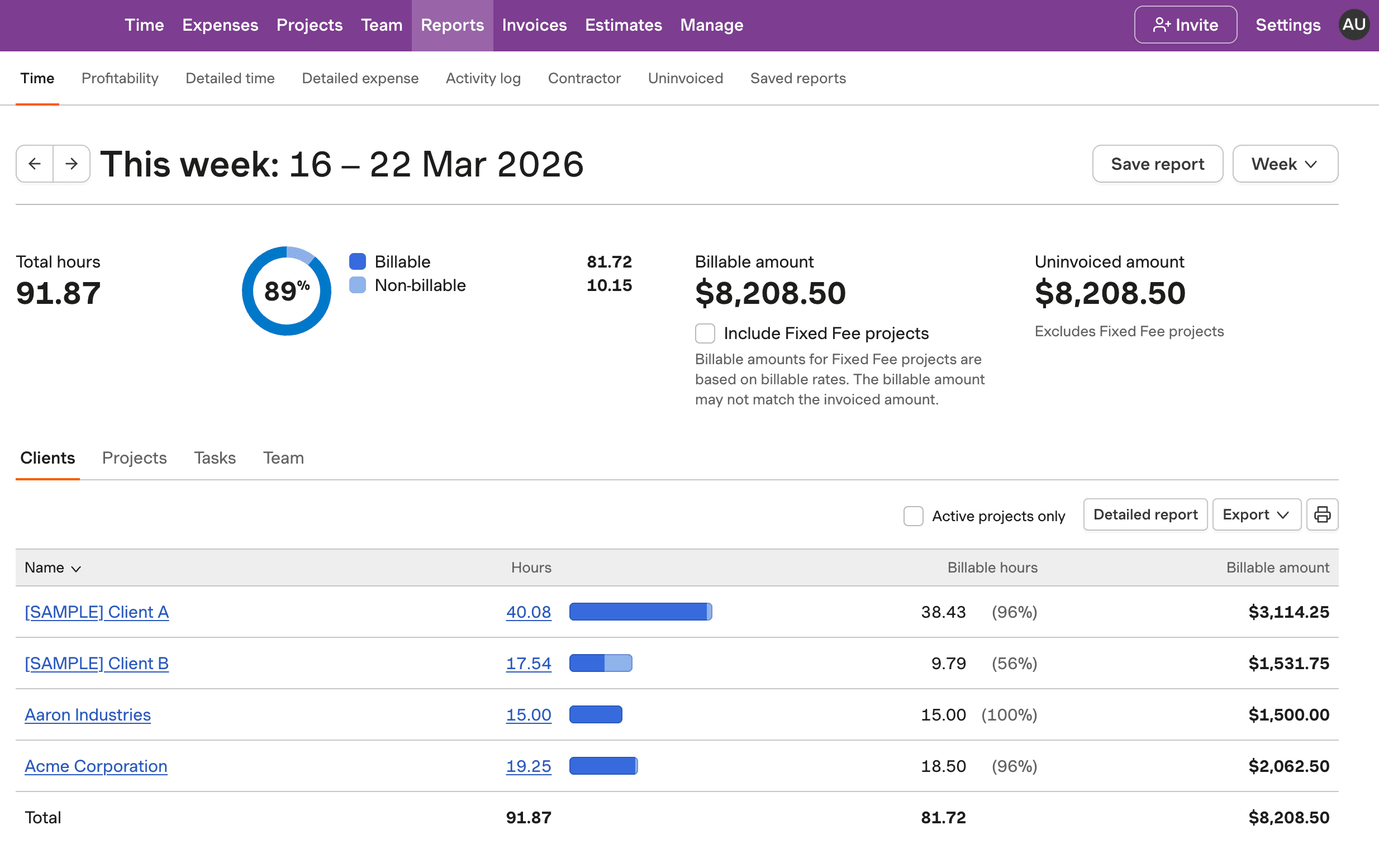
Comparing Features: Billable Hours Calculator vs. Excel

When comparing features, dedicated billable hours calculators offer a range of advantages over Excel. Harvest, for example, integrates seamlessly with invoicing and project management tools, providing comprehensive insights that static Excel sheets can't match. These calculators allow for real-time data entry, which is crucial for maintaining accuracy. Statistics show that tracking time on the same day is 67% accurate, a figure that drops significantly when recorded only weekly.

Moreover, Harvest enables users to set alerts for project budgets and track both billable and non-billable hours with flexible per-project rates. This not only enhances accuracy but also compliance with legal standards, such as the U.S. Fair Labor Standards Act. While Excel requires complex formulas and manual updates, Harvest automates these processes, allowing professionals to focus on billable work rather than administrative tasks.

Cost Implications of Using Billable Hours Calculators vs. Excel

When considering cost, Excel's perceived "free" nature can be misleading due to hidden costs associated with errors and lost productivity. Manual tracking errors can cost companies approximately $291 per incident. In contrast, a dedicated tool like Harvest, despite its upfront cost, can reduce these errors and the associated costs significantly. Professionals using such software typically recover an additional 20% of billable hours compared to those using spreadsheets.

Furthermore, the investment in a billable hours calculator often pays off through increased productivity and reduced administrative time. Automated solutions like Harvest reduce time spent on administrative tasks by 50%, freeing up valuable time for more profitable activities. Thus, while the initial investment may be higher, the long-term savings and productivity gains make Harvest a cost-effective choice.

Scenarios Where Billable Hours Calculators Excel

Certain scenarios highlight the superiority of billable hours calculators over Excel. For instance, industries like legal services, where precise tracking of billable hours in 6-minute increments is critical, benefit from dedicated tools like Harvest. These calculators provide real-time visibility and detailed reporting, ensuring compliance and accuracy. In contrast, Excel requires manual setup and lacks the flexibility to handle such specific needs efficiently.

Similarly, for freelancers and consultants managing multiple clients and varying billing rates, Harvest's integration with invoicing software streamlines the billing process. Agencies tracking billable hours against project budgets also find dedicated calculators invaluable. Harvest offers alerts when budgets are nearing limits, ensuring financial health and preventing budget overruns. These scenarios demonstrate the practical advantages of using a dedicated tool over Excel.

Billable Hours Tracking with Harvest

See how Harvest streamlines billable hours tracking with integrations and real-time insights, unlike static Excel spreadsheets.

Screenshot of Harvest billable hours calculator features.

Billable Hours Calculator vs Excel FAQs

  • Using a billable hours calculator like Harvest offers greater accuracy and efficiency compared to Excel. Harvest reduces manual errors, improving accuracy by up to 20% in billable hours recovered. It also integrates with invoicing and project management tools, providing real-time insights that Excel lacks.

  • A billable hours calculator improves accuracy by automating the time tracking process, reducing human error. Harvest's one-click timers and real-time tracking ensure that time is logged as tasks are completed, which is 67% more accurate than end-of-day entries.

  • While there is an upfront cost, using a billable hours calculator like Harvest reduces hidden costs associated with manual errors and lost productivity. Companies typically recover 20% more billable hours, translating into significant financial benefits.

  • Yes, Harvest allows users to track both billable and non-billable hours. This feature helps consultants and agencies maintain profitability by providing insights into time allocation and project budgets.

  • Harvest integrates seamlessly with various tools such as Asana, Trello, and QuickBooks. These integrations streamline workflows by connecting time tracking with project management and accounting, enhancing productivity and accuracy.

  • While Excel seems cost-effective, hidden costs like errors and lost productivity can outweigh its benefits. Manual tracking errors can cost approximately $291 per incident, making dedicated tools like Harvest a more economical choice in the long run.

  • Industries like legal services, consulting, and agencies benefit greatly from using a billable hours calculator. These industries require precise tracking and reporting, which Harvest provides, ensuring compliance and maximizing billable hours.

  • Yes, Harvest is designed to handle complex billing scenarios, such as those in the legal industry requiring tracking in 6-minute increments. It offers flexible rates and detailed reports to meet diverse billing needs effectively.