
Harvest
Time Tracking
Sign up free

Break Calculator for Freshbooks

Harvest is a top choice for teams and freelancers needing precise time tracking and invoicing features, helping minimize errors and maximize billable hours.

Try Harvest Free

How many hours did you work this week?

Enter your clock-in and clock-out times for each day. The calculator handles breaks, overtime, and weekly totals automatically.

Day Clock In Clock Out Break Hours
Total hours this week 0h
Regular hours (≤40) 0h
Overtime hours 0h
Average hours/day 0h
Total break time 0h

Track time automatically with Harvest

Walk through the entire flow below. Start a timer, check your reports, and create a real invoice — all in three clicks.

Go ahead — start tracking!

One click and you're timing. Try it right here: start a timer, add an entry, edit the details. This is exactly how it feels in Harvest.

  • One-click timer from browser, desktop & mobile
  • Works inside Jira, Asana, Trello, GitHub & 50+ tools
  • Duration or start/end — your call
  • Day, week & calendar views to stay on top of it all
  • Friendly reminders so no hour gets left behind
Acme Corp
Website Redesign
Homepage layout revisions
1:24:09
Content Strategy
Blog calendar planning
1:30:00
SEO Audit
Technical audit report
0:45:00
Brand Guidelines
Color system documentation
2:15:00
Logo Concepts
Initial sketches round 1
1:00:00

Understanding Break Time Regulations and Their Impact on Billing

Break time regulations in the United States can significantly impact billing practices, especially when considering both federal and state laws. While the federal Fair Labor Standards Act (FLSA) does not mandate breaks, it does require that short breaks of 5 to 20 minutes be compensated as work hours. In contrast, meal periods typically lasting 30 minutes or more are unpaid if the employee is completely relieved of duties. In states like California, non-exempt workers must receive a 30-minute meal break for shifts over 5 hours and a 10-minute paid rest break for every 4 hours worked.

Non-compliance with these regulations can result in penalties. For instance, California employers must pay an additional hour of regular pay for each day a meal or rest break violation occurs. Understanding these requirements is crucial for businesses to avoid fines and to ensure fair compensation. Different worker classifications, such as hourly or piece-rate, also influence how breaks should be calculated and paid.
Strategies for Accurate Break Time Tracking

Accurate tracking of break times is essential for compliance and proper billing. Real-time tracking, where time is recorded as tasks are performed, enhances accuracy and reduces the risk of under-billing. It’s important to record both the start and end times of breaks to ensure precise calculations. Converting these times into decimal hours, such as translating 30 minutes into 0.50 hours, helps in maintaining clarity and consistency in records.

Implementing best practices for documenting paid versus unpaid breaks, like categorizing them in time tracking software, supports transparent billing. Automated tools can streamline this process by automatically logging hours, deducting unpaid breaks, and generating detailed reports. These practices not only ensure compliance but also help in analyzing non-billable hours for efficiency improvements.

Distinguishing Between Billable and Non-Billable Break Time

Understanding the distinction between billable and non-billable break time is vital for accurate invoicing. Billable hours are directly chargeable to clients for work performed, whereas non-billable hours encompass activities like administrative tasks and breaks. Short breaks (5-20 minutes) are usually considered part of the overall work period and are typically non-billable, while meal breaks can be unpaid and excluded from billable hours.

Clear communication of break policies to clients is essential to manage expectations regarding billing practices. Freelancers and consultants, in particular, often have more flexibility in accounting for breaks, but establishing clear client agreements is crucial to define what constitutes billable time. By clearly differentiating between these categories, businesses can ensure accurate and fair billing.

Leveraging Tools for Efficient Break Calculation and Invoicing

Utilizing tools like automated time tracking software can significantly enhance the efficiency of break calculation and invoicing. These solutions offer features such as automatic break deduction and comprehensive reporting, which streamline both payroll and client invoicing processes. Automated systems reduce errors and save time compared to manual tracking.

Integrated systems that connect time tracking with payroll and accounting software further streamline operations. Although Harvest does not directly integrate with FreshBooks for break-even analysis, it excels in time tracking, offering features like one-click timers and detailed reporting. Leveraging such tools can improve productivity by providing insights into time allocation and helping identify areas for efficiency improvements.

Efficient Time Tracking with Harvest

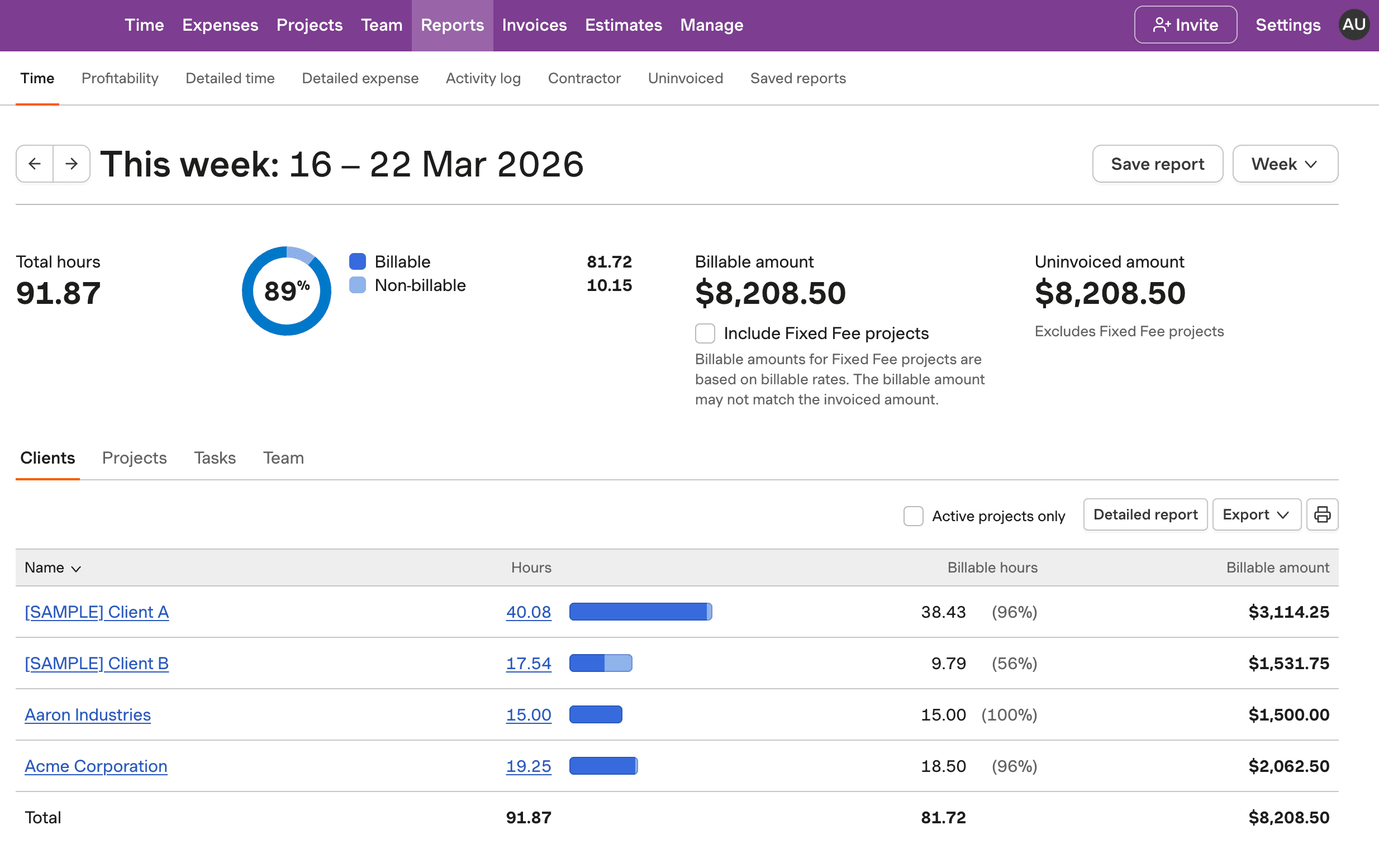
See how Harvest simplifies time tracking with one-click timers and detailed reporting, improving billing accuracy for FreshBooks users.

Harvest time tracking interface for FreshBooks users

Break Calculator for Freshbooks FAQs

  • Breaks can affect billing and invoicing by altering the total hours worked. Short breaks are typically paid and part of work hours, while longer meal breaks might be unpaid. Accurate tracking helps ensure clients are billed appropriately.

  • Federal law does not mandate breaks, but if provided, short breaks (5-20 minutes) must be paid. Meal breaks of 30+ minutes can be unpaid if the employee is relieved of duties. State laws, like those in California, may offer more specific regulations.

  • Accurate break time tracking involves recording the start and end of each break in real-time. Using time tracking software can automate this process, ensuring precise calculations and reducing manual errors.

  • Billable time is chargeable to clients for work done on their behalf, while non-billable time includes internal work, administrative tasks, and breaks. Clear categorization helps in accurate invoicing.

  • Harvest provides tools like one-click timers and detailed reporting, which help in accurately tracking work and break times. Although it doesn't integrate with FreshBooks for break-even analysis, it excels in time tracking.

  • Tracking non-billable time helps identify inefficiencies, optimize resource allocation, and improve profitability by understanding where non-revenue generating time is spent.

  • Freelancers should establish clear agreements with clients about billing for breaks. While short breaks are typically non-billable, clarity in contracts can prevent disputes.