
Harvest
Time Tracking
Sign up free

Break Calculator for Adp

Complement your ADP payroll with precise time tracking. Harvest logs work hours and breaks, giving you clean data for payroll processing.

Try Harvest Free

How many hours did you work this week?

Enter your clock-in and clock-out times for each day. The calculator handles breaks, overtime, and weekly totals automatically.

Day Clock In Clock Out Break Hours
Total hours this week 0h
Regular hours (≤40) 0h
Overtime hours 0h
Average hours/day 0h
Total break time 0h

Track time automatically with Harvest

Walk through the entire flow below. Start a timer, check your reports, and create a real invoice — all in three clicks.

Go ahead — start tracking!

One click and you're timing. Try it right here: start a timer, add an entry, edit the details. This is exactly how it feels in Harvest.

  • One-click timer from browser, desktop & mobile
  • Works inside Jira, Asana, Trello, GitHub & 50+ tools
  • Duration or start/end — your call
  • Day, week & calendar views to stay on top of it all
  • Friendly reminders so no hour gets left behind
Acme Corp
Website Redesign
Homepage layout revisions
1:24:09
Content Strategy
Blog calendar planning
1:30:00
SEO Audit
Technical audit report
0:45:00
Brand Guidelines
Color system documentation
2:15:00
Logo Concepts
Initial sketches round 1
1:00:00

Understanding Federal Break Law Fundamentals

The Fair Labor Standards Act (FLSA) does not mandate that employers provide meal or rest breaks to employees. However, it does outline guidelines for breaks that are offered. Short breaks, lasting between 5 to 20 minutes, are generally considered compensable work hours and must be paid. On the other hand, meal periods longer than 30 minutes can be unpaid, provided the employee is completely relieved of duties. This distinction is crucial for ensuring compliance with overtime calculations.

Special provisions exist within federal law for nursing mothers, requiring employers to provide reasonable break time for expressing breast milk. While the FLSA sets the baseline, many states have enacted their own break and rest laws, adding layers of complexity for employers operating across state lines.
Navigating State-Specific Break Requirements

State-specific laws often require meal and rest breaks, which can vary significantly across the United States. Approximately 32 states have enacted their own break laws, with 21 states mandating meal breaks specifically. States like California, Oregon, and Washington are known for their stringent regulations, requiring both meal and rest breaks. For example, California mandates a 30-minute unpaid meal break for shifts lasting over five hours and a 10-minute paid rest break for every four hours worked.

Non-compliance with these requirements can lead to severe penalties. In Oregon, violations can result in civil penalties of up to $1,000 per incident, while Washington State can impose fines up to $5,000 per violation. Employers must be diligent in adhering to these regulations to avoid such costly repercussions.

Best Practices for Compliant Break Management

To effectively manage employee break times, employers should implement clear, written policies that are communicated to all staff. Accurate record-keeping is essential, especially for unpaid meal breaks, which require employees to clock out and back in. For paid breaks, these should be automatically included in shift hours.

Strategic scheduling can help ensure compliance by staggering break periods and planning them ahead of legal thresholds. Training managers to enforce these guidelines in real-time is also crucial. Leveraging technology, such as time tracking software, can automate the process, reduce manual errors, and ensure compliance with break laws. Regular policy updates reflecting changes in labor laws can further support these efforts.

Special Considerations: Minors and Industry-Specific Rules

Break requirements for minors are often more stringent, with most states mandating meal and rest breaks even where adult breaks are not required. For instance, Utah requires a 30-minute lunch break within 5 hours and a 10-minute rest break for every 4 hours worked for minors under 18. Similarly, Indiana mandates rest breaks totaling at least 30 minutes for minors working six or more consecutive hours.

Industry-specific rules may also apply, adding another layer of complexity. For example, the retail sector may have specific legal requirements, such as Maryland's Healthy Retail Employee Act. Employers in healthcare or transportation may encounter unique regulations due to the nature of their work. Adapting to these nuances is critical for compliance and operational efficiency.

Break Calculator for ADP with Harvest

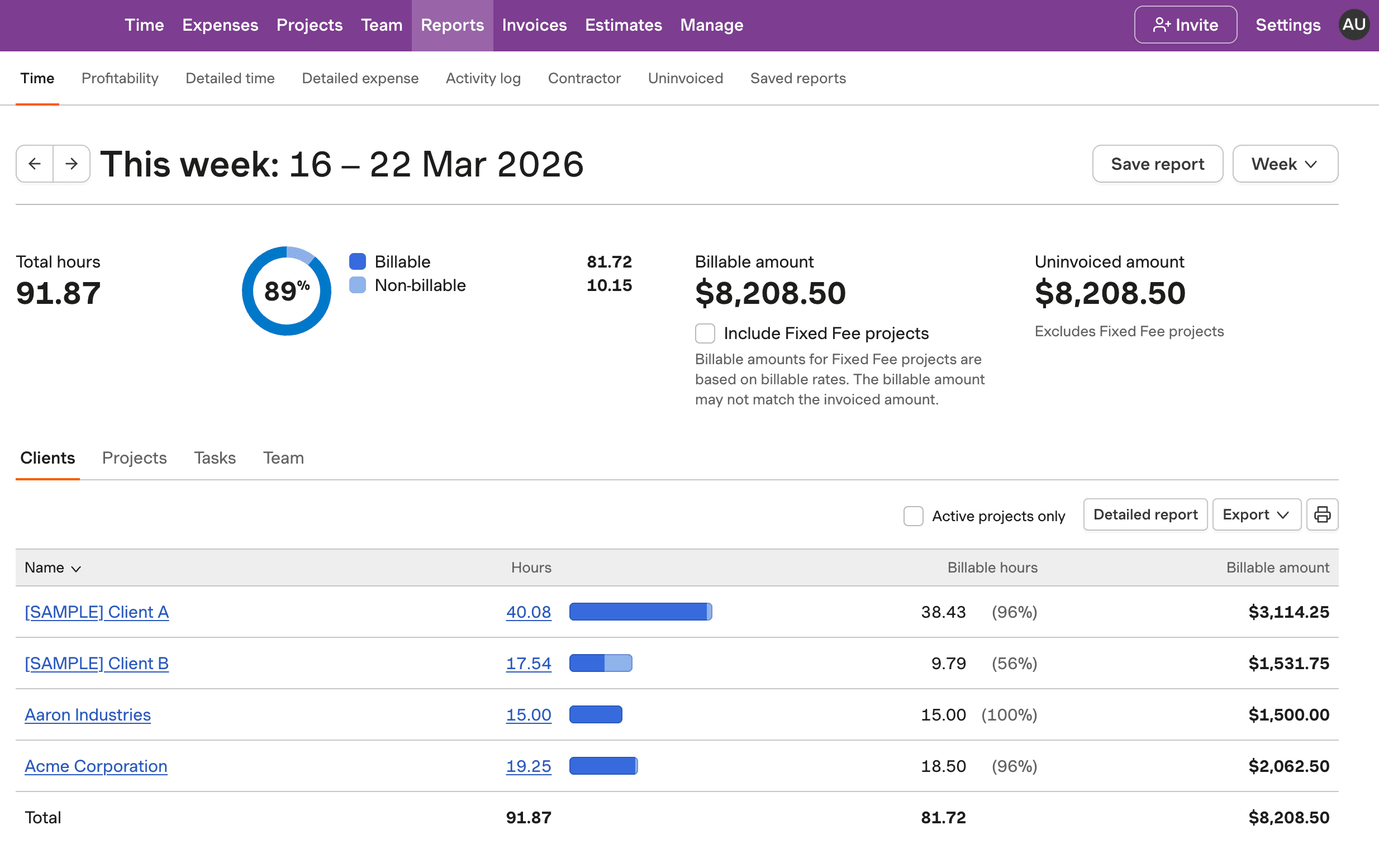
See how Harvest tracks billable hours and generates reports, even though it doesn't calculate breaks. Perfect for teams and freelancers.

Screenshot of Harvest time tracking features for teams.

Break Calculator for Adp FAQs

  • To calculate break time for hourly employees using ADP, you need to first understand the break laws applicable in your state. ADP can help integrate these calculations into your payroll system, ensuring compliance with specific state regulations.

  • Legal requirements for breaks vary by state. While federal law does not mandate breaks, approximately 32 states have their own laws, with 21 mandating meal breaks. States like California require both meal and rest breaks, while others may not have specific requirements.

  • ADP offers solutions to integrate break calculations into payroll processing, ensuring that both paid and unpaid breaks are accurately accounted for according to state laws. This integration helps maintain compliance and streamline payroll operations.

  • Unpaid breaks, such as meal periods longer than 30 minutes, are not included in work hours if the employee is completely relieved of duties. Accurate timekeeping is essential to ensure that these breaks do not affect payroll calculations negatively.

  • To track breaks using ADP, employees can clock out for unpaid meal breaks and back in when returning to work. For paid breaks, this time should be automatically included in their work hours. ADP's time tracking tools can help automate this process.

  • Yes, most states have stricter break requirements for minors than for adults. For example, minors in Utah must receive a 30-minute lunch break within 5 hours and a 10-minute rest break for every 4 hours worked.

  • If an employee is required to work during a break, even an unpaid meal break, that time must be counted as compensable work time. Employers should ensure employees are fully relieved of duties during unpaid breaks to avoid compliance issues.