
Harvest
Time Tracking
Sign up free

Exempt vs Non Exempt Overtime

Harvest simplifies time tracking for exempt and non-exempt employees, ensuring accurate billing and compliance with FLSA overtime rules.

Try Harvest Free

What will your overtime pay be?

Calculate regular and overtime earnings based on your hours and rate. Supports standard time-and-a-half and double-time multipliers.

$
Standard is 40 hours/week (FLSA threshold)
1.5x
1.5x = time and a half (most common). 2x = double time (CA after 12h, holidays).
Some states require 2x pay after 12 hours/day or on 7th consecutive day.
Total gross pay $0
Regular pay $0
Overtime pay (1.5x) $0
Double-time pay (2x) $0
Effective hourly rate $0

Track overtime hours with Harvest

Walk through the entire flow below. Start a timer, check your reports, and create a real invoice — all in three clicks.

Go ahead — start tracking!

One click and you're timing. Try it right here: start a timer, add an entry, edit the details. This is exactly how it feels in Harvest.

  • One-click timer from browser, desktop & mobile
  • Works inside Jira, Asana, Trello, GitHub & 50+ tools
  • Duration or start/end — your call
  • Day, week & calendar views to stay on top of it all
  • Friendly reminders so no hour gets left behind
Acme Corp
Website Redesign
Homepage layout revisions
1:24:09
Content Strategy
Blog calendar planning
1:30:00
SEO Audit
Technical audit report
0:45:00
Brand Guidelines
Color system documentation
2:15:00
Logo Concepts
Initial sketches round 1
1:00:00

Understanding Exempt vs Non-Exempt Employee Classifications

The distinction between exempt and non-exempt employees under U.S. labor law fundamentally impacts how overtime pay is handled. Exempt employees are not entitled to overtime pay under the Fair Labor Standards Act (FLSA), while non-exempt employees are. This classification affects how businesses manage payroll and labor costs, which are crucial for accurate time tracking and cost allocation in service-based industries.

Exempt employees must meet specific criteria, including earning a predetermined salary above a certain threshold. As of July 1, 2024, this threshold will be $844 per week, increasing to $1,128 per week on January 1, 2025. These employees typically perform executive, administrative, or professional duties and are not required to track hours for payroll purposes, although businesses often do so for project management and client billing purposes.

Non-exempt employees, however, are eligible for overtime pay at a rate of 1.5 times their regular pay for hours worked over 40 in a week. Accurate time tracking is legally required to ensure compliance with wage laws, influencing how businesses calculate and set their billing rates for clients.
Legal Implications of Employee Misclassification

Misclassifying an employee as exempt when they should be non-exempt can lead to significant legal and financial repercussions. Employers may be liable for unpaid overtime wages, liquidated damages, and civil penalties, which can severely impact a business's financial health. For instance, penalties can include back pay for up to three years, doubling of unpaid wages, and civil fines up to $1,000 per offense.

Compliance with both federal and state laws is crucial, as some states have more stringent requirements than the FLSA. Employers must adhere to the law that offers greater employee protection. This necessitates robust time tracking and payroll systems that ensure accurate classification and compensation, safeguarding the business against potential legal challenges.

Harvest, while not directly involved in legal classifications, aids in maintaining meticulous time records that support compliance and accurate billing, protecting businesses from costly errors.

Impact on Billing and Invoicing Practices

The classification of employees as exempt or non-exempt significantly influences billing and invoicing practices in service industries. Non-exempt employees require precise time tracking to ensure accurate overtime payments, which directly affects billing rates and client invoices. For instance, agencies must factor in potential overtime costs when setting rates to maintain profitability.

Exempt employees, while not tracked for overtime, also contribute to client projects where their time must be accurately recorded for billing purposes. Harvest offers seamless time tracking capabilities, ensuring that all hours, whether billable or non-billable, are logged accurately to support transparent and detailed client invoicing.

With Harvest, businesses can streamline the billing process, ensuring that all tracked time is properly accounted for, leading to clear and dispute-free client invoices.

State and Federal Compliance for Overtime Pay

Compliance with both federal and state overtime regulations is non-negotiable for U.S. businesses. The FLSA sets the baseline, but state laws can impose additional requirements, such as different salary thresholds or overtime calculations. Employers must comply with the law that provides the greater benefit to the employee.

For example, while the FLSA sets the federal minimum wage at $7.25 per hour, some states have higher minimum wages. Similarly, the federal salary threshold for overtime exemption is set to rise, but some states may have already implemented higher thresholds. This necessitates businesses to stay informed and adjust their payroll practices accordingly.

Harvest's robust time tracking system helps businesses maintain accurate records, facilitating compliance with varying state and federal regulations and ensuring accurate employee compensation and client billing.

Manage Exempt vs Non-Exempt Time with Harvest

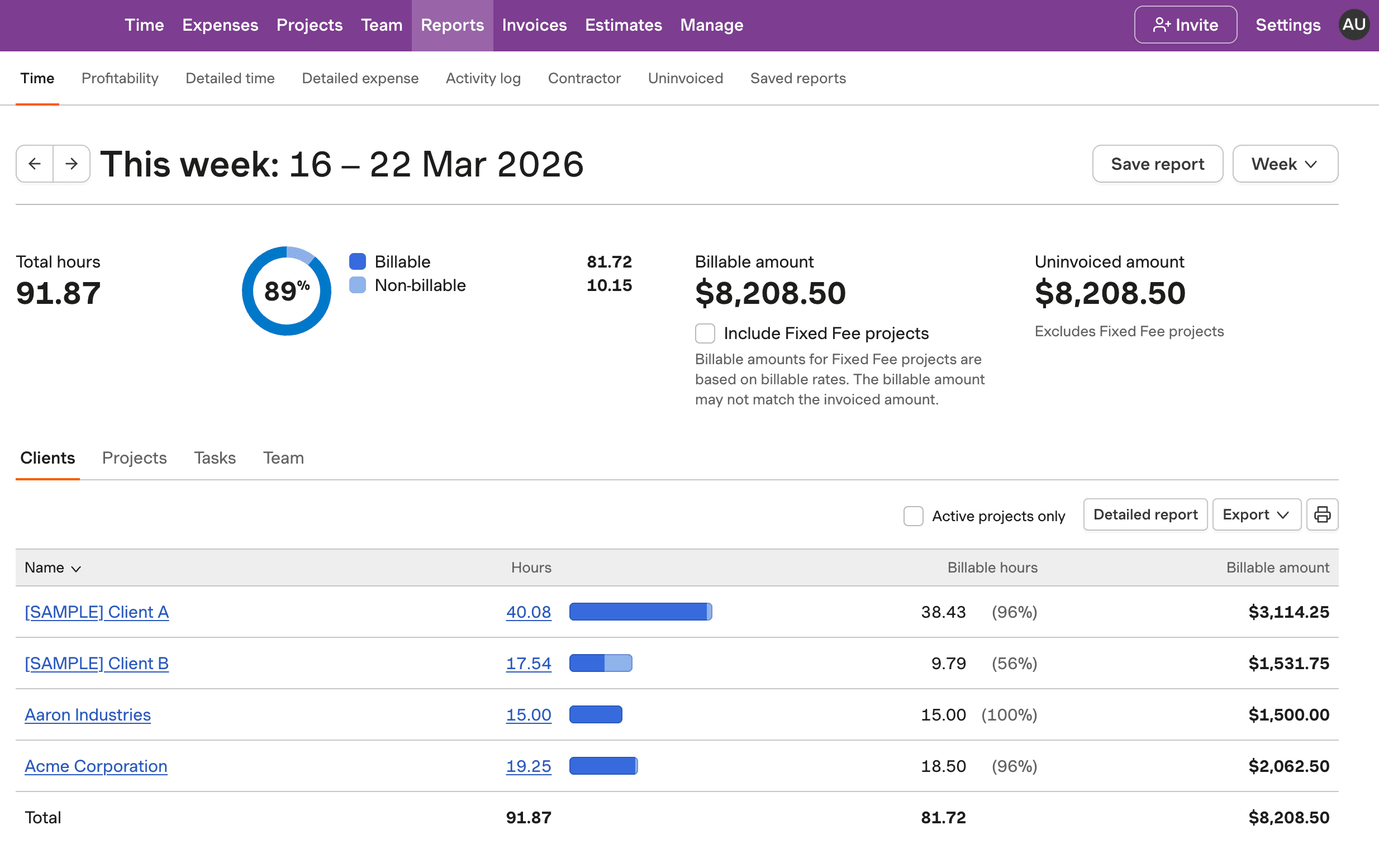
See how Harvest tracks time for exempt and non-exempt employees, ensuring accurate billing and legal compliance.

Harvest interface for managing exempt and non-exempt employee time tracking.

Exempt vs Non Exempt Overtime FAQs

  • An exempt employee is not entitled to overtime pay under the Fair Labor Standards Act (FLSA). They must meet criteria including a minimum salary threshold, which will be $844 per week starting July 1, 2024, and perform specific job duties like executive or professional tasks.

  • A non-exempt employee is entitled to overtime pay for hours worked over 40 in a week at a rate of 1.5 times their regular pay. They must be accurately tracked for payroll compliance under the FLSA.

  • State laws may impose additional requirements or protections beyond the FLSA, such as higher salary thresholds for exemption. Employers must comply with the laws that provide the greater benefit to the employee.

  • Misclassification can lead to penalties including back pay for overtime, liquidated damages, and civil fines up to $1,000 per offense. This underscores the need for accurate employee classification and tracking.

  • Harvest allows businesses to track the time of exempt employees for project management and billing purposes, even though it's not required for payroll. This aids in accurate client invoicing and profitability analysis.

  • Yes, Harvest supports accurate time tracking for both exempt and non-exempt employees, facilitating compliance with FLSA overtime regulations and ensuring precise billing.

  • The salary threshold for exempt status is set to increase to $844 per week on July 1, 2024, and to $1,128 per week on January 1, 2025. Employees must earn above these thresholds to qualify as exempt.