
Harvest
Time Tracking
Sign up free

How to Calculate Profit Margin in the Middle East

Harvest empowers businesses in the Middle East to calculate accurate profit margins by managing VAT on invoices, crucial for regions like the UAE and KSA.

Try Harvest Free

How much revenue is your team leaving on the table?

Most agencies run at 55-60% utilization. Even a small improvement means significant revenue. See what closing the gap looks like for your team.

Number of people who track billable time
$
Blended rate across roles (junior, senior, lead)
55%
Percentage of total hours that are billable. Industry average is 55-60%.
75%
A realistic target for service businesses is 70-80%.
Monthly revenue gap $0
Revenue at current utilization $0/mo
Revenue at target utilization $0/mo
Extra billable hours needed per person/day 0h
Annual revenue opportunity $0

Start tracking team utilization

Walk through the entire flow below. Start a timer, check your reports, and create a real invoice — all in three clicks.

Go ahead — start tracking!

One click and you're timing. Try it right here: start a timer, add an entry, edit the details. This is exactly how it feels in Harvest.

  • One-click timer from browser, desktop & mobile
  • Works inside Jira, Asana, Trello, GitHub & 50+ tools
  • Duration or start/end — your call
  • Day, week & calendar views to stay on top of it all
  • Friendly reminders so no hour gets left behind
Acme Corp
Website Redesign
Homepage layout revisions
1:24:09
Content Strategy
Blog calendar planning
1:30:00
SEO Audit
Technical audit report
0:45:00
Brand Guidelines
Color system documentation
2:15:00
Logo Concepts
Initial sketches round 1
1:00:00

Understanding Profit Margins: A Key Metric for Business Success in the Middle East

Profit margins are vital indicators of a business's financial health and strategic efficacy, especially in the competitive markets of the Middle East. Understanding the different types of profit margins—gross, operating, and net—is crucial for businesses aiming to thrive in this region. Gross profit margin is calculated as (Revenue - Cost of Goods Sold) ÷ Revenue × 100 and measures profitability after direct costs. Operating profit margin takes this further by subtracting operating expenses, calculated as (Operating Profit ÷ Revenue) × 100. Finally, net profit margin offers an overall profitability view, calculated as (Net Profit ÷ Revenue) × 100. These metrics help businesses make informed decisions and strategize effectively in the context of local market conditions.

For example, a company operating in the UAE with AED 1,000,000 in revenue and AED 600,000 in costs of goods sold would have a gross profit margin of 40%. By understanding these calculations, businesses can benchmark against industry standards and refine their strategies accordingly.
Navigating Tax Regulations: Impact on Profit Margins in the Middle East

The tax landscape in the Middle East varies significantly across countries, impacting profit margin calculations. In the UAE, a federal corporate tax system was introduced in 2023, with a 9% rate on profits over AED 375,000, affecting how businesses calculate their net profit margins. Conversely, Saudi Arabia imposes a 20% corporate income tax, with higher rates for oil income. Additionally, VAT rates differ; for instance, the UAE maintains a 5% rate, while Saudi Arabia's stands at 15%.

These taxes directly influence profit margins by increasing the cost of operations. For instance, a business in Saudi Arabia with SAR 500,000 in taxable profits would pay SAR 75,000 in corporate tax, affecting its net profit margin. Understanding these regulations is critical for businesses to remain compliant and competitive.

Utilizing the UAE VAT Profit Margin Scheme to Optimize Profits

The UAE's VAT Profit Margin Scheme offers a unique advantage for businesses dealing in specific goods like second-hand items or antiques. This scheme allows VAT to be calculated only on the profit margin, rather than the full selling price, preventing double taxation and potentially increasing net profit margins. For instance, if a reseller buys an antique for AED 10,000 and sells it for AED 15,000, VAT is applied only to the AED 5,000 profit.

Businesses must meticulously track transactions to leverage this scheme effectively. This requires accurate record-keeping and compliance with VAT regulations, ensuring that profit calculations reflect true profitability. By utilizing this scheme, companies can enhance their financial positions and competitive edge in the region.

Adjusting to Regional Dynamics: Challenges and Opportunities in Profit Margin Calculation

The Middle East presents a complex yet rewarding business environment with diverse challenges and opportunities that affect profit margin calculations. Economic diversification efforts, such as the UAE's push into technology and tourism, create new market opportunities, while the oil-dependent economies like Saudi Arabia face unique taxation challenges. For example, oil companies in Saudi Arabia may encounter tax rates as high as 85%, impacting overall profitability.

Moreover, cultural and political factors, such as regional stability and regulatory reforms, play a significant role in shaping business operations. Companies must navigate these dynamics carefully, leveraging local insights and adapting strategies to optimize profit margins. By understanding these factors, businesses can better position themselves for success in the Middle East.

Calculate Profit Margins with Harvest

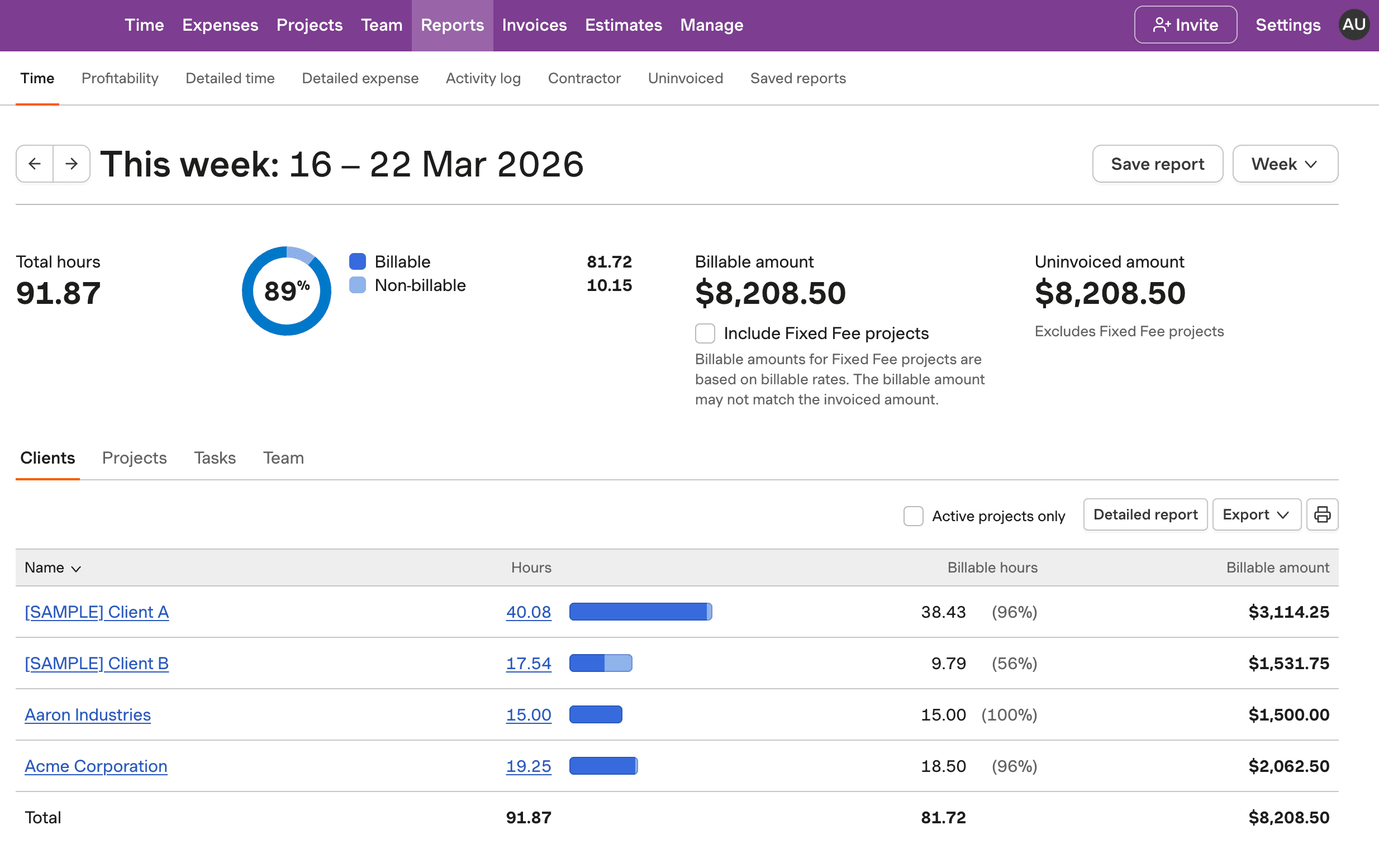
See how Harvest helps businesses in the Middle East manage VAT on invoices, aiding accurate profit margin calculations, especially in the UAE and KSA.

Screenshot of Harvest's interface for profit margin calculations in the Middle East.

How to Calculate Profit Margin in the Middle East FAQs

  • The basic profit margin formulas include gross profit margin: (Revenue - Cost of Goods Sold) ÷ Revenue × 100, operating profit margin: (Operating Profit ÷ Revenue) × 100, and net profit margin: (Net Profit ÷ Revenue) × 100. These help assess different levels of profitability.

  • In the UAE and KSA, VAT increases operational costs, affecting profit margins. The UAE applies a 5% VAT, while KSA's rate is 15%. Proper management of VAT, such as using the VAT Profit Margin Scheme in the UAE, can mitigate its impact on profitability.

  • The UAE VAT Profit Margin Scheme allows VAT to be calculated on the profit margin rather than the full selling price for eligible goods like second-hand items. This helps prevent double taxation and can improve net profit margins.

  • Corporate taxes in the Middle East, such as the UAE's 9% and Saudi Arabia's 20% rates, directly affect net profit margins by increasing expenses. Understanding these rates is crucial for accurate financial planning and compliance.

  • Yes, the Middle East has industry-specific tax rates, especially for oil and gas sectors. For instance, Saudi Arabia and Qatar impose higher taxes on petroleum income, affecting profit calculations significantly.

  • Businesses face challenges like diverse tax laws, regulatory changes, and economic shifts. Adapting to VAT, corporate taxes, and regional dynamics is crucial for accurate profit margin calculations and strategic planning.

  • Harvest aids businesses in managing VAT on invoices, crucial for accurate profit margin calculations in regions like the UAE and KSA. It allows customization per client, addressing regional VAT implications effectively.