
Harvest
Time Tracking
Sign up free

Profit Calculator in the Middle East

Harvest simplifies profit calculations for Middle Eastern businesses by incorporating VAT notes and local regulations, helping you manage finances effectively.

Try Harvest Free

Will this project be profitable?

Estimate your project cost, set the right price, and know exactly how many hours your team can spend before margin disappears.

Total hours across all team members
$
Average rate across all roles on the project
15%
Scope creep is real. Most projects need 10-25% buffer to stay profitable.
Recommended project price $0
Base cost (before buffer) $0
Hours per person per week 0h
Weekly burn rate $0
Max hours before loss 0h

Track project hours with Harvest

Walk through the entire flow below. Start a timer, check your reports, and create a real invoice — all in three clicks.

Go ahead — start tracking!

One click and you're timing. Try it right here: start a timer, add an entry, edit the details. This is exactly how it feels in Harvest.

  • One-click timer from browser, desktop & mobile
  • Works inside Jira, Asana, Trello, GitHub & 50+ tools
  • Duration or start/end — your call
  • Day, week & calendar views to stay on top of it all
  • Friendly reminders so no hour gets left behind
Acme Corp
Website Redesign
Homepage layout revisions
1:24:09
Content Strategy
Blog calendar planning
1:30:00
SEO Audit
Technical audit report
0:45:00
Brand Guidelines
Color system documentation
2:15:00
Logo Concepts
Initial sketches round 1
1:00:00

Understanding Corporate Tax Rates in the Middle East

Businesses operating in the Middle East must navigate a diverse landscape of corporate tax rates, which vary significantly across the region. For instance, the UAE introduced a corporate tax rate of 9% for taxable income exceeding AED 375,000, effective from June 1, 2023. In contrast, Bahrain generally offers a 0% corporate tax, except for oil and gas companies that face a 46% rate. Kuwait applies a uniform 15% corporate tax, while Oman implements a 15% rate for most businesses, with a 3% rate for small companies and a 55% rate for petroleum income. Understanding these rates is crucial for accurate profit calculations and financial planning.

The tax landscape further complicates with Saudi Arabia's 20% corporate income tax on most businesses and higher rates ranging from 50% to 85% for oil and hydrocarbon production. Additionally, Saudi and GCC citizens are subject to 'zakat', a wealth tax at a rate of 2.5% of net worth for individuals and total capital resources for companies. Navigating these varying tax rates is essential for businesses aiming to maximize profits while ensuring compliance with local regulations.
Navigating VAT in the Gulf Cooperation Council

The introduction of Value Added Tax (VAT) in the Gulf Cooperation Council (GCC) countries presents both challenges and opportunities for businesses. The standard VAT rate in the UAE and Saudi Arabia is 5%, applicable to most goods and services since January 1, 2018. However, Bahrain has a higher VAT rate that can reach up to 15%. Understanding these rates is vital for businesses to accurately calculate their profit margins and ensure compliance.

VAT exemptions and zero-rating are also critical considerations. For example, in the UAE, a 0% VAT rate applies to exports, international transport, crude oil and gas, and certain educational and healthcare services. Moreover, transactions in goods between companies in UAE Free Zones may not be subject to VAT, providing strategic benefits for businesses operating in these areas. By leveraging these exemptions, companies can optimize their VAT liabilities and enhance profitability.

Factoring in Marketplace Fees and Currency Fluctuations

For businesses in trading and e-commerce, marketplace fees and currency fluctuations are significant factors impacting profit calculations. Middle Eastern businesses often operate on global platforms where marketplace fees can range from 5% to 15%, affecting the bottom line. Accurately incorporating these fees into profit calculations is crucial for maintaining competitiveness and profitability.

Currency fluctuations also play a critical role, especially for businesses dealing with multiple currencies. The Middle Eastern market is subject to exchange rate volatility, which can impact profit margins. Companies should employ robust financial strategies to mitigate these risks, such as using forward contracts or currency hedging. By understanding and managing these factors, businesses can better protect their profit margins in a dynamic market environment.

Leveraging Harvest for Middle East Profit Calculations

Harvest offers a comprehensive solution for businesses in the Middle East looking to simplify their profit calculations. With its flexible invoicing capabilities, Harvest allows businesses to customize VAT notes, ensuring compliance with regional requirements such as Saudi Arabia's 15% VAT. This feature is essential for businesses that need to accurately reflect VAT considerations in their financial documentation.

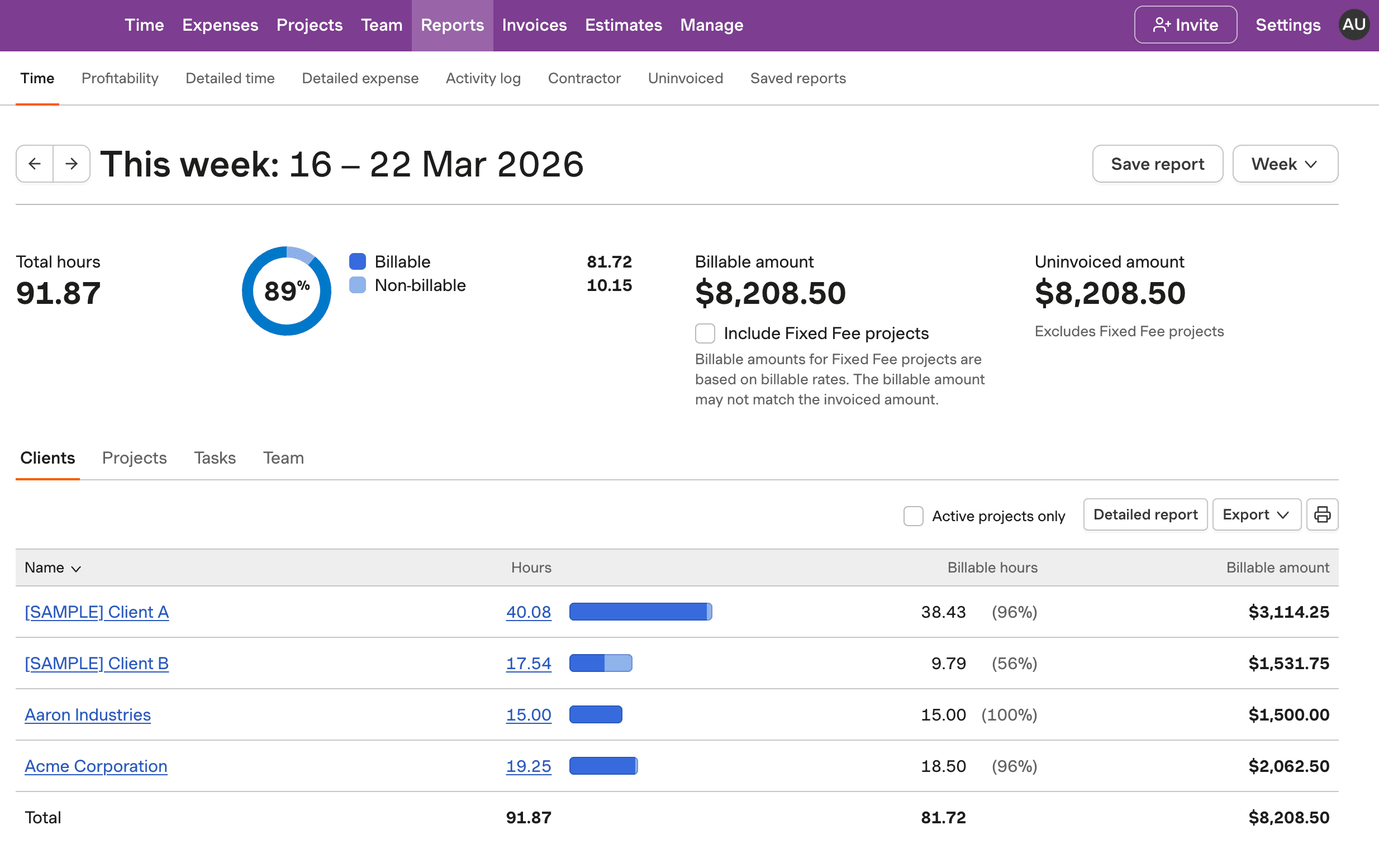
Additionally, Harvest's detailed reporting tools enable businesses to track expenses, manage project budgets, and monitor team utilization effectively. These capabilities are crucial for businesses aiming to optimize their financial strategies and maximize profitability in the Middle Eastern market. By integrating with popular platforms like QuickBooks and Xero, Harvest further streamlines the financial management process, providing businesses with a robust toolset to navigate the complexities of the regional economy.

Maximize Profits with Harvest

See how Harvest helps Middle Eastern businesses calculate profits, incorporating VAT and local fees. Manage your finances seamlessly with Harvest.

Profit calculation tools for Middle Eastern businesses using Harvest.

Profit Calculator in the Middle East FAQs

  • The GCC countries have varying corporate tax rates. The UAE has a 9% tax for income over AED 375,000. Bahrain generally imposes 0% but 46% on oil companies. Kuwait and Oman apply a 15% tax, with Oman offering 3% for small businesses. Saudi Arabia charges 20% on most businesses, with higher rates for oil income.

  • VAT in the Middle East impacts profit calculations by adding a 5% rate in the UAE and Saudi Arabia, and up to 15% in Bahrain, to goods and services. Accurate calculation and compliance are crucial, with exemptions available for certain sectors like exports and international transport.

  • Marketplace fees, ranging from 5% to 15%, can significantly reduce profit margins for businesses in the Middle East. Accurately accounting for these fees is essential to maintain competitiveness and profitability in trading and e-commerce sectors.

  • The VAT rate in the UAE is 5%, applied to most goods and services since January 1, 2018. Businesses in UAE Free Zones may benefit from certain VAT exemptions, optimizing their tax liabilities.

  • Currency fluctuations can impact profit calculations by affecting exchange rates, thus altering the value of revenue and expenses. Businesses should employ strategies like forward contracts to mitigate these risks and protect profit margins.

  • Yes, Harvest allows businesses to include VAT information in their invoices by customizing VAT notes, which is crucial for compliance with local regulations such as Saudi Arabia's VAT requirements.

  • Harvest integrates with popular accounting platforms like QuickBooks and Xero, streamlining financial management and ensuring seamless incorporation of VAT and other financial considerations into profit calculations.