
Harvest
Time Tracking
Sign up free

Timesheet Calculator in Spain

Harvest offers a comprehensive solution for teams in Spain to meet mandatory time tracking regulations, ensuring compliance and transparency.

Try Harvest Free

How many hours did you work this week?

Enter your clock-in and clock-out times for each day. The calculator handles breaks, overtime, and weekly totals automatically.

Day Clock In Clock Out Break Hours
Total hours this week 0h
Regular hours (≤40) 0h
Overtime hours 0h
Average hours/day 0h
Total break time 0h

Track time automatically with Harvest

Walk through the entire flow below. Start a timer, check your reports, and create a real invoice — all in three clicks.

Go ahead — start tracking!

One click and you're timing. Try it right here: start a timer, add an entry, edit the details. This is exactly how it feels in Harvest.

  • One-click timer from browser, desktop & mobile
  • Works inside Jira, Asana, Trello, GitHub & 50+ tools
  • Duration or start/end — your call
  • Day, week & calendar views to stay on top of it all
  • Friendly reminders so no hour gets left behind
Acme Corp
Website Redesign
Homepage layout revisions
1:24:09
Content Strategy
Blog calendar planning
1:30:00
SEO Audit
Technical audit report
0:45:00
Brand Guidelines
Color system documentation
2:15:00
Logo Concepts
Initial sketches round 1
1:00:00

The Legal Imperative: Why Time Tracking is Mandatory in Spain

Time tracking has become a critical requirement for all companies operating in Spain since the introduction of Royal Decree-Law 8/2019 on May 12, 2019. This legislation mandates daily recording of working hours for all employees, including senior executives, to ensure transparency and compliance with labor laws. The primary aims are to prevent unpaid overtime and enforce adherence to working hour limits. Non-compliance with these regulations can lead to significant fines ranging from €1,000 to €10,000 per affected employee, underscoring the importance of accurate time tracking.

The law applies universally across sectors, sizes, and contract types, including full-time, part-time, and remote workers. As the law evolves, companies must transition from manual to digital systems by January 2026, further emphasizing the need for objective, reliable, and tamper-proof solutions to avoid hefty penalties.
The Digital Transformation: Spain's 2026 Mandate

By January 2026, Spain will require all businesses to adopt digital time tracking systems, phasing out paper-based and manual methods. This shift is part of a broader effort to enhance transparency and accountability in labor practices. Digital systems must be tamper-proof and allow remote access for the Labour and Social Security Inspectorate (ITSS), ensuring records are readily available for inspection.

These systems must also support the 'right to disconnect,' ensuring employees are not penalized for ignoring work communications outside of official hours. Implementing such systems is not only a legal obligation but a strategic move to safeguard against potential fines and improve workforce management.

Core Compliance Requirements: What to Record and How to Manage It

To comply with Spanish labor laws, companies must meticulously record specific data: the exact start and end times of each workday, total daily hours worked, and any breaks considered as working time. These records must be stored securely for at least four years and be accessible to employees, their representatives, and labor inspectors. Monthly summaries should accompany each payslip to maintain transparency.

Employers must ensure that employees can access their own records in real-time. This accessibility is crucial for fostering trust and ensuring compliance. The digital systems used must prevent unauthorized modifications, maintaining integrity and traceability of records.

Implementing a Compliant Digital Time Tracking System

Choosing the right digital time tracking system is crucial for compliance with Spanish regulations. Companies should evaluate solutions based on their size, work model (on-site, remote, hybrid), and compliance features. Systems should support employee-driven entries, traceability of changes, and automatic calculation of regular and overtime hours.

It's essential to develop internal policies and protocols for time registration in consultation with worker representatives. Training employees on the new system is also critical to ensuring smooth adoption and compliance. Effective communication and education can help mitigate resistance and facilitate a seamless transition to compliant digital time tracking.

Timesheet Calculator with Harvest

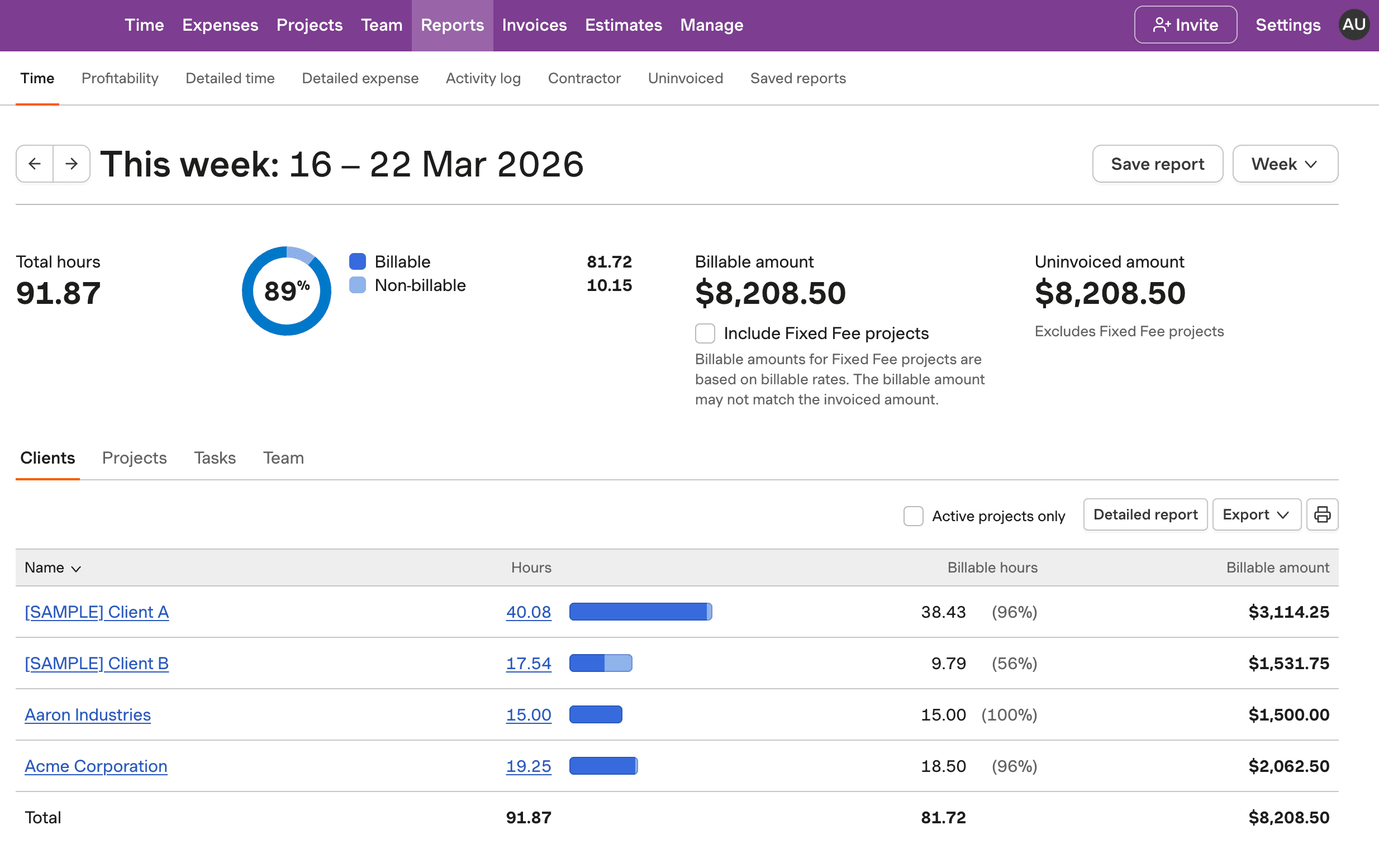
See how Harvest helps teams in Spain comply with labor laws, tracking hours, breaks, and overtime accurately.

Harvest timesheet calculator for Spanish labor compliance

Timesheet Calculator in Spain FAQs

  • Yes, since Royal Decree-Law 8/2019, time tracking is mandatory for all companies in Spain, regardless of their size or sector. This includes all types of employee contracts, such as full-time, part-time, and remote workers.

  • Companies must record the exact start and end times of each workday, total daily hours, and any breaks that count as working time. This ensures compliance with Spanish labor laws and transparency for employees.

  • Harvest offers time tracking features that can be adapted to comply with Spanish regulations, providing a reliable digital solution to record work hours, breaks, and overtime accurately.

  • Yes, companies that fail to comply with time tracking regulations in Spain face significant fines, ranging from €1,000 to €10,000 per affected employee, depending on the severity and recurrence of the offense.

  • Yes, Harvest is suitable for remote work time tracking, allowing employees and employers to maintain accurate records that comply with Spanish labor laws, even when working remotely.

  • The 'right to disconnect' ensures that employees are not obligated to respond to work-related communications outside of their working hours. This is part of Spain's labor laws to protect employee personal time.