
Harvest
Time Tracking
Sign up free

Utilization Rate Calculator for Solopreneurs

Many solopreneurs struggle with optimizing their working hours for profitability. Harvest helps track utilization rates to maximize billable time.

Try Harvest Free

How much revenue is your team leaving on the table?

Most agencies run at 55-60% utilization. Even a small improvement means significant revenue. See what closing the gap looks like for your team.

Number of people who track billable time
$
Blended rate across roles (junior, senior, lead)
55%
Percentage of total hours that are billable. Industry average is 55-60%.
75%
A realistic target for service businesses is 70-80%.
Monthly revenue gap $0
Revenue at current utilization $0/mo
Revenue at target utilization $0/mo
Extra billable hours needed per person/day 0h
Annual revenue opportunity $0

Start tracking team utilization

Walk through the entire flow below. Start a timer, check your reports, and create a real invoice — all in three clicks.

Go ahead — start tracking!

One click and you're timing. Try it right here: start a timer, add an entry, edit the details. This is exactly how it feels in Harvest.

  • One-click timer from browser, desktop & mobile
  • Works inside Jira, Asana, Trello, GitHub & 50+ tools
  • Duration or start/end — your call
  • Day, week & calendar views to stay on top of it all
  • Friendly reminders so no hour gets left behind
Acme Corp
Website Redesign
Homepage layout revisions
1:24:09
Content Strategy
Blog calendar planning
1:30:00
SEO Audit
Technical audit report
0:45:00
Brand Guidelines
Color system documentation
2:15:00
Logo Concepts
Initial sketches round 1
1:00:00

Understanding Utilization Rate for Solopreneurs

Utilization rate is a pivotal metric for solopreneurs, reflecting the percentage of available working hours spent on revenue-generating activities. Calculating this rate helps solopreneurs assess their efficiency and profitability. The formula is straightforward: (Total Billable Hours / Total Available Working Hours) x 100. For instance, if a solopreneur works 40 hours weekly and dedicates 30 to billable tasks, the utilization rate is 75%.

Understanding what constitutes billable and non-billable hours is crucial. Billable hours include direct client work, like project planning and execution, while non-billable hours cover essential tasks such as administration and marketing. Optimizing the balance between these is key to maximizing profitability. Many solopreneurs aim for a utilization rate between 75% and 85%, balancing productivity and avoiding burnout.
Calculating Your Utilization Rate: A Step-by-Step Guide

Calculating your utilization rate involves a few key steps. First, define your total available hours, considering a realistic work capacity and accounting for breaks and holidays. Next, track your time meticulously, distinguishing between billable and non-billable tasks. Utilizing digital tools or manual logs can enhance accuracy.

Once your time is tracked, sum the hours spent on billable work and apply the utilization formula. For example, working 20 billable hours in a 40-hour week results in a 50% utilization rate. Regularly reviewing and analyzing this rate helps identify inefficiencies and areas for improvement. Benchmarking against industry standards—typically 70-85%—can guide your target setting.

Optimizing Your Utilization Rate as a Solopreneur

Optimizing utilization involves streamlining workflows and reducing time spent on low-value tasks. Automation tools can handle administrative duties, freeing up time for billable work. Solopreneurs should also focus on effective project scoping and client communication to enhance efficiency.

Harvest supports solopreneurs by tracking both billable and non-billable hours, offering insights to maximize billable time. With project budgets and alerts, Harvest helps set realistic capacity limits based on personal work habits and client demands. Continuous skill development further increases billable value, contributing to a healthier utilization rate.

The Impact of Utilization Rate on Profitability

A strong utilization rate directly affects profitability. Solopreneurs who actively track this metric see a 15–25% improvement in project profitability. For instance, increasing utilization from 65% to 75% at a $100 hourly rate can yield an additional $20,800 annually.

Harvest provides detailed reporting to analyze utilization trends over time, aiding in strategic decision-making. Understanding how non-billable hours impact profitability can guide adjustments to time management strategies, ensuring sustainable growth. Solopreneurs who balance productivity with personal well-being are better positioned to scale their businesses effectively.

Utilization Rate Calculator for Solopreneurs with Harvest

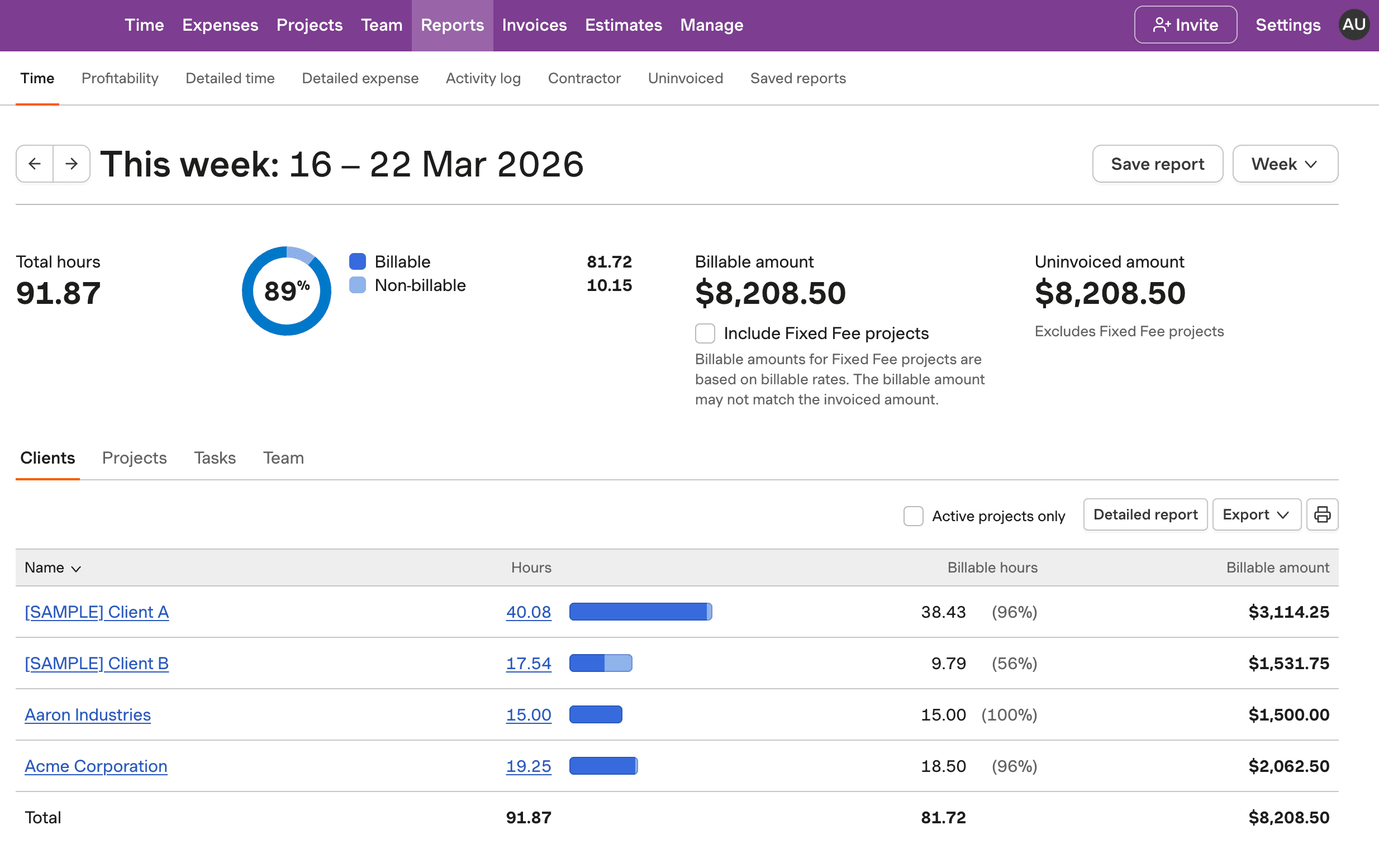
See how Harvest tracks and analyzes your solopreneur utilization rate for better efficiency and profitability.

Screenshot showing Harvest's utilization rate calculator for solopreneurs

Utilization Rate Calculator for Solopreneurs FAQs

  • A good utilization rate for solopreneurs typically falls between 75% and 85%. This range balances high productivity with avoiding burnout. Rates above 85% might indicate overutilization, while rates below 70% could suggest inefficiencies.

  • To calculate your utilization rate, divide your total billable hours by your total available working hours and multiply by 100. For example, if you work 40 hours weekly and spend 30 on billable tasks, your utilization rate is 75%.

  • Tracking utilization rate is crucial for solopreneurs as it measures efficiency and profitability. A higher utilization rate can significantly boost earnings by ensuring more time is spent on revenue-generating activities.

  • To improve your utilization rate sustainably, streamline workflows, automate administrative tasks, and focus on strategic project selection. Tools like Harvest help track and optimize both billable and non-billable hours to maximize productivity.

  • Tools like Harvest offer detailed reports and flexible time tracking to help solopreneurs calculate their utilization rates. These tools track both billable and non-billable hours, providing insights for better time management.

  • Harvest tracks non-billable hours, providing valuable insights into their impact on overall profitability. This helps solopreneurs optimize their time management, ensuring more focus on revenue-generating activities.

  • Yes, Harvest enables solopreneurs to set realistic capacity limits using project budgets and alerts tailored to their work habits and client demands, ensuring balanced workloads and preventing burnout.