
Harvest
Time Tracking
Sign up free

Billable Hours Calculator for Solopreneurs

Solopreneurs often struggle with accurate time tracking, risking undercharging for their services. Harvest provides a seamless solution for tracking billable hours, ensuring fair compensation and financial clarity.

Try Harvest Free

What should you charge per hour?

Most freelancers and consultants dramatically undercharge. This calculator accounts for what most people miss: non-billable time, taxes, and overhead.

$
Accounting for vacation, holidays, sick days
60%
Most freelancers can bill 50-70% of their time. The rest goes to admin, marketing, proposals, and learning.
$
Software, insurance, equipment, accounting, taxes beyond income tax, etc.
Your break-even rate $0
Recommended rate (+20% buffer) $0
Billable hours per week 0h
Equivalent daily rate $0

Start tracking your billable hours

Walk through the entire flow below. Start a timer, check your reports, and create a real invoice — all in three clicks.

Go ahead — start tracking!

One click and you're timing. Try it right here: start a timer, add an entry, edit the details. This is exactly how it feels in Harvest.

  • One-click timer from browser, desktop & mobile
  • Works inside Jira, Asana, Trello, GitHub & 50+ tools
  • Duration or start/end — your call
  • Day, week & calendar views to stay on top of it all
  • Friendly reminders so no hour gets left behind
Acme Corp
Website Redesign
Homepage layout revisions
1:24:09
Content Strategy
Blog calendar planning
1:30:00
SEO Audit
Technical audit report
0:45:00
Brand Guidelines
Color system documentation
2:15:00
Logo Concepts
Initial sketches round 1
1:00:00

Understanding Billable Hours for Solopreneurs

Billable hours are the cornerstone of a solopreneur's revenue, encompassing time spent on tasks like project deliverables, client communication, and research. However, it's crucial to balance these with non-billable activities such as marketing and administrative tasks, which are necessary but don't directly generate income. Most solopreneurs find that they can realistically sustain only 25 to 30 billable hours per week, as attempting to bill for more can lead to burnout. Maintaining a healthy billable to non-billable ratio, ideally around 60% to 70%, ensures operational efficiency and profitability.

Research indicates that delayed tracking of billable hours can result in losing more than 10% of potential revenue. Without accurate tracking, solopreneurs risk undercharging clients, ultimately affecting their bottom line. Therefore, adopting a robust time tracking tool like Harvest can help solopreneurs log time accurately, capturing every billable hour and maximizing revenue potential.
Calculating Your Hourly Rate as a Solopreneur

Determining the right hourly rate is essential for solopreneurs looking to cover expenses and achieve desired income levels. Start by calculating your annual costs, including fixed expenses and business overhead. Add your targeted personal income to these costs to determine your total annual financial needs. Next, estimate your annual billable hours realistically. Most solopreneurs bill between 1,000 and 1,500 hours per year, factoring in vacations and non-billable tasks.

Divide your total annual financial needs by your estimated billable hours to find your base hourly rate. It's wise to add a buffer or profit margin to this rate, accommodating unexpected costs and ensuring a healthy business reinvestment. For instance, if your annual costs plus desired income total $75,000 and you aim to bill 1,200 hours, your base rate should be around $62.50 per hour. A tool like Harvest allows you to monitor and adjust your rates based on real-time insights into billable versus non-billable time.

Maximizing Billable Hours with Effective Tracking

Accurate time tracking is critical for solopreneurs to ensure they are compensated fairly for their work. To maximize billable hours, it's vital to define billable tasks upfront and choose a consistent tracking method. Harvest offers one-click timers, making it easy to log hours in real-time, reducing the risk of losing track of billable work. This precision helps prevent the loss of up to 70% of potential revenue due to delayed timesheet entries.

Solopreneurs should categorize every time entry, marking it as either billable or non-billable. This practice not only aids in understanding where time is spent but also helps in generating detailed reports to identify productivity bottlenecks. By automating non-billable tasks and setting daily or weekly billable hour targets, solopreneurs can optimize their workflow and improve their overall profitability. Harvest's integration capabilities with popular tools like Asana and Slack further streamline time tracking processes.

Pricing Strategies for Solopreneurs

Setting the right pricing strategy is as important as tracking time accurately. Solopreneurs must decide whether to charge hourly rates or use flat rates for projects. While hourly rates provide flexibility and ensure compensation for time spent, flat rates can appeal to clients seeking budget certainty. Regularly reviewing and adjusting your rates is crucial, especially as your experience grows or market conditions change.

Consider industry-specific rates to remain competitive. For instance, in the U.S., the average freelance hourly rate is around $48, while tech and software professionals might charge between $20-$150+ per hour. By leveraging insights from tools like Harvest, solopreneurs can track their effective hourly rate, which accounts for unpaid work, and adjust their pricing strategies to align with their financial goals and market standards.

Calculate Billable Hours with Harvest

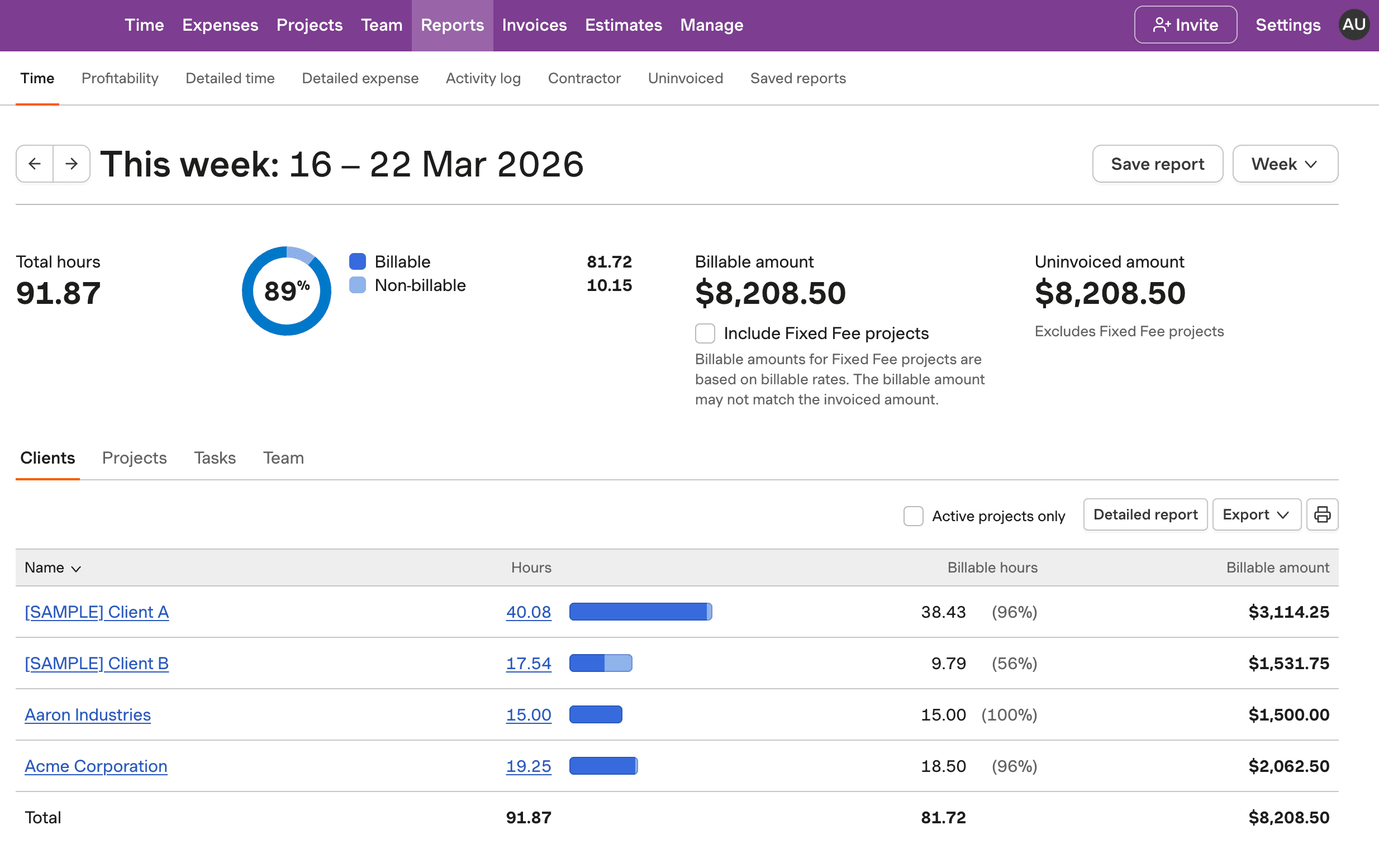
Harvest's tool helps solopreneurs accurately calculate billable hours, set competitive rates, and track time efficiently, ensuring fair compensation.

Screenshot of Harvest tool for calculating billable hours for solopreneurs.

Billable Hours Calculator for Solopreneurs FAQs

  • Solopreneurs calculate their hourly rate by adding annual costs and desired income, then dividing by estimated billable hours. Typically, solopreneurs bill 1,000 to 1,500 hours per year.

  • Billable tasks include work on client deliverables, project planning, and client communication. Non-billable tasks, like marketing and administration, don't directly generate income but are crucial for business operations.

  • Solopreneurs can improve time tracking by using real-time tracking tools like Harvest, which offers one-click timers for precise logging, reducing the risk of lost billable hours.

  • A healthy billable to non-billable ratio for solopreneurs is around 60% to 70%. Falling below 50% can indicate excessive administrative overhead impacting earnings.

  • Harvest tracks non-billable hours, providing insights into how they impact overall income. This helps solopreneurs manage their time better and focus on maximizing billable work.

  • Industry-specific rates vary widely. For example, freelance rates range from $48 per hour in the U.S. to $20 in Asia-Pacific. Solopreneurs should align rates with industry standards to remain competitive.

  • Yes, Harvest integrates with popular tools like Asana, Slack, and QuickBooks, helping solopreneurs streamline workflow and enhance productivity through seamless time tracking.