
Harvest
Time Tracking
Sign up free

Utilization Rate Calculator in Russia

In Russia, understanding and optimizing utilization rates is crucial for firms aiming to maximize profitability. Harvest offers tools to accurately track and manage these metrics.

Try Harvest Free

How much revenue is your team leaving on the table?

Most agencies run at 55-60% utilization. Even a small improvement means significant revenue. See what closing the gap looks like for your team.

Number of people who track billable time
$
Blended rate across roles (junior, senior, lead)
55%
Percentage of total hours that are billable. Industry average is 55-60%.
75%
A realistic target for service businesses is 70-80%.
Monthly revenue gap $0
Revenue at current utilization $0/mo
Revenue at target utilization $0/mo
Extra billable hours needed per person/day 0h
Annual revenue opportunity $0

Start tracking team utilization

Walk through the entire flow below. Start a timer, check your reports, and create a real invoice — all in three clicks.

Go ahead — start tracking!

One click and you're timing. Try it right here: start a timer, add an entry, edit the details. This is exactly how it feels in Harvest.

  • One-click timer from browser, desktop & mobile
  • Works inside Jira, Asana, Trello, GitHub & 50+ tools
  • Duration or start/end — your call
  • Day, week & calendar views to stay on top of it all
  • Friendly reminders so no hour gets left behind
Acme Corp
Website Redesign
Homepage layout revisions
1:24:09
Content Strategy
Blog calendar planning
1:30:00
SEO Audit
Technical audit report
0:45:00
Brand Guidelines
Color system documentation
2:15:00
Logo Concepts
Initial sketches round 1
1:00:00

Understanding Utilization Rates in Russia

Utilization rates are crucial metrics for professional services firms in Russia, helping them maximize profitability by tracking billable hours. In Russia, these rates are typically between 70% and 80% for successful consulting companies, with junior consultants targeting 75-85% and senior consultants aiming for 70-80%. Practice leaders often have lower targets, ranging from 40-60%. Understanding these benchmarks is essential for optimizing team performance and ensuring competitive service delivery in the Russian market.

While there are no specific regulations governing the calculation of utilization rates, the output from these calculations plays a vital role in invoicing and tax compliance. For instance, the calculated billable hours contribute to drafting the "Act of acceptance of services," a key document for service acknowledgment in Russia. This document is followed by a VAT invoice (schyot-faktura), which is critical for tax deductions.
Calculating Utilization Rates: Tools and Techniques

Calculating utilization rates involves determining the ratio of billable hours to total hours worked. This calculation is pivotal for firms aiming to track employee productivity and enhance profitability. A typical formula used in Russia is: Utilization Rate = (Billable Hours / Total Hours) x 100. Achieving the ideal utilization rate, often pegged at 70-80%, ensures that firms are optimizing their workforce efficiency.

While there are no dedicated Russian regulations for utilization rate calculators, these tools are widely adopted within professional services to streamline operations. By using a utilization rate calculator, firms can quickly assess their current performance against industry benchmarks and make data-driven decisions to improve their operational efficiency. These calculations directly impact invoicing processes, ensuring compliance with local tax regulations.

Regulatory Considerations for Utilization in Russia

In Russia, although there are no specific regulations for utilization rate calculators, understanding the broader regulatory environment is crucial for compliance. The Federal Tax Service (FTS) oversees e-invoicing standards, mandating that electronic invoices be generated in XML format with Russian language tags. These invoices must be transmitted through certified Electronic Document Exchange Operators (EDEOs) and authenticated with qualified electronic signatures.

Recording accurate utilization rates is vital, as this data feeds into the "Act of acceptance of services" and subsequent VAT invoices. The standard VAT rate in Russia is 20%, with a projected increase to 22% by 2026, making accurate invoicing critical for maintaining tax compliance. Firms must ensure all documentation aligns with the Universal Transfer Document (UTD) standards set by the FTS.

Practical Applications of Utilization Rates

Utilization rates are not just theoretical metrics; they have practical applications that affect various aspects of a business's financial health. In Russia, these rates guide professional services firms in managing resources and setting strategic goals. For example, a firm with a utilization rate below the industry standard may need to adjust staffing or client engagement strategies to boost profitability.

Furthermore, utilization rates influence billing cycles and payment terms. Firms often adopt a 30/70 payment structure—30% at order and 70% upon completion of services—to manage cash flow effectively. In a volatile currency environment, many Russian businesses prefer transactions in USD or EUR over RUB, impacting how utilization rates are calculated and applied to billing practices.

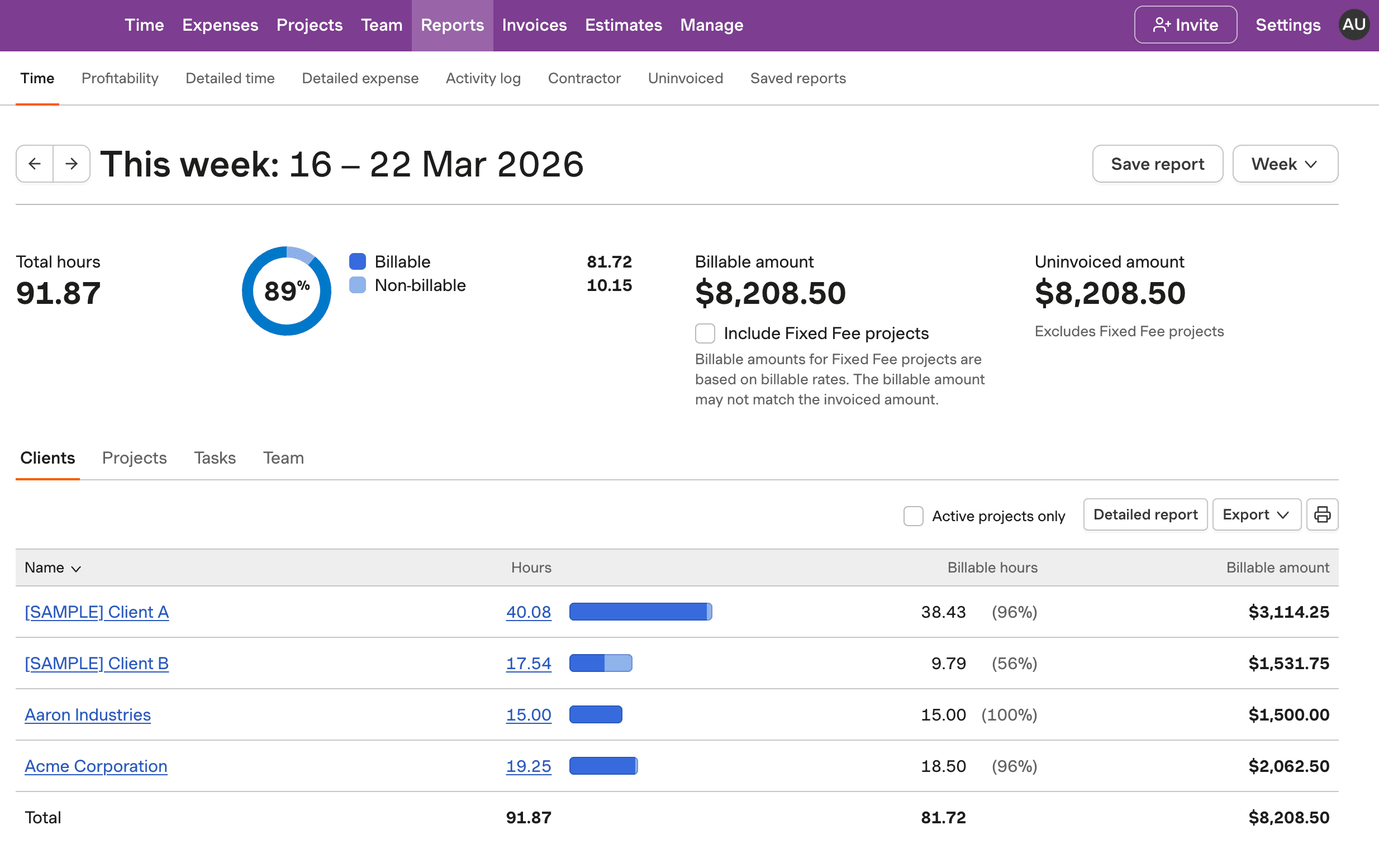
Utilization Rate Calculation with Harvest

See how Harvest helps calculate utilization rates, optimizing billable hours for Russian businesses.

Screenshot of Harvest's utilization rate calculator for Russian businesses

Utilization Rate Calculator in Russia FAQs

  • The utilization rate in Russia is calculated as: Utilization Rate = (Billable Hours / Total Hours) x 100. This formula helps firms track productivity and optimize profits.

  • While there are no specific regulations for utilization rates, the data informs invoicing, which must comply with Russian tax standards, including VAT documentation.

  • Factors include vehicle availability, route efficiency, and scheduling. Optimizing these can significantly improve utilization rates and transport efficiency.

  • Government policies affect utilization rates mainly through tax regulations, such as VAT requirements, which influence invoicing and profitability calculations.

  • Yes, many online platforms offer free utilization rate calculators. Harvest provides tools to track and optimize utilization rates effectively.

  • Harvest helps by offering detailed time tracking and reporting tools that allow firms to accurately calculate and optimize utilization rates for improved profitability.

  • Yes, Harvest allows you to track expenses alongside time, providing comprehensive data for calculating utilization rates and managing project budgets effectively.