
Harvest
Time Tracking
Sign up free

Overtime Calculator for Adp

Overtime calculation can be complex, but Harvest's integration with ADP simplifies it by automating payroll processes and ensuring compliance with FLSA standards.

Try Harvest Free

What will your overtime pay be?

Calculate regular and overtime earnings based on your hours and rate. Supports standard time-and-a-half and double-time multipliers.

$
Standard is 40 hours/week (FLSA threshold)
1.5x
1.5x = time and a half (most common). 2x = double time (CA after 12h, holidays).
Some states require 2x pay after 12 hours/day or on 7th consecutive day.
Total gross pay $0
Regular pay $0
Overtime pay (1.5x) $0
Double-time pay (2x) $0
Effective hourly rate $0

Track overtime hours with Harvest

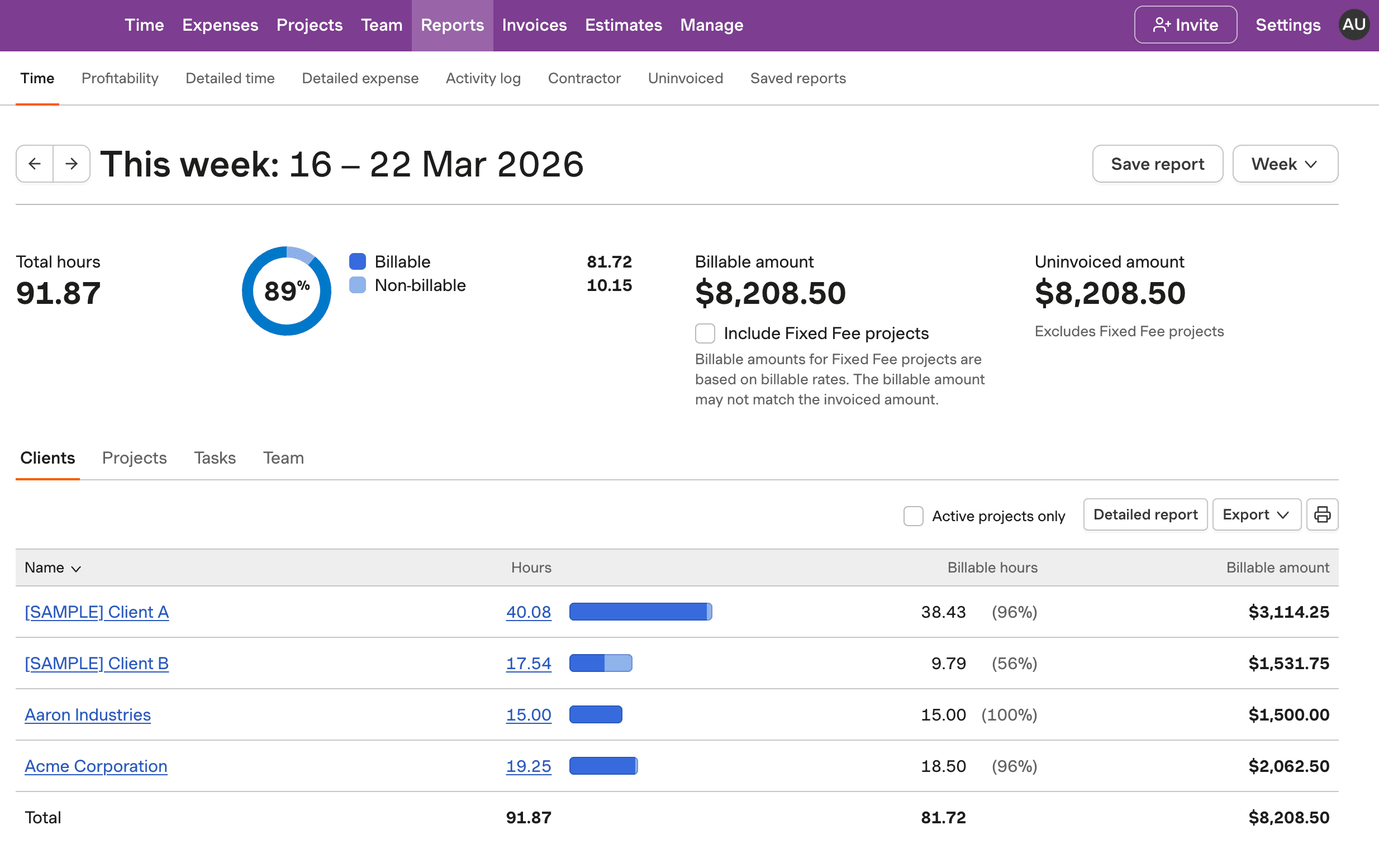
Walk through the entire flow below. Start a timer, check your reports, and create a real invoice — all in three clicks.

Go ahead — start tracking!

One click and you're timing. Try it right here: start a timer, add an entry, edit the details. This is exactly how it feels in Harvest.

  • One-click timer from browser, desktop & mobile
  • Works inside Jira, Asana, Trello, GitHub & 50+ tools
  • Duration or start/end — your call
  • Day, week & calendar views to stay on top of it all
  • Friendly reminders so no hour gets left behind
Acme Corp
Website Redesign
Homepage layout revisions
1:24:09
Content Strategy
Blog calendar planning
1:30:00
SEO Audit
Technical audit report
0:45:00
Brand Guidelines
Color system documentation
2:15:00
Logo Concepts
Initial sketches round 1
1:00:00

Understanding Overtime Calculation in ADP

Calculating overtime accurately is crucial for compliance with the Fair Labor Standards Act (FLSA). Under the FLSA, non-exempt employees must receive overtime pay at a rate of 1.5 times their regular rate for hours worked over 40 in a workweek. ADP's payroll system facilitates this calculation by allowing employers to define workweeks and correctly categorize employees as exempt or non-exempt. It's important to accurately track all hours worked to ensure compliance. For instance, ADP can assist in maintaining the accuracy needed for the 168-hour workweek standard defined by the FLSA.

Employers also need to consider state-specific regulations that might require overtime for work on the seventh consecutive day or for daily hours exceeding a certain threshold. ADP's payroll system can be configured to automatically account for these variations, ensuring that all legal requirements are met. Properly setting up your ADP system with these parameters helps mitigate the risk of compliance issues.
Factors Affecting Overtime Calculations

Several factors can influence how overtime is calculated in ADP, including the determination of an employee's regular rate of pay. This rate includes not only hourly wages but also other forms of compensation like non-discretionary bonuses and commissions. For example, if an employee receives a $100 production bonus, this must be factored into the regular hourly rate calculation. ADP's payroll system allows employers to input these additional compensations to ensure accurate overtime calculations.

It's also essential to distinguish between discretionary and non-discretionary bonuses, as only the latter affect overtime pay. ADP can help manage these nuances by providing tools to categorize and include these bonuses in payroll processing. Additionally, employers must maintain accurate records of all employee work hours and compensation elements, which ADP can efficiently manage, aligning with FLSA requirements.

Using ADP for Overtime Management

ADP's payroll system streamlines the management of overtime pay by automating many of the complex calculations and record-keeping requirements mandated by the FLSA. With ADP, employers can set workweek parameters, classify employees correctly, and ensure that all hours worked over 40 in a workweek are automatically calculated at the correct overtime rate. This reduces the administrative burden and minimizes the risk of errors that could lead to non-compliance penalties.

Moreover, ADP supports state-specific overtime rules, such as double-time pay or daily overtime, by allowing customization within the payroll settings. This flexibility ensures that businesses can adhere to varying regional labor laws without manual intervention. By leveraging ADP's robust payroll capabilities, employers can focus on strategic business operations while ensuring legal compliance with overtime regulations.

Harvest's ADP Integration

See how Harvest integrates with ADP to streamline overtime calculations, ensuring accurate and compliant payroll processes.

Screenshot of Harvest integration with ADP for overtime calculation

Overtime Calculator for Adp FAQs

  • To calculate overtime using ADP, set up your system to define workweeks and categorize employees correctly. ADP will automatically calculate overtime at 1.5x the regular rate for hours over 40 per week, ensuring compliance with FLSA standards.

  • Factors include the regular rate of pay, which must account for non-discretionary bonuses and commissions. ADP allows input of these compensations to ensure accurate overtime calculations, aligning with FLSA requirements.

  • Yes, ADP can be configured to accommodate state-specific regulations, such as daily overtime or double-time requirements. This ensures compliance with both federal and regional labor laws.

  • ADP helps maintain accurate payroll records by automating time tracking and compensation calculations. This aligns with FLSA's record-keeping requirements, ensuring all data is preserved and accessible.

  • Employers are obligated to pay for all overtime hours worked, even if they were not pre-approved, as long as the employer knew or should have known the work was done. ADP can help track and document these hours effectively.

  • Yes, ADP allows employers to include non-discretionary bonuses in overtime calculations, ensuring that the regular rate of pay is accurately determined for compliance with overtime laws.

  • Harvest integrates with ADP to streamline payroll processes, providing accurate time tracking and record-keeping. This ensures compliance with overtime calculations and helps manage payroll efficiently.