
Harvest
Quotes
Sign up

Bid Software for Government Contractors

Government contractors face complex challenges in bidding for contracts, but Harvest helps by offering tools for tracking project time, managing expenses, and invoicing.

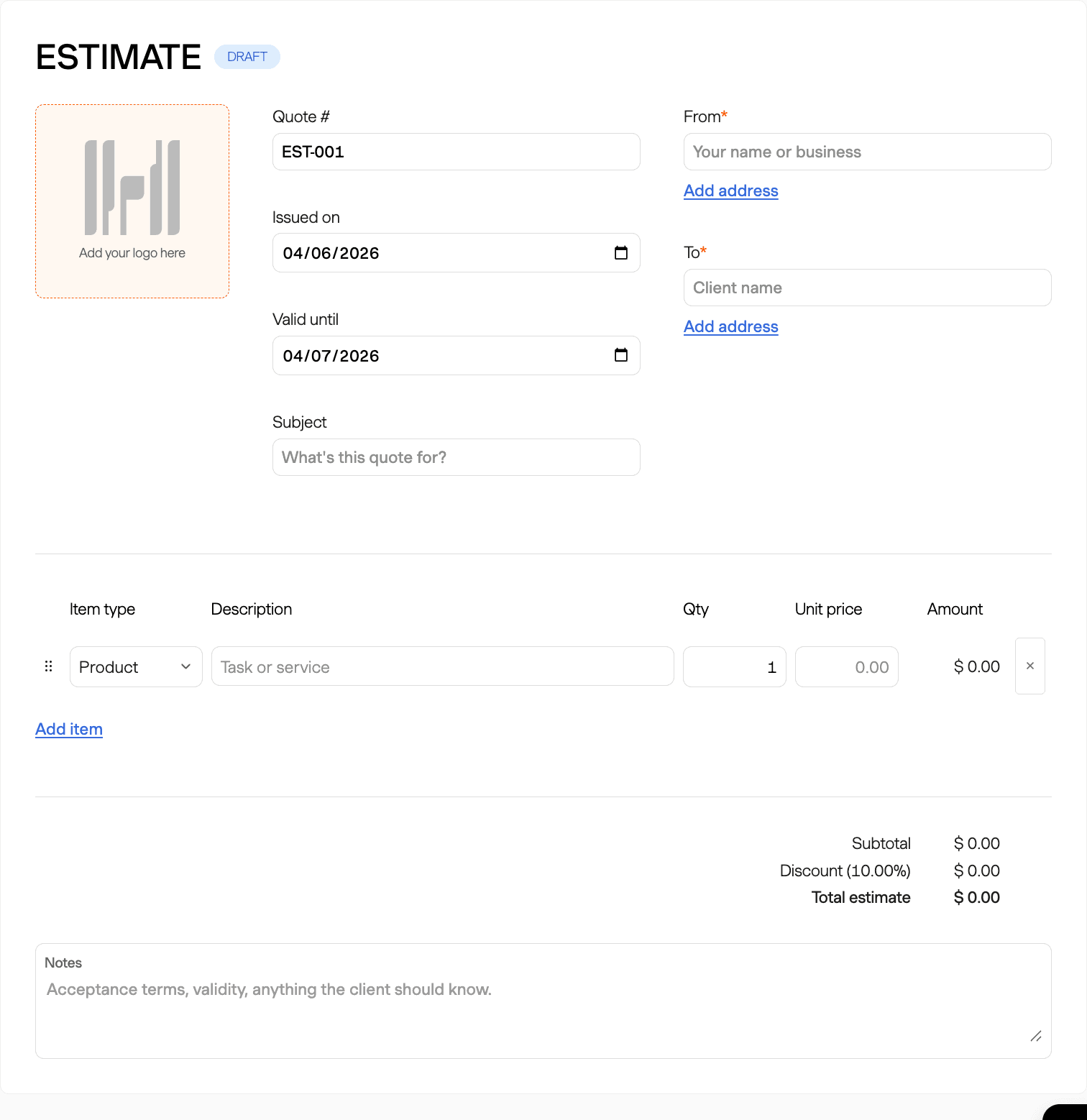
ESTIMATE DRAFT

Add your logo here
Item type
Description
Qty
Unit price
Tax
Amount
Subtotal
$0.00
Discount
$0.00
Total estimate
$0.00
Get paid via:
Credit card / Debit card
ACH
Wire transfer

Customize estimate

Appearance

Add a logo
Show estimate title

Quote settings

Tax Add up to 2 tax rates
%
Discount Apply a discount percentage
%

Understanding the Challenges in Government Contract Bidding

Government contractors face a unique set of challenges when bidding for contracts, primarily due to stringent compliance requirements and the need for precision in proposal submissions. Unlike commercial contracts, government contracts demand rigorous adherence to regulations such as the Federal Acquisition Regulation (FAR) and the Defense Federal Acquisition Regulation Supplement (DFARS). Non-compliance can lead to disqualification, contract termination, and even legal action. Moreover, the increasing emphasis on technology and innovation in government procurement means contractors must stay abreast of trends like digital transformation and AI integration.

Many contractors find that bid software can significantly reduce the manual workload involved in proposal preparation. For instance, one case study showed a 90% reduction in manual work, slashing preparation time from over 100 hours to less than 10 hours. This not only increased proposal capacity but also resulted in a 23% higher win rate. While Harvest does not provide specialized bid management software, it supports government contractors by offering tools for tracking project time, managing expenses, and invoicing, which are crucial for successful contract management.

Maximizing Efficiency with the Right Bid Software

Adopting bid software can streamline the complex processes involved in government contract bidding. These tools help contractors identify opportunities, manage proposals, and ensure compliance with intricate government regulations. In the construction sector, bid software centralizes inputs and automates document assembly, ensuring complete and compliant bids. Municipalities also leverage automated systems to facilitate digital bid submissions and enhance procurement transparency.

For government contractors, choosing the right software is essential. A structured approach involves identifying specific pain points, evaluating software with government-specific features, and ensuring seamless integration with existing systems like CRM and ERP platforms. While Harvest does not specialize in bid software, it provides essential tools for tracking project budgets and expenses, enabling contractors to focus more on proposal quality and compliance.

Ensuring Compliance and Avoiding Common Pitfalls

Compliance is a critical aspect of government contracting, with strict regulations governing every stage of the bidding process. Contractors must adhere to cybersecurity requirements like the Cybersecurity Maturity Model Certification (CMMC) 2.0 and be properly registered with systems such as SAM.gov. Non-compliance, such as missing forms or failing to meet eligibility criteria, can lead to contract loss or disqualification.

To avoid these pitfalls, contractors should utilize software with embedded compliance checks, clause libraries, and audit trails. Although Harvest does not provide these specific compliance tools, it supports contractors by offering detailed time tracking and reporting features, which enhance transparency and facilitate compliance management. By integrating Harvest into their workflow, contractors can maintain accurate project records, aiding in compliance with government regulations.

Leveraging Technology for Competitive Advantage

In the competitive landscape of government contracting, leveraging technology is crucial for gaining an advantage. Industry experts emphasize the importance of precision, strategic thinking, and technological adoption. While AI can accelerate proposal development, human oversight is necessary to avoid generic submissions that lack customization.

Bid software can be a game-changer, enabling contractors to automate repetitive tasks and focus on crafting strong technical proposals that emphasize value over price. Harvest, while not a bid management tool, provides analytics for tracking project budgets and time, allowing contractors to optimize resource allocation and enhance their competitive edge. By focusing on these core areas, Harvest supports contractors in navigating the complex requirements of government contracts.

Strategic Pricing and Proposal Customization

Strategic pricing and proposal customization are vital for success in government contracting. Contractors must adapt their pricing models to account for economic conditions and strategically position their proposals to justify costs. Customization over generic content is key to demonstrating an understanding of the agency's needs and initiatives.

While Harvest does not offer pricing models tailored to government contracts, it aids contractors by providing tools to track billable hours and manage expenses, ensuring that pricing narratives align with cost sheets. By leveraging Harvest's capabilities, contractors can maintain transparency and accuracy in their proposals, ultimately improving their chances of winning government contracts.

Streamline Bidding with Harvest

Explore how Harvest aids government contractors in managing bid processes with essential tools for tracking time, expenses, and invoicing.

Screenshot of Harvest dashboard for government contractor bid management.

Bid Software for Government Contractors FAQs

  • Bid software for government contracts enhances efficiency by automating proposal preparation, reducing manual work by up to 90%, and increasing proposal capacity. This leads to a higher win rate and helps contractors meet compliance requirements more effectively.

  • Bid software improves compliance by embedding checks, maintaining audit trails, and providing regulatory libraries. These features help contractors avoid common errors like missing forms or incorrect formatting, which can lead to disqualification.

  • Government contractors face challenges such as stringent compliance requirements, evolving agency priorities, and the need for precision in proposal submissions. Non-compliance can result in disqualification or contract loss.

  • Look for features like automated document assembly, compliance checks, centralized input management, and integration capabilities. These features help streamline the bidding process and ensure compliance with government regulations.

  • Customization in proposals is crucial to demonstrate an understanding of the agency's needs and objectives. Tailored proposals are more likely to meet specific requirements and stand out against generic submissions.

  • Technology enhances bidding by automating tasks, allowing contractors to focus on strategic proposal development. Tools like AI can accelerate processes, but human oversight ensures proposals are customized and compliant.

  • Strategic pricing is essential to account for dynamic economic conditions and justify costs in proposals. Accurate pricing narratives aligned with cost sheets improve the likelihood of contract success.

  • Harvest enhances transparency through detailed time tracking and reporting features, allowing contractors to maintain accurate project records and comply with government regulations.