
Harvest
Contracts
Sign up

Nda Generator

NDAs are essential for protecting your business's sensitive information, but manual processes are time-consuming. Harvest doesn't generate NDAs, but it can help with related administrative tasks, offering seamless time tracking and invoicing solutions.

Start from a template

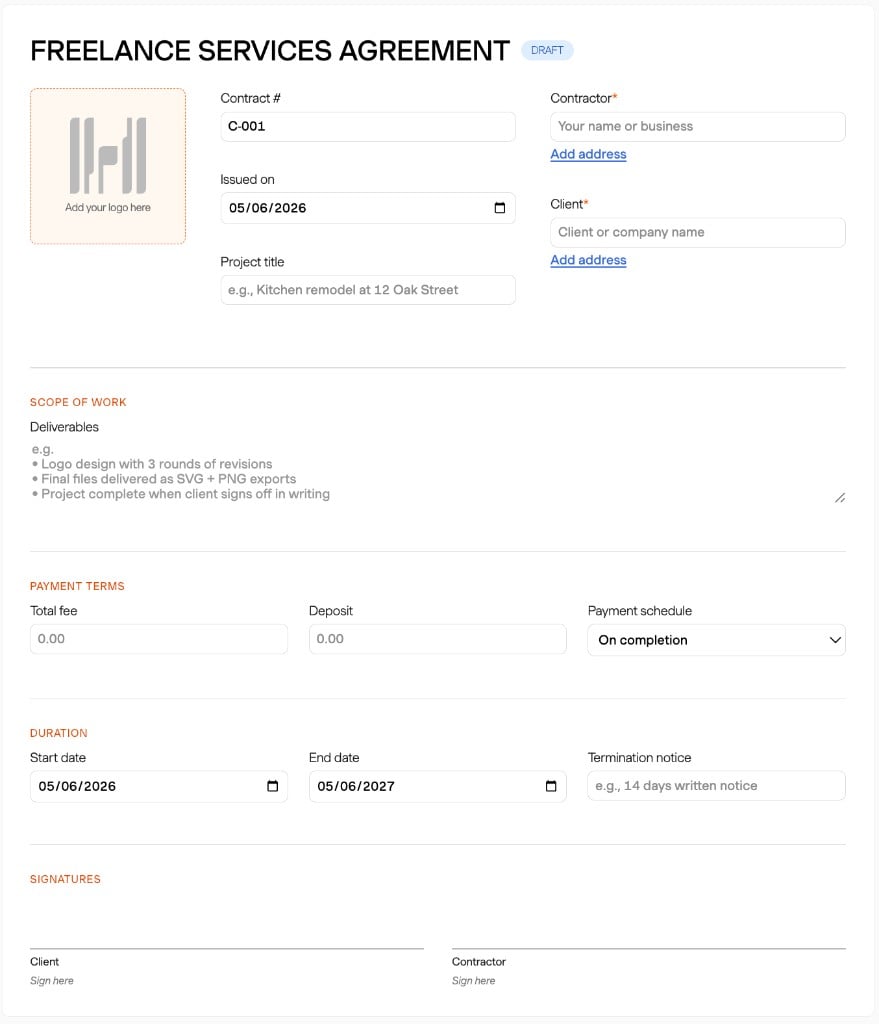
AGREEMENT DRAFT

Add your logo here

Scope of work

Payment terms

Duration

Signatures

Client

Sign here

Contractor

Sign here

Get paid via:
Credit card / Debit card
ACH
Wire transfer

Customize contract

Appearance

Add a logo
Show contract title

Contract settings

Include payment terms Total fee, deposit, and schedule
Include termination clause Notice required to end the contract
Include signature blocks Both parties sign at the bottom

Understanding the Importance of NDAs

Non-disclosure agreements (NDAs) are critical tools for businesses across industries, safeguarding sensitive information such as trade secrets, financial data, and strategic plans. In fact, NDAs account for nearly 30% of a legal team's daily workload in large companies due to their ubiquity and necessity. The high volume of NDAs makes them ideal candidates for automation, as manual handling can be time-consuming and prone to errors. Industry trends indicate that automating NDA processes can reduce contract handling time by up to 50%, significantly boosting productivity.

However, the enforceability of NDAs hinges on clear and specific language. Vague terms or overly broad definitions of confidential information can render an NDA unenforceable. To ensure legal soundness, it's crucial to define the scope of confidential information precisely, identify all parties involved, specify the duration of the agreement, and include critical clauses such as governing law and injunctive relief.

Automating NDA Creation: Key Features

Automating the creation of NDAs can significantly streamline business operations, offering speed and precision that manual processes lack. Automated NDA tools can reduce the time to finalize agreements to as little as two hours, with some systems achieving 100% compliance and up to 400% ROI. These tools often leverage AI to draft, review, and negotiate NDAs faster and more efficiently than traditional methods, freeing up legal teams to focus on higher-value tasks.

Key features to look for in an NDA generator include smart template logic, which allows for conditional clauses based on user input, data mapping to ensure accurate information transfer, and electronic signature integration for quick execution. Additionally, centralized storage in a document management system enables easy tracking and retrieval of executed agreements, enhancing auditability and compliance.

Choosing the Right NDA Generator

When selecting an NDA generator, it's important to consider the level of customization the tool offers. While generic templates can expedite the process, they may not address specific legal requirements or business needs. Experts recommend tailoring agreements to the specific relationship and risk profile rather than relying solely on pre-made templates. This ensures the NDA addresses unique aspects of your business and legal environment, enhancing its enforceability.

Additionally, consider the cost and ease of use. While many tools offer free versions, there may be costs associated with advanced features such as AI-powered review or integration with other business processes. It's also vital to ensure that the tool allows for immediate document downloads without mandatory registration, facilitating quick access and deployment.

Common Pitfalls and How to Avoid Them

Despite their importance, NDAs are often subject to common drafting mistakes that can undermine their enforceability. One frequent issue is using broad definitions of confidential information, which can lead to disputes over scope. Instead, NDAs should clearly define specific categories of data, such as source code or customer lists. Another common mistake is failing to specify the correct legal entities involved, which can affect standing to sue in case of a breach.

Other pitfalls include setting unreasonable durations for confidentiality and disclosing information before the NDA is signed. To avoid these issues, ensure NDAs are signed before any sensitive information is shared. Additionally, verify that the signatories have the authority to bind their respective legal entities, and consider including an injunctive relief clause to stop unauthorized disclosures promptly.

Streamline NDA Creation with Harvest

Explore how Harvest supports your business with efficient administrative solutions, even as you manage NDAs.

Screenshot of NDA generator interface showing document customization options.

Nda Generator FAQs

  • An NDA, or non-disclosure agreement, is a legal contract that protects sensitive information from being disclosed to unauthorized parties. It is crucial for maintaining confidentiality and safeguarding trade secrets, business strategies, and proprietary information.

  • Automation significantly reduces the time and effort required to draft, review, and finalize NDAs. With automation, businesses can cut contract handling time by up to 50%, allowing legal teams to focus on more strategic tasks.

  • When choosing an NDA generator, look for smart template logic, electronic signature integration, and centralized storage for executed agreements. These features enhance efficiency and ensure compliance.

  • Yes, automated NDAs are legally binding as long as they contain clear, specific language and adhere to legal requirements such as defining confidential information, identifying parties, and specifying duration.

  • Common mistakes include using vague definitions of confidential information, failing to specify the correct legal entities, and disclosing information before signing the NDA. These can weaken enforceability.

  • NDAs can be tailored by editing templates to fit specific relationships, risk profiles, and jurisdictions. This customization ensures the agreement meets the unique legal and business requirements of each situation.

  • Breaching an NDA can lead to civil lawsuits, financial damages, and injunctions. In some cases, particularly involving trade secrets, criminal charges may also apply.