
Harvest
Contracts
Sign up

Contract Template for Carpenters

Contracts are vital for carpenters to clearly define work scope and protect their rights. Harvest provides tools to manage project budgets, track time, and invoice clients efficiently.

Start from a template

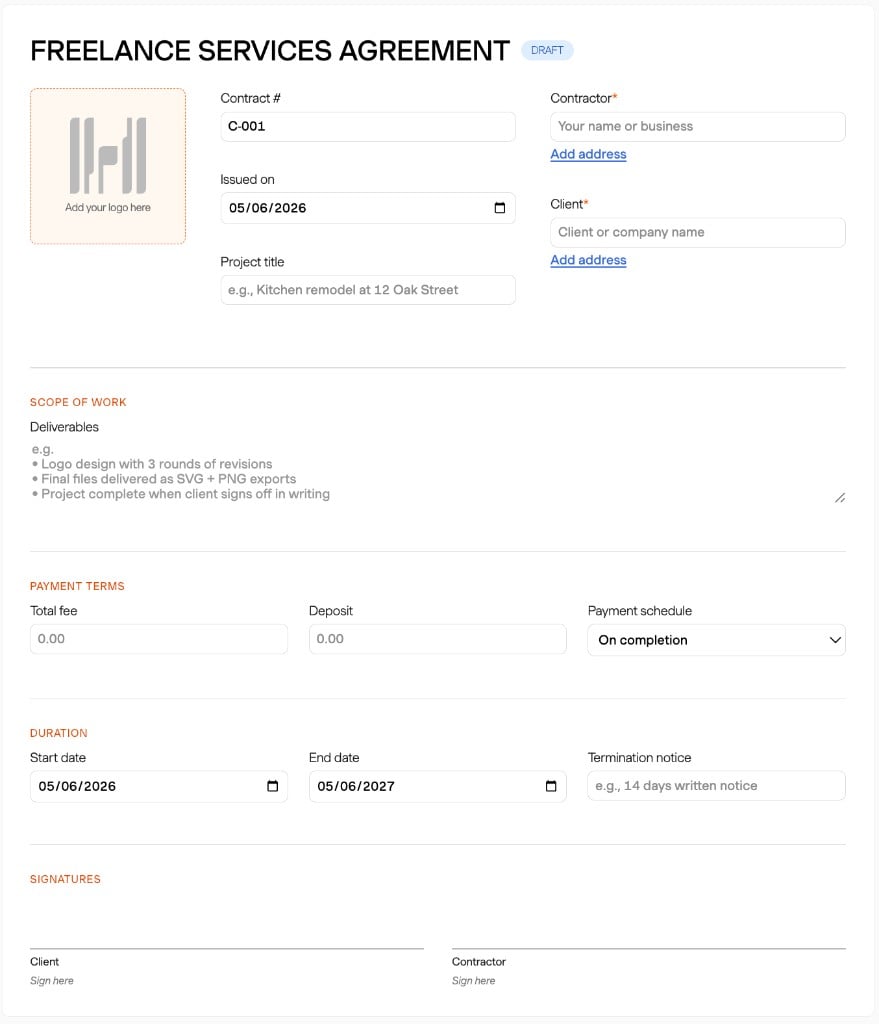
AGREEMENT DRAFT

Add your logo here

Scope of work

Payment terms

Duration

Signatures

Client

Sign here

Contractor

Sign here

Get paid via:
Credit card / Debit card
ACH
Wire transfer

Customize contract

Appearance

Add a logo
Show contract title

Contract settings

Include payment terms Total fee, deposit, and schedule
Include termination clause Notice required to end the contract
Include signature blocks Both parties sign at the bottom

Essential Components of a Carpentry Contract

A well-structured carpentry contract is crucial for defining the scope of work, setting expectations, and protecting both the carpenter and the client. Key components include detailed descriptions of the services and materials required, which help minimize misunderstandings and disputes. For example, an explicit listing of materials, labor, and other expenses ensures clarity and accountability. This is particularly important given that inefficient manual contract management can cost organizations an average of 9.2% of their annual revenue.

Carpentry contracts should also specify payment terms and structures, such as fixed price, cost-plus, or time and materials, to accommodate different project types. According to industry trends, 91% of projects by contractors utilize unit price and lump sum contracts. Harvest supports various payment structures by allowing carpenters to invoice based on tracked time, expenses, or fixed fees, making it easier to manage financial aspects effectively.

Customizing Your Carpentry Contract Template

Customization is key when using a carpentry contract template to ensure it meets the specific needs of your project. This includes adapting clauses for project scope, timelines, and payment schedules based on client requirements and project details. While general templates offer a starting point, it's vital to tailor them to include specific milestones and deliverables.

Using Harvest, carpenters can better manage change orders that often occur during projects. Harvest's change order builder can help manage project scope changes effectively, ensuring that all parties agree on the adjustments. This tool can help reduce the risk of disputes and additional costs, which is crucial in an industry where errors can lead to project delays and cost overruns.

Legal Considerations and Compliance

While carpentry contracts should always address legal requirements, it’s important to consult with a lawyer to ensure compliance with state-specific regulations, such as those introduced in California from January 2026. These include mandatory disclosures and retention caps. Although Harvest does not provide legal advice, it can efficiently manage project budgets and invoicing, which are critical components of a compliant contract.

For example, including a carpenter's license number on all contracts and business documents is a legal requirement that demonstrates professionalism and compliance. Additionally, specifying claims and payment timelines as per legal standards helps maintain transparency and trust with clients. With Harvest, carpenters can ensure accurate invoicing and payment tracking, which supports legal compliance and fosters client trust.

Streamlining Contract Management with Harvest

Managing contracts efficiently can significantly impact a carpenter’s bottom line. By leveraging tools like Harvest, carpenters can streamline contract management processes, reducing the time and cost associated with drafting and reviewing agreements. This is especially beneficial as organizations that use standardized contract templates often experience lower operational costs and improved risk management.

Harvest facilitates the integration of contract management with broader business processes, allowing carpenters to track project budgets, manage expenses, and invoice clients seamlessly. This holistic approach not only enhances efficiency but also helps avoid the financial pitfalls of poor cash flow, a common issue in the construction industry. Given that the median annual wage for U.S. carpenters was $56,350 in 2023, optimizing contract management can have a significant impact on profitability and business sustainability.

Streamline Carpentry Contracts with Harvest

Discover how Harvest helps carpenters manage contracts, track time, and handle invoicing efficiently. Tailor contracts to your project needs.

Screenshot of Harvest's contract template for carpenters.

Contract Template for Carpenters FAQs

  • A comprehensive carpentry contract should include detailed descriptions of services and materials, payment terms, project timeline, and deliverables. It should also specify any clauses related to change orders and dispute resolution.

  • Customizing a carpentry contract involves adding specific project details such as milestones, payment schedules, and deliverables. Tools like Harvest can help manage these details, ensuring accurate project tracking and invoicing.

  • Legal requirements for carpentry contracts vary by state. It's essential to consult with a legal professional to ensure compliance. Harvest helps manage the financial aspects, but legal advice is necessary for contract compliance.

  • Common protective clauses include detailed scope of work, payment terms, timelines, and change order procedures. It's important to include clauses that address disputes and responsibilities clearly.

  • Harvest assists carpenters by providing tools to manage project budgets, track time, and invoice clients. It supports change order management, ensuring project scope changes are documented and agreed upon.

  • Even for small projects, a contract is crucial to prevent disputes, ensure clarity, and foster client trust. It sets clear expectations and provides legal protection for both parties involved.

  • Change orders can significantly affect timelines and costs. Managing them effectively, as supported by tools like Harvest, helps ensure all parties agree on project adjustments, reducing disputes and additional expenses.