
Harvest
Expenses
Sign up

Business Expense Sheet Excel

Harvest helps small businesses manage project expenses with customizable tracking and reporting, offering a superior alternative to Excel.

EXPENSE REPORT DRAFT

Drop your receipts here or click to upload

Images and PDFs (max 10 MB each)

Date
Category
Merchant
Description
Amount
Total
$0.00

Customise report

Appearance

Show report title

Report settings

Why Businesses Rely on Excel for Expense Tracking

Excel remains a staple for tracking business expenses, particularly among small and medium-sized enterprises. Approximately 35.9% of businesses continue to use Excel spreadsheets for financial management. This prevalence is primarily due to Excel’s accessibility, low cost, and flexibility, which are attractive for organizations looking to maintain control over their expenses without investing in complex software solutions.

However, the reliance on Excel does come with its challenges. Studies have shown that about 88% of spreadsheets contain significant errors, leading to inaccurate financial reporting and decisions. Errors in spreadsheets have historically caused substantial financial losses, such as the $1.3 billion error by Fannie Mae. Despite these risks, many businesses prefer Excel for its familiar interface and the ability to customize templates to suit specific needs.
The Hidden Costs of Manual Expense Reporting

The manual nature of Excel-based expense tracking introduces hidden costs that can significantly impact a business’s bottom line. For instance, processing a single expense report manually can cost approximately $20.65, translating to an annual cost of $10,400 per analyst. These costs quickly escalate when considering larger teams.

In addition to direct labor costs, manual reporting can lead to reconciliation errors and duplicate payments, which often go unnoticed. Such inefficiencies can result in a loss of about 20% of business spending. Furthermore, companies report that bad data from spreadsheets costs them an average of $15 million annually. These challenges highlight the need for more streamlined solutions, such as Harvest, which offers customizable expense tracking and reporting to mitigate these issues.

Enhancing Expense Management with Harvest

Harvest provides an effective alternative to traditional Excel spreadsheets by offering customizable expense tracking and reporting features. For businesses looking to manage project expenses and mileage more efficiently, Harvest supports mileage tracking by allowing users to create expense categories with unit prices. This feature ensures that all mileage expenses are accurately recorded and easily reported.

Moreover, Harvest allows administrators to create and manage customizable expense categories tailored to specific business needs. This flexibility helps businesses maintain organized financial records and supports better budgeting practices. With Harvest, detailed expense reports can be filtered and exported, aiding in monthly and weekly financial planning.

Practical Tips for Building a Business Expense Sheet in Excel

Creating an effective expense sheet in Excel begins with setting up a structured workbook. Essential columns should include Date, Vendor/Payee, Category, Description, Amount, and Payment Method. This structured setup ensures that all expenses are clearly documented and auditable.

To enhance efficiency, leverage Excel’s built-in formulas such as SUM() for totals and SUMIF() for category-specific totals. Pivot Tables can provide dynamic summary reports. Regularly enter data to prevent backlogs and use conditional formatting to highlight significant expenses or policy violations. Additionally, maintain both physical and digital copies of receipts, linking digital versions to corresponding entries in the spreadsheet.

Why Consider Harvest for Your Expense Tracking Needs

While Excel is a popular tool for expense tracking, it’s important to consider the benefits of solutions like Harvest that offer more modern capabilities. Harvest provides customizable expense categories and supports mileage tracking, which are not inherently available in Excel.

Businesses that transition to Harvest can significantly reduce the time spent on manual data entry and error reconciliation, freeing up resources for more strategic tasks. By offering detailed reporting and export options, Harvest facilitates better financial oversight and planning. This makes Harvest a valuable tool for small businesses seeking to enhance their financial management practices without the complexity of traditional accounting software.

Streamline Expenses with Harvest

Explore Harvest's customizable expense tracking features, offering a superior solution to Excel for managing business expenses.

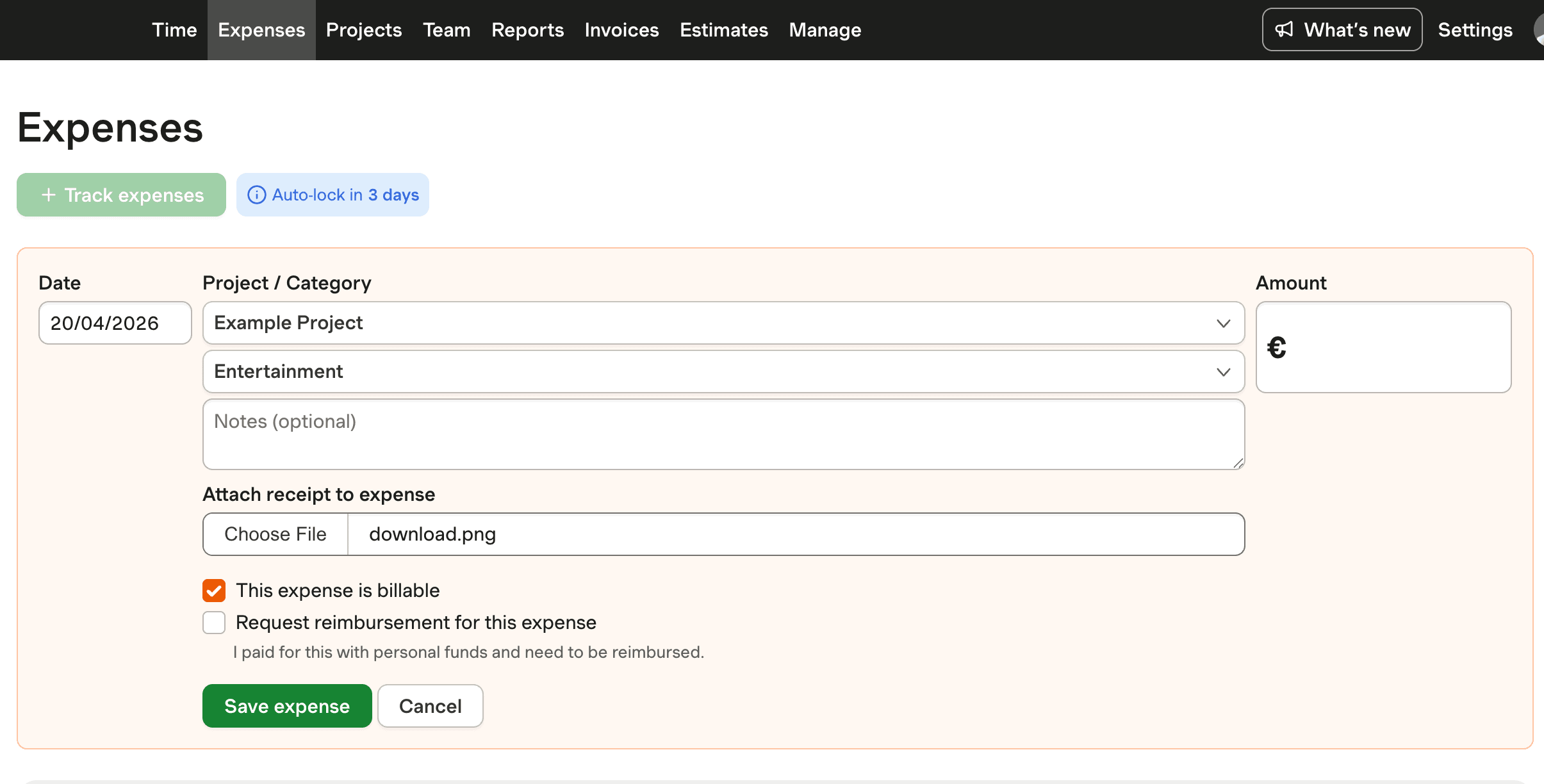
Harvest dashboard showing business expense tracking features.

Business Expense Sheet Excel FAQs

  • Many websites offer free Excel templates for business expenses. These templates typically include essential columns like Date, Vendor, Category, and Amount to help you get started with tracking your expenses effectively.

  • Look for templates that offer a structured layout with columns for Date, Vendor, Category, and Amount. Features like automatic totals using formulas and space for itemized receipts are also beneficial.

  • Customize your Excel expense sheet by adding or modifying columns to match your specific categories or tracking needs. Use formulas to automate calculations and conditional formatting to highlight key expenses.

  • Excel is prone to errors, with studies indicating that 88% of spreadsheets contain significant mistakes. It lacks real-time tracking, receipt validation, and integration capabilities, which can lead to inefficiencies and increased costs.

  • Harvest offers customizable expense categories and supports mileage tracking, reducing manual entry errors. Its reporting features provide better insights and facilitate efficient budgeting, unlike traditional Excel sheets.

  • Yes, Harvest supports mileage tracking by allowing users to create mileage expense categories with unit prices, making it easier to record and report these expenses accurately.

  • To use an Excel expense sheet effectively, regularly enter data to avoid backlogs, use formulas for calculations, and maintain accurate records of all receipts. Regular reviews help ensure data accuracy and completeness.