
Harvest
Expenses
Sign up

Business Spending Management

Harvest simplifies project-based expense tracking, helping small-to-medium businesses manage expenses efficiently alongside time tracking to prevent cash flow issues.

EXPENSE REPORT DRAFT

Drop your receipts here or click to upload

Images and PDFs (max 10 MB each)

Date
Category
Merchant
Description
Amount
Total
$0.00

Customise report

Appearance

Show report title

Report settings

The Importance of Business Spending Management

Effective business spending management is essential for maintaining financial health and operational efficiency within an organization. With procurement teams now overseeing approximately 71% of total enterprise spend, controlling expenditures has become increasingly crucial. This shift can lead to a potential savings of 6% to 12% on every dollar spent. Moreover, 82% of businesses cite cash flow issues as a primary reason for failure, underscoring the importance of rigorous spending management strategies.

Organizations with mature spend management practices can reduce costs by 10% to 20%, minimizing administrative efforts and enhancing financial stability. By leveraging automated solutions, businesses can save hundreds of hours and thousands of dollars annually, moving beyond manual expense reporting, which is prone to a 19% error rate. The evolution from manual to automated, data-driven solutions marks a significant transformation in the way businesses approach expense management.
Challenges in Business Spending Management

Managing business spending effectively involves overcoming several common challenges, such as lack of control and oversight, inefficient manual processes, and poor visibility into spending patterns. Without proper control, organizations often struggle with decentralized purchasing and limited expense tracking. This can result in data entry errors and delayed reporting, contributing to financial inaccuracies.

These issues are further compounded when businesses rely on outdated methods like spreadsheets or paper receipts, which frequently lead to lost documentation. By adopting automated systems, organizations can streamline expense tracking. For instance, real-time receipt scanning and automatic data extraction can drastically reduce errors, providing a more accurate financial picture and improving forecasting capabilities.

Harvest's Role in Project-Based Expense Tracking

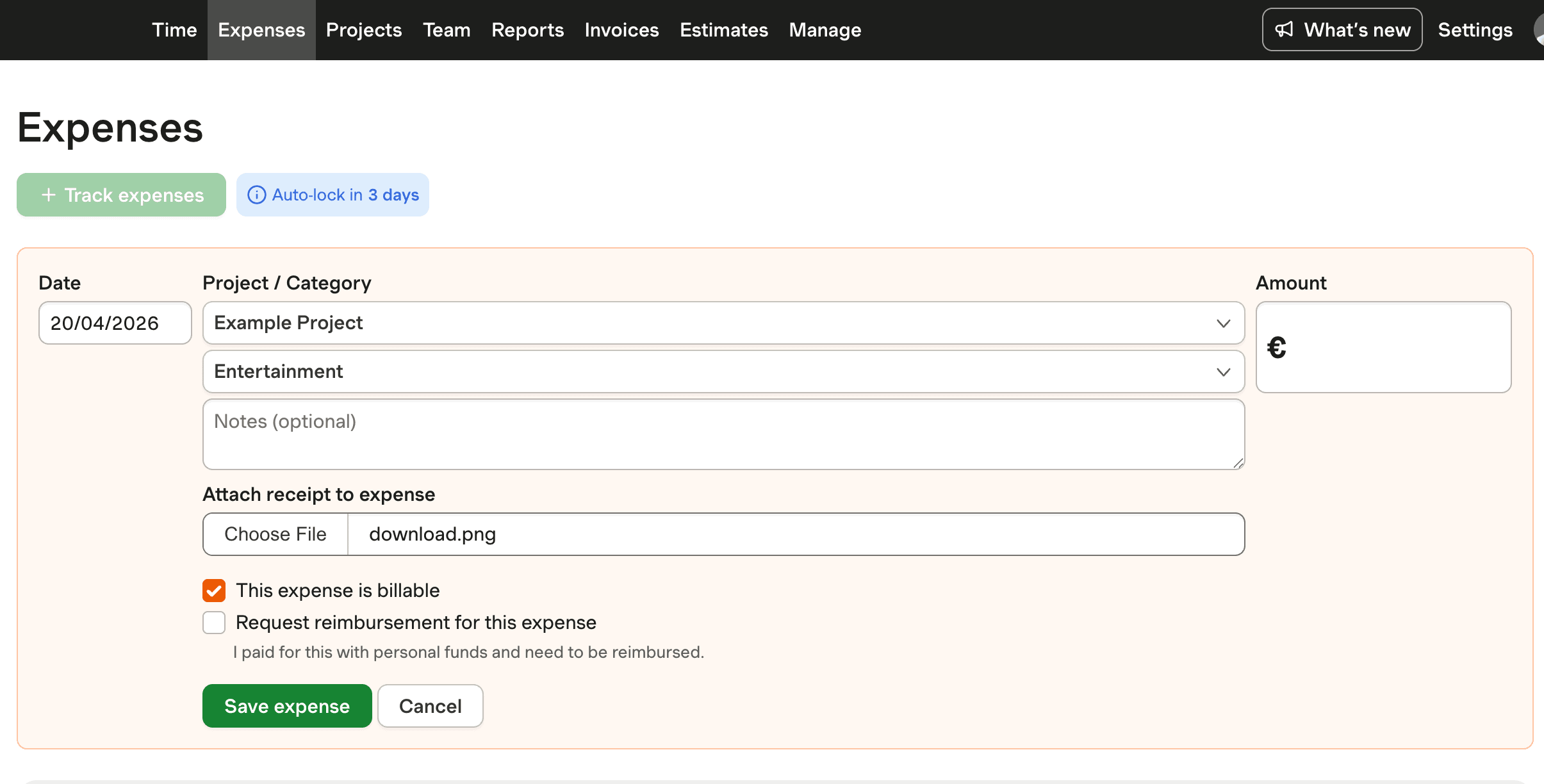
Harvest offers an effective solution for small-to-medium businesses seeking to streamline project-based expense tracking and invoicing. While it does not provide holistic financial visibility tools, Harvest excels in delivering detailed time and expense reports that help users review entries and export data efficiently. This capability is ideal for businesses that need to manage expenses alongside time tracking without the complexity of enterprise-wide financial systems.

By focusing on project-based expenses, Harvest enables businesses to maintain control over spending on a project level, facilitating better budget management and cost optimization. Its user-friendly interface and automated invoicing from tracked time and expenses enhance operational efficiency, making Harvest a practical choice for businesses looking to improve their spending management practices.

Leveraging Technology for Spend Optimization

The adoption of technology in business spending management has been transformative, with AI and automation playing pivotal roles. Gartner predicts that by 2027, 90% of finance analytics will be fully automated, a testament to the growing necessity for tech-driven solutions. Automated expense management systems not only reduce the risk of fraud — which accounts for 5% of annual revenue loss in typical companies — but also enhance employee satisfaction by simplifying processes.

Harvest, while not offering AI-driven analytics, provides an intuitive platform for tracking project-based expenses efficiently. Businesses that integrate such technology can better manage their financial operations, reduce errors, and ensure compliance with industry standards. As companies continue to embrace digital solutions, the strategic use of technology becomes a key component in achieving optimal financial management.

Manage Spending with Harvest

Explore Harvest's project-based expense tracking and invoicing features, tailored for efficient business spending management.

Harvest dashboard showing business spending management features

Business Spending Management FAQs

  • Business spending management involves overseeing and optimizing all company expenditures to enhance financial health and operational efficiency. It includes practices like cost control, expense tracking, and strategic budgeting.

  • Improving spending management involves adopting automated solutions, centralizing spend data, and implementing customized spend controls. These strategies can help reduce errors and provide clearer financial insights.

  • Effective spending management is crucial as 82% of businesses fail due to cash flow issues. Proper management can prevent financial instability and optimize resources, leading to cost reductions of 10% to 20%.

  • Technology, particularly AI and automation, plays a key role in modern spending management by enhancing accuracy and efficiency. It helps reduce errors, streamline processes, and provides real-time financial insights.

  • Harvest aids in business spending management by offering project-based expense tracking and invoicing. This helps small-to-medium businesses maintain control over project expenses and streamline financial operations.

  • Yes, small businesses can greatly benefit from expense management systems. These systems reduce administrative burdens, minimize errors, and provide valuable insights into spending patterns, enhancing financial visibility.

  • Manual expense management is prone to errors — with 19% of reports containing mistakes — and can lead to data entry errors, lost receipts, and delayed reporting. Automating these processes improves accuracy and efficiency.

  • Automated expense management saves time by streamlining processes such as real-time receipt scanning and automatic data entry. This efficiency translates into cost savings, reducing financial loss and enhancing employee satisfaction.