
Harvest
Expenses
Sign up

Cost Reimbursement

Harvest addresses the complexities of cost reimbursement by providing detailed expense tracking and reporting, essential for accurate cost accounting in industries like construction and healthcare.

EXPENSE REPORT DRAFT

Drop your receipts here or click to upload

Images and PDFs (max 10 MB each)

Date
Category
Merchant
Description
Amount
Total
$0.00

Customise report

Appearance

Show report title

Report settings

Understanding Cost Reimbursement in Contracting

Cost reimbursement is a financial practice where an entity recovers expenses incurred on behalf of another party, commonly under a contractual agreement. This mechanism is prevalent across various industries, including government contracting, healthcare, and construction, where projects often have uncertain scopes. In these sectors, cost reimbursement contracts offer flexibility, allowing adjustments as projects evolve. For instance, in construction, they are essential for handling unforeseen conditions like geological challenges or design changes.

However, the manual processing of expenses in such contracts often leads to inefficiencies. Studies show that 71% of finance leaders struggle with compliance and fraud prevention due to manual tracking, with companies losing up to 5% of annual revenue to expense fraud. Embracing automated systems, such as those provided by Harvest, can significantly mitigate these risks. Harvest excels at detailed expense tracking, enabling comprehensive cost accounting that aids in managing reimbursement contracts efficiently.
Types of Cost Reimbursement Contracts and Their Applications

Cost reimbursement contracts are used when project scopes are uncertain, and costs need to be controlled while allowing for flexibility. Common types include cost-plus-fixed-fee, cost-plus-incentive-fee, and cost-plus-award-fee contracts. These contracts are prevalent in industries like government contracting, where they enable projects to adapt to changing requirements and unforeseen technical challenges.

While Harvest does not manage contract types directly, it supports detailed expense reporting, which is crucial for effective cost management in these contracts. By providing comprehensive data for cost accounting, Harvest helps organizations maintain transparency and accuracy in their financial dealings. This level of detail is especially important in regulated environments, where compliance with standards such as the Federal Acquisition Regulation (FAR) is mandatory.

Automating Expense Management for Better Compliance

Manual expense reporting often leads to errors and compliance issues, inflating mileage claims by 10-15% and contributing to a loss of up to 5% of revenue annually due to fraud. Automation is a critical solution, with businesses adopting automated systems to reduce processing time by 60% and cut costs by 35%. In 2025, 87% of CFOs plan to prioritize expense automation for enhanced accuracy.

Harvest offers a robust platform for automating expense tracking and reporting, addressing these challenges head-on. With features that enable detailed cost accounting and reporting, businesses can ensure compliance and efficiency. By automating these processes, Harvest not only reduces the likelihood of errors but also provides real-time insights into spending patterns, supporting informed decision-making.

Harvest: Detailed Expense Reporting for Cost Reimbursement

Managing cost reimbursement contracts effectively requires meticulous documentation and reporting. Harvest excels in this area by offering detailed expense tracking capabilities that meet the rigorous demands of cost accounting. This is particularly beneficial in industries like healthcare and government contracting, where maintaining compliance with regulations such as the FAR is crucial.

Harvest enables users to filter and export data for comprehensive reporting, ensuring transparency and accuracy. As organizations shift towards automated systems, Harvest's capabilities in tracking time and expenses provide the real-time data needed to manage contracts effectively, reducing the risk of errors and enhancing financial oversight.

Best Practices for Cost Reimbursement Management

Effective management of cost reimbursement contracts involves establishing clear policies and adopting automation to minimize errors. Key practices include developing comprehensive reimbursement policies, using standardized forms or software for submissions, and implementing multi-level approval processes. These steps help ensure compliance and streamline expense management.

Harvest supports these best practices by offering automated expense tracking and reporting. By integrating with accounting systems, Harvest provides seamless data flow, enhancing accuracy and efficiency. This integration not only aids in compliance but also equips organizations with the tools needed to adapt to evolving project and regulatory requirements.

Cost Reimbursement with Harvest

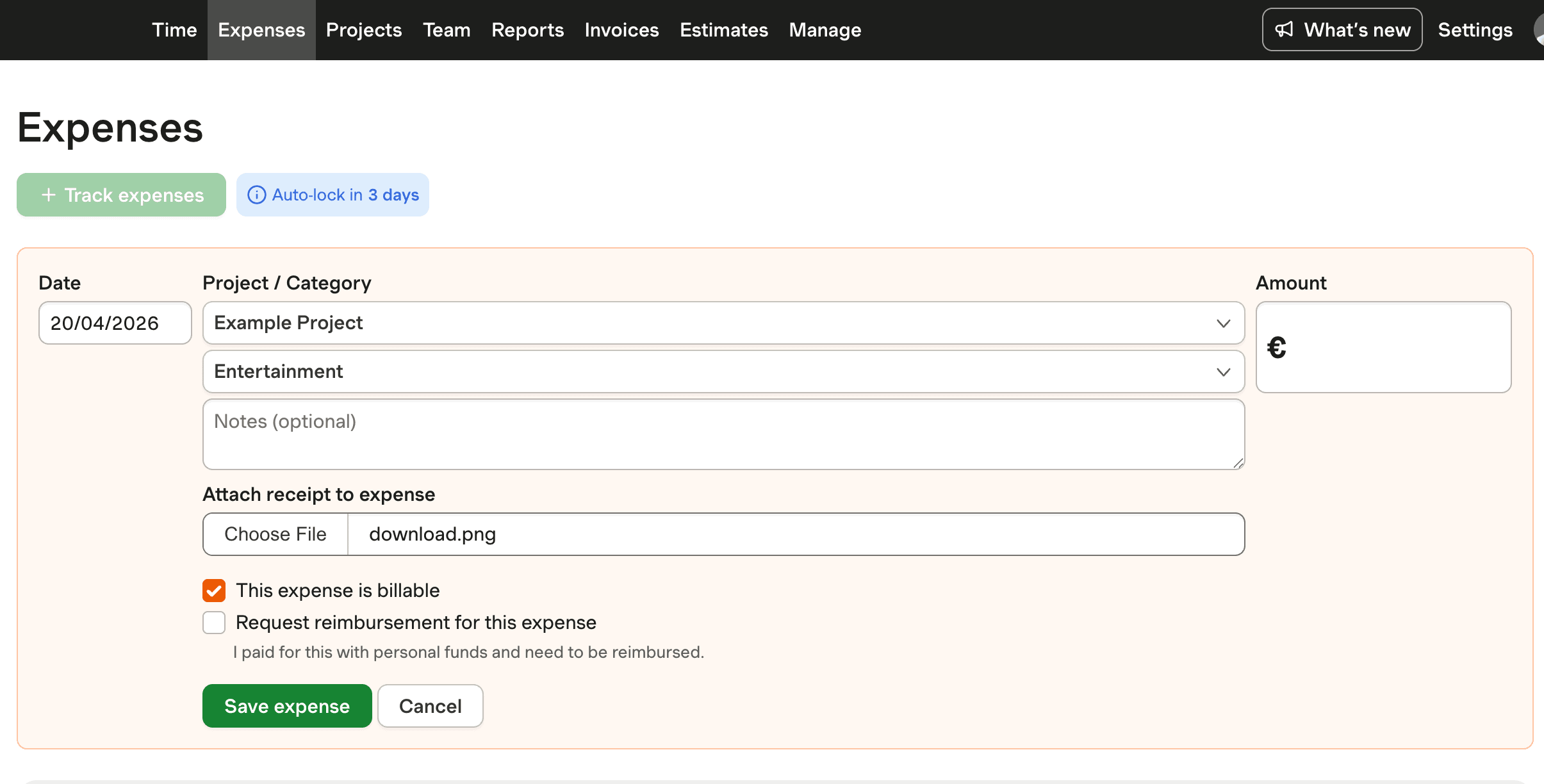
See how Harvest tracks expenses for effective cost reimbursement management, offering detailed reporting and compliance tools.

Harvest dashboard showing cost reimbursement tracking features.

Cost Reimbursement FAQs

  • Cost reimbursement contracts are agreements where a contractor is paid for all allowable expenses to a set limit plus additional payment for profit. They are used in projects with uncertain scopes, such as government or construction projects, allowing for flexibility in adapting to changes.

  • Harvest provides detailed expense tracking and reporting capabilities, essential for managing cost reimbursement contracts. It automates expense management, reducing errors and enhancing compliance, which is crucial in regulated industries like government contracting.

  • Industries such as construction, healthcare, and government contracting frequently use cost reimbursement contracts. These contracts are ideal for projects with uncertain scopes, allowing for flexibility and adaptability as project needs change.

  • The primary advantage of cost reimbursement contracts is their flexibility in accommodating changes in project scope. They allow contractors to recover all allowable costs, making them suitable for complex projects where expenses are unpredictable.

  • Automation in expense management reduces processing time by 60% and cuts costs by 35%. It minimizes errors and compliance issues, such as inflated mileage claims, and provides real-time insights into spending patterns, enhancing decision-making.

  • Risks include potential cost overruns if not carefully monitored, as well as compliance issues if expenses are not documented properly. Adopting automated expense tracking systems like Harvest can help mitigate these risks by ensuring accurate reporting.

  • Yes, Harvest can integrate with accounting systems, allowing for seamless expense data flow and enhancing financial accuracy. This integration supports real-time reporting and improves compliance with financial regulations.