
Harvest
Expenses
Sign up

Expense Ledger Excel

Harvest enables small businesses to streamline expense tracking, reducing errors and saving time compared to traditional spreadsheets. Export detailed reports to Excel for further analysis.

EXPENSE REPORT DRAFT

Drop your receipts here or click to upload

Images and PDFs (max 10 MB each)

Date
Category
Merchant
Description
Amount
Total
$0.00

Customise report

Appearance

Show report title

Report settings

Why Use Excel for Expense Tracking?

Excel remains a popular tool for small businesses and freelancers for tracking expenses due to its flexibility and cost-effectiveness. In France, for instance, 89% of small to medium-sized enterprises (SMEs) utilize Excel for various accounting tasks. This widespread adoption underscores Excel's utility in managing business expenses without the need for costly subscriptions. Despite the rise of specialized software, the manual nature of spreadsheets allows for a level of customization that many small operations find indispensable.

However, using Excel for expense tracking isn't without its challenges. Studies have shown that up to 88% of spreadsheets contain errors, ranging from simple typos to incorrect formulas. These inaccuracies can lead to substantial financial discrepancies, affecting tax preparations and financial reporting. Moreover, manual data entry is time-consuming and can cost companies approximately Rs 1,500 per report in processing expenses, as noted by the Global Business Travel Association.
Transitioning from Excel to Harvest

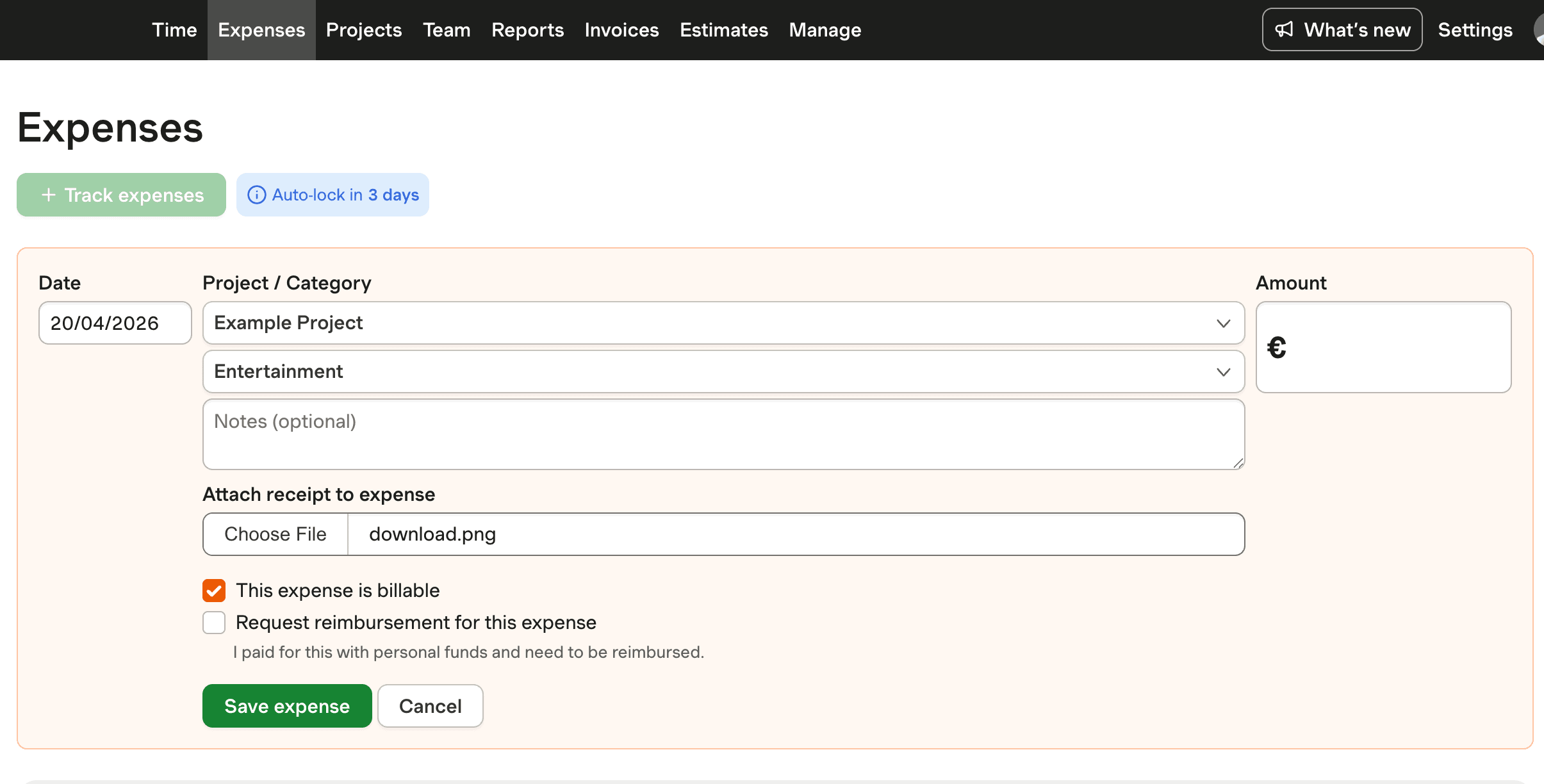
While Excel provides a foundational tool for expense tracking, transitioning to a platform like Harvest can significantly enhance efficiency and accuracy. Harvest offers small businesses a centralized system for tracking expenses by date, project, and category, reducing the manual input required in Excel. This streamlined approach not only minimizes errors but also provides real-time visibility into spending, a feature that spreadsheets often lack.

Harvest facilitates the categorization of expenses by type—such as travel, supplies, and utilities—using custom categories. This functionality is crucial for maintaining organized records and ensuring compliance with tax regulations. Moreover, Harvest allows users to export detailed reports to Excel, making it easy to integrate with existing systems and conduct in-depth analysis or generate reports for tax purposes.

Maximize Efficiency with Harvest's Export Features

One of the significant advantages of using Harvest is its ability to export detailed expense reports to Excel, offering businesses the flexibility to leverage Excel's analytical tools while benefiting from Harvest's streamlined data collection. This export feature is especially useful for generating tax reports or conducting further financial analysis, providing a seamless bridge between automated expense tracking and traditional spreadsheet use.

Harvest also supports tracking employee reimbursements and allows administrators to enter expenses on behalf of teammates. By automating these processes, businesses can save time and reduce the likelihood of errors, which are prevalent in manual spreadsheet systems.

Mitigating Spreadsheet Limitations with Harvest

Spreadsheets, while versatile, often fall short in providing real-time insights and error-free data entry. With 88% of spreadsheets containing errors, the risk of financial inaccuracies is high. Harvest mitigates these limitations by offering a more reliable and efficient way to track expenses. By centralizing data and automating calculations, Harvest reduces the time spent correcting errors—estimated at 30 minutes per report for manual systems.

By using Harvest, businesses can focus on strategic financial management rather than routine data entry, allowing for more informed decision-making. As businesses grow, the scalability and real-time visibility offered by Harvest become invaluable, surpassing the capabilities of traditional spreadsheets.

Streamline Expenses with Harvest

Explore how Harvest tracks and categorizes expenses, with easy export options to Excel for detailed analysis.

Harvest expense tracking interface with Excel export option.

Expense Ledger Excel FAQs

  • Excel can be used for tracking expenses by setting up a spreadsheet with predefined categories like travel, supplies, and utilities. Include columns for date, description, amount, and payment method. Use formulas like SUM for automatic calculations.

  • Common errors in spreadsheet expense tracking include typos, incorrect formulas, and inconsistent data entry. Studies show up to 88% of spreadsheets have errors, leading to inaccuracies in financial reports.

  • Harvest improves expense tracking by automating data entry and categorization, reducing errors and saving time. It provides real-time visibility and allows for detailed reporting and analysis, which can be exported to Excel.

  • Yes, Harvest allows you to export detailed expense reports to Excel. This feature enables further analysis and integration with existing financial systems, offering flexibility for businesses that rely on Excel.

  • Look for features like predefined categories, automated calculations, and data validation rules. Ensure the template allows for easy data entry and includes columns for date, category, amount, and payment method.

  • To categorize expenses effectively in Excel, use dropdown lists for categories to ensure consistency. Avoid vague terms and regularly update the spreadsheet to maintain accurate records.

  • Harvest offers small businesses an efficient way to track expenses with real-time visibility and reduced manual errors. It supports categorization by type and allows exporting reports to Excel for detailed analysis.