
Harvest
Expenses
Sign up

Expense Report Google Docs

Struggling with manual expense reporting inefficiencies? Harvest simplifies expense management with features like custom categories and receipt uploads.

  • Attach receipts to projects & tasks
  • Turn tracked expenses into client invoices
  • Free 30-day trial, no credit card needed

or drag & drop • Images and PDFs, max 10 MB

Efficient Expense Reporting with Google Docs

Searching for a free expense report template in Google Docs is a common need for businesses looking to manage costs effectively. With more than 65% of companies still using traditional methods for expense management, customizable templates in Google Docs provide a straightforward solution to streamline reporting. However, manual processes can be inefficient, with employees spending an average of 20 minutes per report and 19% of these reports containing errors. These inefficiencies highlight the need for a more structured approach to expense reporting.

Google Docs offers the flexibility to create or download templates that can be customized according to your business needs. By standardizing fields such as date, vendor, amount, and business purpose, businesses can ensure that all necessary information is captured consistently. While this approach can reduce manual entry errors, integrating a system like Harvest can help manage expenses more efficiently by providing features such as custom categories and receipt uploads.
Transitioning from Manual to Automated Expense Reporting

Manual expense reporting processes can lead to significant inefficiencies and errors, as seen with 19% of reports requiring corrections. Transitioning to automated solutions can reduce these errors by 65% and cut processing costs by 30%. For businesses relying on Google Docs, this means moving from static templates to systems that offer real-time expense tracking and categorization.

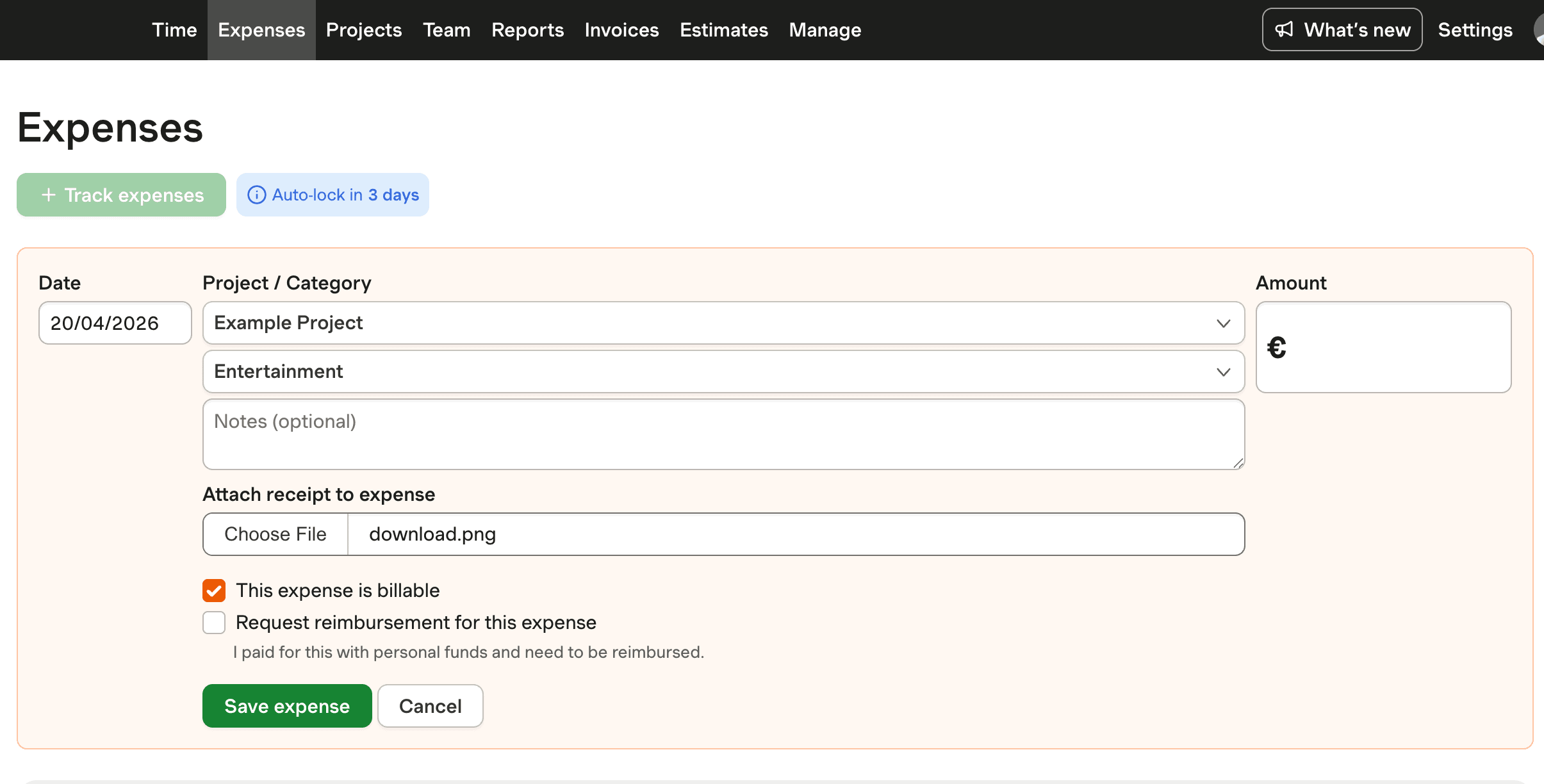
Harvest offers a solution by supporting itemized expenses and allowing direct receipt uploads to expense reports. This capability not only reduces the time spent on manual entry but also ensures compliance with financial policies by capturing all necessary details. For small businesses and startups, Harvest's project-based expense tracking is particularly beneficial, offering a seamless way to manage and track expenses by project and category.

Overcoming Common Challenges in Expense Management

Expense management often presents challenges such as lack of real-time visibility, delayed submissions, and compliance issues. More than 34% of businesses report difficulties in monitoring spending due to reliance on manual document-based systems. By implementing a more dynamic solution, companies can gain instant access to up-to-date expense data, allowing for proactive adjustments and better budget control.

With Harvest, businesses can attach receipts directly to expenses, enhancing audit readiness and reducing the risk of missing documentation. The ability to categorize expenses by custom fields such as transportation and meals further supports detailed tracking and compliance. Despite Google Docs templates offering basic structure, integrating with a system like Harvest simplifies processing and increases accuracy, ultimately improving financial oversight.

Legal and Compliance Considerations in Expense Reporting

Ensuring compliance with legal standards is crucial in expense reporting. In the US, the IRS requires businesses to keep adequate records, including digital receipts, for tax deductions. However, 71% of finance leaders struggle with compliance due to manual tracking. This highlights the need for systems that not only capture expenses accurately but also maintain secure and accessible records.

Harvest addresses these concerns by allowing users to attach receipts to expense reports, ensuring that all necessary documentation is stored securely and is easily retrievable for audits. While Google Docs can serve as a starting point, integrating Harvest enhances compliance by providing a structured, secure platform for managing and storing expense data. This approach reduces the risk of non-compliance penalties and streamlines audit processes.

Streamline Expense Reporting with Harvest

See how Harvest enhances your expense reports with custom categories and receipt uploads, perfect for Google Docs users.

Harvest interface showing expense report features for Google Docs users.

Expense Report Google Docs FAQs

  • To create an expense report in Google Docs, you can start by using a pre-existing template or designing your own. Include fields for date, vendor, amount, and business purpose to ensure all necessary information is captured. For enhanced features, consider integrating with a tool like Harvest for real-time tracking and receipt uploads.

  • An expense report should include the date of the transaction, the vendor or payee, the amount spent, the category of expense (such as travel or meals), and a brief description of the business purpose. Attaching receipts to the report is essential for verification and compliance.

  • Harvest enhances expense reporting by enabling users to attach receipts directly to expenses and categorize them with custom fields like transportation and meals. This capability reduces errors and ensures compliance, making it easier for businesses to manage expenses efficiently.

  • While Harvest doesn't integrate directly with Google Docs, it complements document-based systems by offering features such as custom expense categories and receipt uploads. Users can export data from Harvest to CSV/Excel for manual processing in Google Docs.

  • Common mistakes include delayed submissions, missing receipts, and manual entry errors. These issues can lead to reimbursement delays and compliance problems. Using a system like Harvest can help mitigate these errors by providing structured expense tracking and receipt management.

  • To ensure compliance, businesses should maintain accurate and accessible records of all expenses, including digital receipts. Using a tool like Harvest helps by securely storing receipts and ensuring all necessary documentation is attached to each expense report.

  • Automating expense reporting reduces processing costs by 30%, decreases errors by 65%, and speeds up approval times by 50%. Tools like Harvest streamline the process, providing real-time tracking, receipt uploads, and compliance checks, which enhance financial oversight and control.