
Harvest
Expenses
Sign up

Expense Report With Sage

Harvest simplifies project-based expense tracking and invoicing, making it ideal for small-to-medium businesses without complex automation needs.

  • Attach receipts to projects & tasks
  • Turn tracked expenses into client invoices
  • Free 30-day trial, no credit card needed

or drag & drop • Images and PDFs, max 10 MB

Understanding the Cost of Manual Expense Reporting

Creating an expense report manually can be both time-consuming and costly for businesses. On average, a single expense report takes about 20 minutes to process and costs approximately $58. For small and mid-sized businesses, this cost can be around $35.02 per report. Furthermore, manual processes are prone to errors, with about 19% of expense reports containing mistakes. Each error can cost an additional $52 and take 18 minutes to correct. These figures highlight the inefficiencies and potential financial drain associated with manual expense reporting.

In contrast, adopting an automated system can drastically reduce these inefficiencies. Companies that automate their expense workflows report saving over 5,400 employee hours and experience a 70% reduction in processing time. These systems not only enhance accuracy but also provide real-time insights into spending, helping businesses optimize their budgets and reduce the risk of fraud, which can cost companies up to 5% of their annual revenue.
The Role of Automation in Expense Management

Automation is revolutionizing expense management, offering a significant time and cost-saving advantage over traditional manual processes. Automated expense management systems integrate seamlessly with accounting and ERP systems, ensuring that all expenses are accurately recorded and categorized. This integration provides real-time financial insights and reduces the need for manual data entry, which is a major source of errors and inefficiencies.

Moreover, automated systems enhance policy compliance and fraud prevention. By flagging out-of-policy expenses at the point of submission, these systems prevent potential violations before they occur. Although Harvest does not offer automated compliance checks, it integrates with QuickBooks Online and Xero for seamless invoice data transfer, streamlining the financial reporting process for small-to-medium businesses.

Best Practices for Effective Expense Reporting

Implementing best practices in expense reporting can significantly enhance financial control and operational efficiency. Establishing clear policies that define allowable expenses, spending limits, and required documentation is crucial. It's also important to communicate these policies effectively to employees and ensure their acknowledgment of compliance with each submission.

Setting deadlines for expense submissions ensures timely tracking and accelerates reimbursements. Encouraging the use of corporate credit or debit cards creates electronic transaction records, simplifying documentation and ensuring separation of business and personal expenses. While Harvest does not support real-time expense tracking for corporate cards, its manual entry system allows for clear and organized expense documentation.

Leveraging Harvest for Project-Based Expense Management

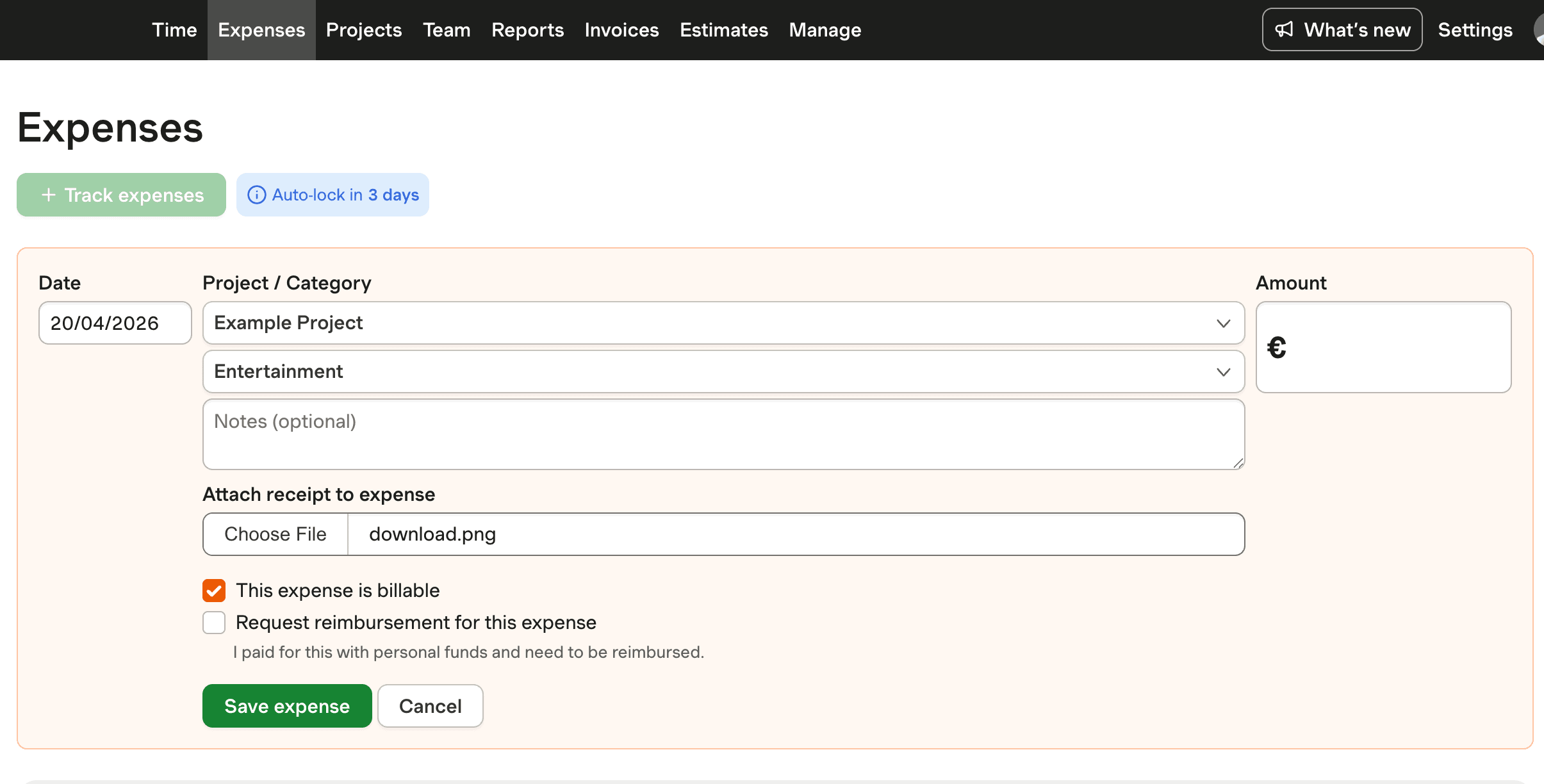
For businesses seeking a straightforward expense management solution, Harvest offers a practical approach to tracking and managing expenses. While it does not provide automated receipt capture or compliance checks, Harvest allows users to easily enter expenses and upload receipts via its mobile app. This feature is particularly beneficial for teams working remotely or on-the-go.

Harvest's integration capabilities with QuickBooks Online and Xero facilitate seamless data transfer, making it easier to manage project-based financials without the complexity of more extensive automated systems. By focusing on clear and organized expense documentation, Harvest helps users maintain efficient expense management processes within their existing workflows.

Expense Reporting with Harvest

Discover how Harvest simplifies project-based expense tracking and invoicing. Manage expenses easily with Harvest's intuitive features.

Harvest interface showing expense report management features.

Expense Report With Sage FAQs

  • To create an expense report with Sage, you typically start by logging expenses as they occur, categorizing them according to your business needs. Sage provides templates and features to assist in organizing and summarizing these expenses for reporting purposes.

  • Sage offers features such as expense categorization, template use for consistent reporting, and integration with financial data for streamlined processing. These tools help automate certain aspects of expense management.

  • Automation in Sage can be achieved through features like automatic categorization and integration with other financial systems. These help reduce manual entry and improve accuracy in expense reporting.

  • Best practices include setting clear expense policies, using templates for consistency, and ensuring regular updates to expense entries. Sage's integration capabilities can also enhance accuracy and efficiency.

  • Harvest integrates with accounting software like QuickBooks Online and Xero for seamless invoice data transfer. This helps streamline financial reporting processes and maintain accurate records.

  • Harvest allows for expense entry and receipt uploads via its mobile app. This feature supports teams working remotely by providing an easy way to manage expenses while on-the-go.