
Harvest
Expenses
Sign up

Expense Variance Report

Harvest simplifies project-based expense tracking, ideal for small businesses managing expenses and time without needing detailed variance analysis.

EXPENSE REPORT DRAFT

Drop your receipts here or click to upload

Images and PDFs (max 10 MB each)

Date
Category
Merchant
Description
Amount
Total
$0.00

Customise report

Appearance

Show report title

Report settings

Understanding Expense Variance Reports

An expense variance report is a critical financial tool that compares planned or budgeted expenses against actual spending. This type of report provides organizations with essential insights into their financial performance and operational efficiency. By identifying deviations, businesses can understand the underlying causes and optimize resource allocation effectively. For instance, in industries like construction and healthcare, monitoring expense variances helps ensure project profitability and improve staffing levels, respectively.

Financial Planning & Analysis (FP&A) teams often spend 45% of their time on data collection rather than strategic analysis, highlighting the need for efficient variance reporting. Automation in variance analysis is becoming increasingly popular, allowing finance teams to focus on root cause analysis and trend identification. In the context of Harvest, while it doesn't offer detailed variance analysis, it provides robust project-based expense tracking, which aids small businesses in managing their expenses effectively.
Creating an Expense Variance Report

To create an effective expense variance report, it is essential to follow a structured process. Start by organizing your data, separating revenue and expense line items, ensuring accuracy and completeness. Next, arrange your report with columns for item description, actual amount, budgeted amount, and the calculated variance. The variance is calculated by subtracting the budgeted expense from the actual expense, with percentage variance computed as: (Actual - Budgeted) / Budgeted × 100.

Label the variances as favorable or unfavorable based on the context. Establish materiality thresholds, such as a 10% deviation, to focus on significant variances. Investigating root causes of these variances is crucial for effective decision-making. Although Harvest does not provide tools for detailed variance analysis, it supports categorizing expenses by project and category, ensuring that businesses can maintain accurate financial records and track spending efficiently.

The Importance of Variance Reporting in Financial Analysis

Variance reporting plays a vital role in financial analysis by acting as a "financial early warning system." It helps organizations understand the root causes of deviations and improve decision-making processes. Despite common misconceptions, a favorable variance is not always positive; underspending on critical initiatives can negatively impact future performance. Therefore, effective variance analysis requires both analytical rigor and an understanding of the business's operational context.

Best practices in variance reporting recommend moving beyond simple numerical differences to understanding the business drivers behind variances. Regular variance analysis, typically monthly or quarterly, is considered essential for maintaining financial health. Harvest, while not focusing on variance analysis, enables regular tracking of expenses and time, contributing to a comprehensive understanding of financial health over time.

Challenges and Solutions in Expense Variance Analysis

Several challenges can arise during expense variance analysis, such as misclassifying expenses, which can distort financial reports. To mitigate this, implementing a standardized categorization system and providing training to finance teams is essential. Data entry mistakes also contribute significantly to accounting variances, affecting financial forecasts. Automation and robust review processes can help minimize these errors.

One case study in corporate travel management demonstrated a 14% reduction in domestic air travel expenses by shifting to proactive cost control. This highlights the importance of understanding the root causes of variances rather than merely calculating them. Harvest offers robust expense tracking that helps businesses categorize and manage their expenses effectively, although it does not delve into deep variance analysis.

Legal and Compliance Considerations in Expense Reporting

Compliance with legal and financial regulations is crucial in expense reporting. For instance, failure to maintain proper records can lead to significant penalties, including fines and legal actions. The IRS requires businesses to keep records supporting income and expenses for at least 3 years, extending to 6 years if income is substantially underreported. Additionally, new guidelines from the Financial Accounting Standards Board (FASB) mandate detailed expense disclosures in financial statements.

Companies must be aware of state-specific regulations, such as those in California and Illinois, which require reimbursement of "necessary" business expenses. While Harvest focuses on expense tracking and reporting, ensuring compliance with these regulations through accurate record-keeping is a key benefit for users, helping them avoid potential legal repercussions.

Harvest Expense Tracking

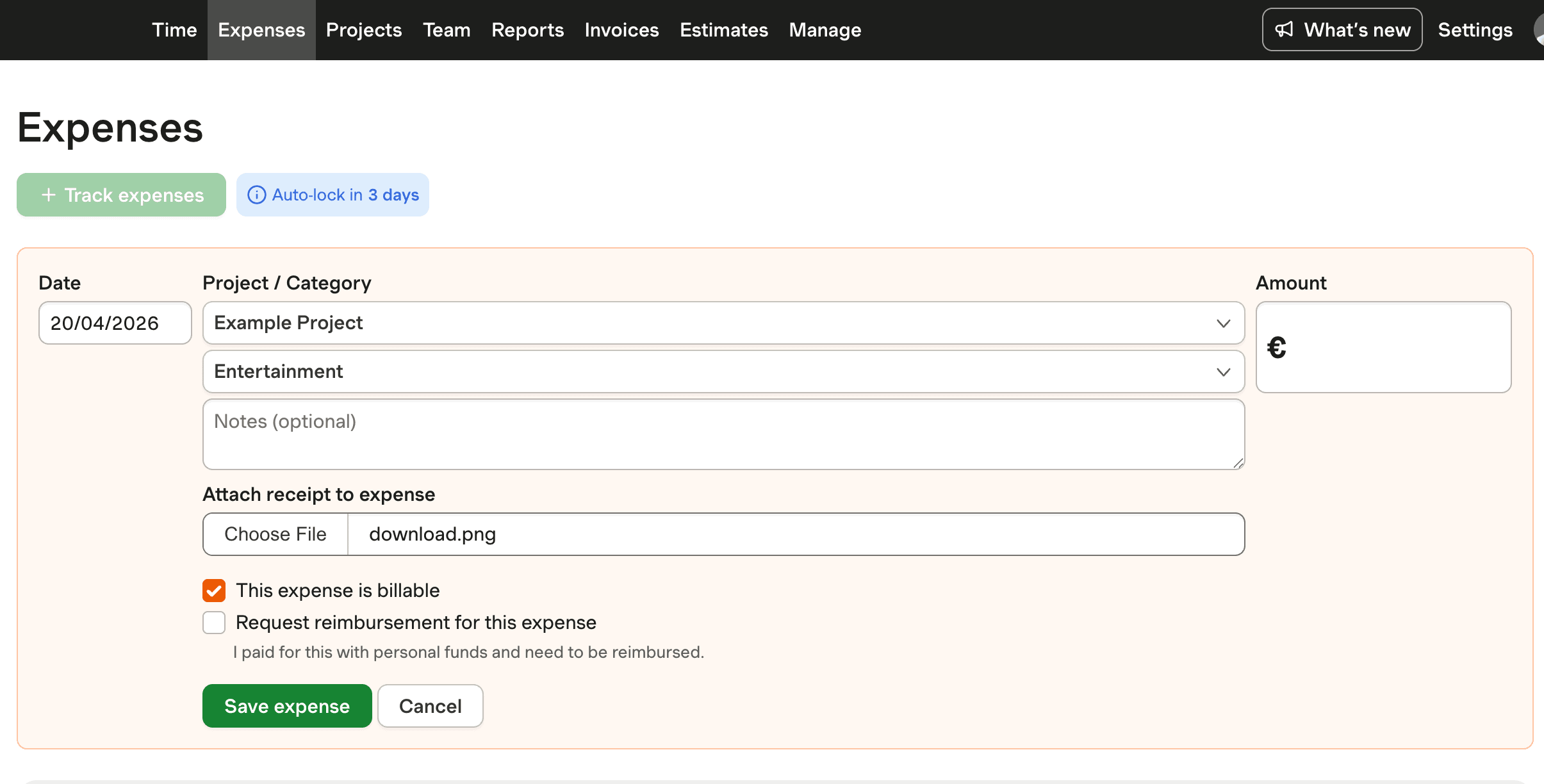
See how Harvest tracks and categorizes expenses by project, helping businesses effectively manage their resources.

Harvest expense tracking dashboard for variance reporting

Expense Variance Report FAQs

  • An expense variance report compares budgeted expenses to actual spending, highlighting discrepancies. It's crucial for financial performance analysis and optimizing resource allocation.

  • Organize your data, create columns for actual and budgeted amounts, then calculate variances. Use thresholds to focus on significant deviations and investigate their causes for better decision-making.

  • Calculate dollar variance by subtracting actual expenses from budgeted ones. For percentage variance, use: (Actual - Budgeted) / Budgeted × 100. These formulas help identify financial discrepancies.

  • Variance reporting acts as a financial early warning system, helping organizations understand deviations and improve decision-making. It goes beyond compliance, offering strategic insights.

  • Interpret results by differentiating between favorable and unfavorable variances. Investigate root causes to understand impacts on financial health and make informed business decisions.

  • While Harvest offers robust project-based expense tracking, it does not support detailed variance analysis. It helps manage expenses effectively by categorizing and tracking them.

  • Harvest provides simple project-based expense tracking, ideal for small businesses. It enables users to categorize expenses, manage budgets, and maintain accurate financial records.

  • Harvest allows for efficient expense tracking and reporting, though it does not automate variance analysis. It helps streamline processes and improve financial management.