
Harvest
Expenses
Sign up

List of Reimbursable Expenses

Businesses can streamline expense management and reduce errors with Harvest, which tracks and categorizes reimbursable expenses efficiently.

EXPENSE REPORT DRAFT

Drop your receipts here or click to upload

Images and PDFs (max 10 MB each)

Date
Category
Merchant
Description
Amount
Total
$0.00

Customise report

Appearance

Show report title

Report settings

Understanding Reimbursable Expenses: Key Categories

Reimbursable expenses are essential for accurate financial management and compliance within a business. Typical categories include travel-related costs, such as fuel, tolls, and repairs for company vehicles, as well as client entertainment expenses. In fact, travel expenses alone can account for a significant portion of a business's operational costs. For instance, the IRS mileage rate for business travel increased to 72.5 cents per mile in 2026, highlighting the need for precise tracking.

Harvest assists businesses by providing customizable expense categories, ensuring that all relevant expenses are captured accurately. This capability allows for better budgeting and financial control, reducing the risk of errors and fraud, which can cost companies up to 5% of their annual revenue. By distinguishing between reimbursable and non-reimbursable expenses, Harvest aids in maintaining clear financial records, crucial for audits and compliance.
Challenges in Expense Management and How Harvest Helps

Manual expense management can be fraught with errors and inefficiencies. Reports have shown that nearly 1 in 5 expense reports contain mistakes, costing an average of $52 to rectify each one. Moreover, manual processes can lead to delays in reimbursements, with 47% of employees experiencing such issues due to outdated approval systems.

Harvest addresses these challenges by streamlining the expense tracking process. With features that allow receipt uploads and detailed categorization, Harvest minimizes the risk of errors and accelerates reimbursement times. Companies that have implemented automated systems like Harvest report a 60% reduction in processing time and a 35% decrease in costs, demonstrating the tangible benefits of moving away from manual methods.

Implementing Best Practices with Harvest

Adopting best practices in expense management is crucial for avoiding common pitfalls, such as lost receipts or inaccurate categorization. Lost receipts are a leading cause of rejected claims, while misclassified expenses can disrupt budget allocations and cause compliance issues during audits.

With Harvest, businesses can follow best practices by utilizing its receipt upload feature, ensuring all documentation is stored digitally and instantly. Additionally, its customizable categories help guide employees in correctly classifying expenses, reducing the likelihood of errors. By maintaining meticulous records, businesses can enhance compliance, reduce fraud, and foster employee satisfaction through timely reimbursements.

The Role of Technology in Modern Expense Management

Technology is transforming how businesses manage expenses, with a growing trend toward automation and mobile solutions. By 2025, 87% of CFOs are expected to prioritize expense automation to boost accuracy and compliance. This shift is driven by the need to reduce manual errors and enhance efficiency.

Harvest is at the forefront of this transformation, offering tools that integrate seamlessly into a company's workflow. With the ability to track expenses by date, project, and category, Harvest ensures precise financial oversight. Businesses adopting such technology report saving an average of $75 per expense report, further underscoring the financial benefits of automated systems.

Manage Reimbursable Expenses with Harvest

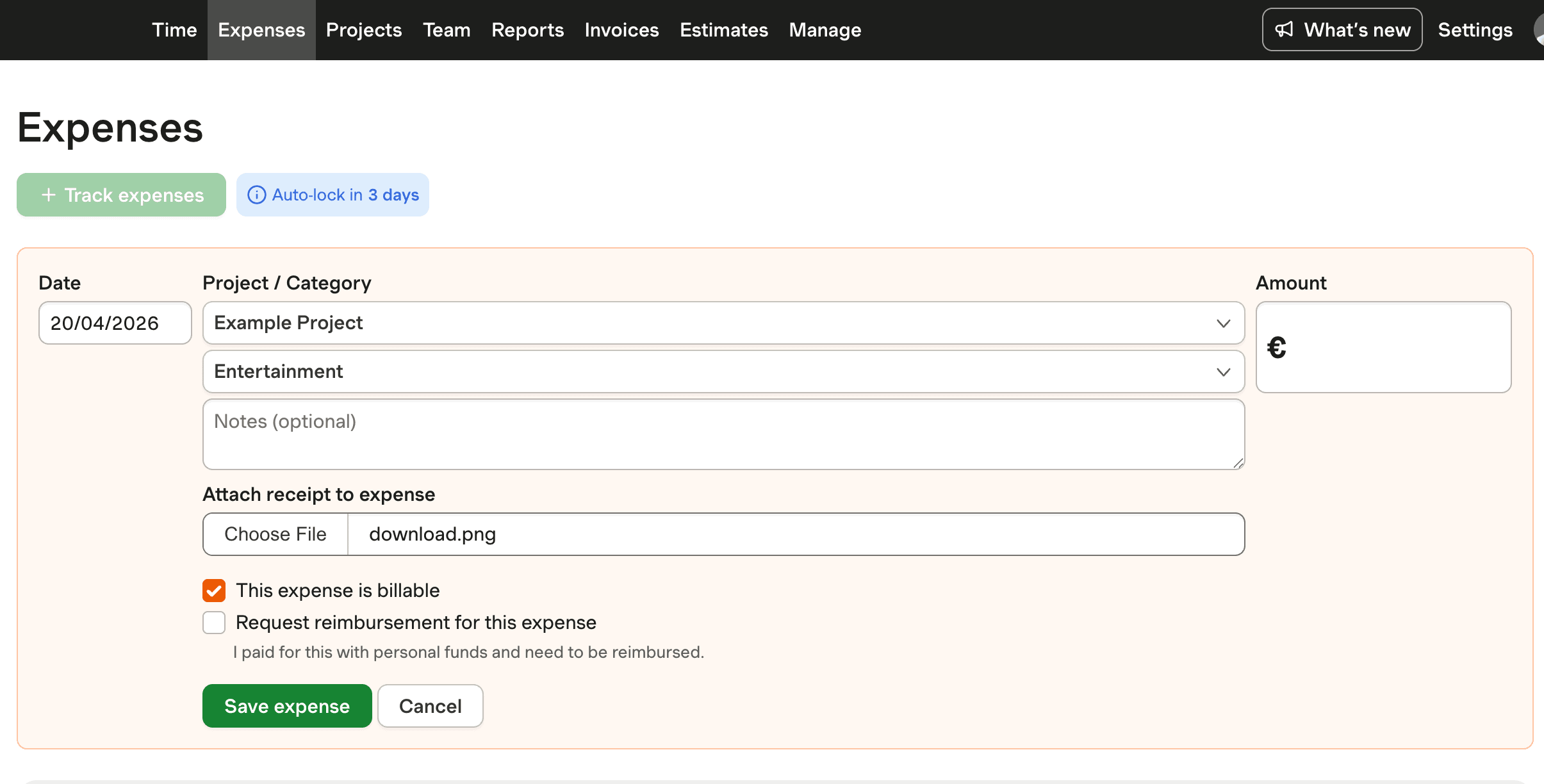
The preview shows Harvest's interface for tracking reimbursable expenses, highlighting customizable categories and receipt uploads.

Harvest expense management interface showing reimbursable expenses tracking.

List of Reimbursable Expenses FAQs

  • Reimbursable expenses usually include travel costs like fuel and tolls, client entertainment, and business meals. These are necessary for conducting business and are often compensated by the employer. Using a platform like Harvest helps manage these categories efficiently.

  • Reimbursable expenses are those that are necessary for business operations and are covered by the employer, such as travel and client meals. Non-reimbursable expenses might include personal purchases or expenses beyond company policy limits. Harvest helps by allowing users to categorize expenses clearly, improving financial management.

  • Typically, receipts or invoices are required to claim reimbursable expenses. These documents should be submitted alongside expense reports for validation. Harvest's receipt upload feature simplifies this process, ensuring all necessary documentation is stored digitally.

  • Yes, many companies establish limits on reimbursable expenses, such as per diem rates for meals or mileage caps. These limits ensure controlled spending. Harvest allows businesses to set and track these limits through custom categories.

  • Technology, such as Harvest, improves expense management by automating tracking and categorization, reducing errors, and speeding up reimbursement processes. Businesses using such tools report significant cost savings and improved compliance.

  • Harvest provides tools to track expenses by date, project, and category, ensuring accurate management of reimbursable expenses. It supports receipt uploads and custom categories, enabling precise financial oversight and reducing fraud risk.

  • Yes, Harvest's detailed tracking and receipt management features enhance compliance by ensuring all expenses are documented and categorized correctly. This reduces the risk of errors and supports audit readiness.