
Harvest
Expenses
Sign up

Self Employed Keeping Track of Expenses

For self-employed individuals, Harvest offers project-based expense tracking that streamlines financial management and maximizes tax savings.

EXPENSE REPORT DRAFT

Drop your receipts here or click to upload

Images and PDFs (max 10 MB each)

Date
Category
Merchant
Description
Amount
Total
$0.00

Customise report

Appearance

Show report title

Report settings

Why Expense Tracking Matters for the Self-Employed

Expense tracking is crucial for the self-employed, who often juggle multiple financial responsibilities. According to recent data, 38% of the U.S. workforce, or 64 million Americans, are engaged in freelance or contract work. This demographic contributes nearly $1.3 trillion annually, underscoring the importance of precise financial management. Accurate expense tracking not only ensures compliance with tax regulations but can also save freelancers between $3,000 and $8,000 annually in taxes.

For the self-employed, transitioning from paper-based systems to digital solutions significantly reduces compliance risks. Digital tools minimize audit risks by 73% compared to traditional methods. Moreover, automated processes enhance accuracy and save time, allowing freelancers to focus on growing their business. Leveraging a tool like Harvest, which offers project-based expense tracking, can streamline these tasks and provide clear financial insights.
Challenges in Differentiating Business and Personal Expenses

One of the biggest hurdles for self-employed individuals is distinguishing between personal and business expenses. This clarity is essential as improper classification can lead to tax complications. Common mistakes include mixing personal and business expenses, which not only complicates tracking but can also trigger audits. Experts suggest maintaining separate bank accounts and credit cards for business transactions to prevent such issues.

While Harvest does not directly differentiate personal and business expenses, it excels in categorizing expenses by project or client. This functionality is particularly beneficial for freelancers who need to associate specific expenses with particular projects, ensuring precise invoicing and reporting. By using Harvest, freelancers can maintain organized records that align with IRS requirements, thereby reducing the risk of errors and penalties.

The Impact of Technology on Expense Tracking

The advent of technology has revolutionized how self-employed individuals manage expenses. Traditionally, freelancers relied on spreadsheets or even physical storage like shoeboxes for receipts. However, the shift to digital platforms has proven both time-saving and cost-effective. For instance, companies utilizing AI-driven expense solutions save an average of $75 per report.

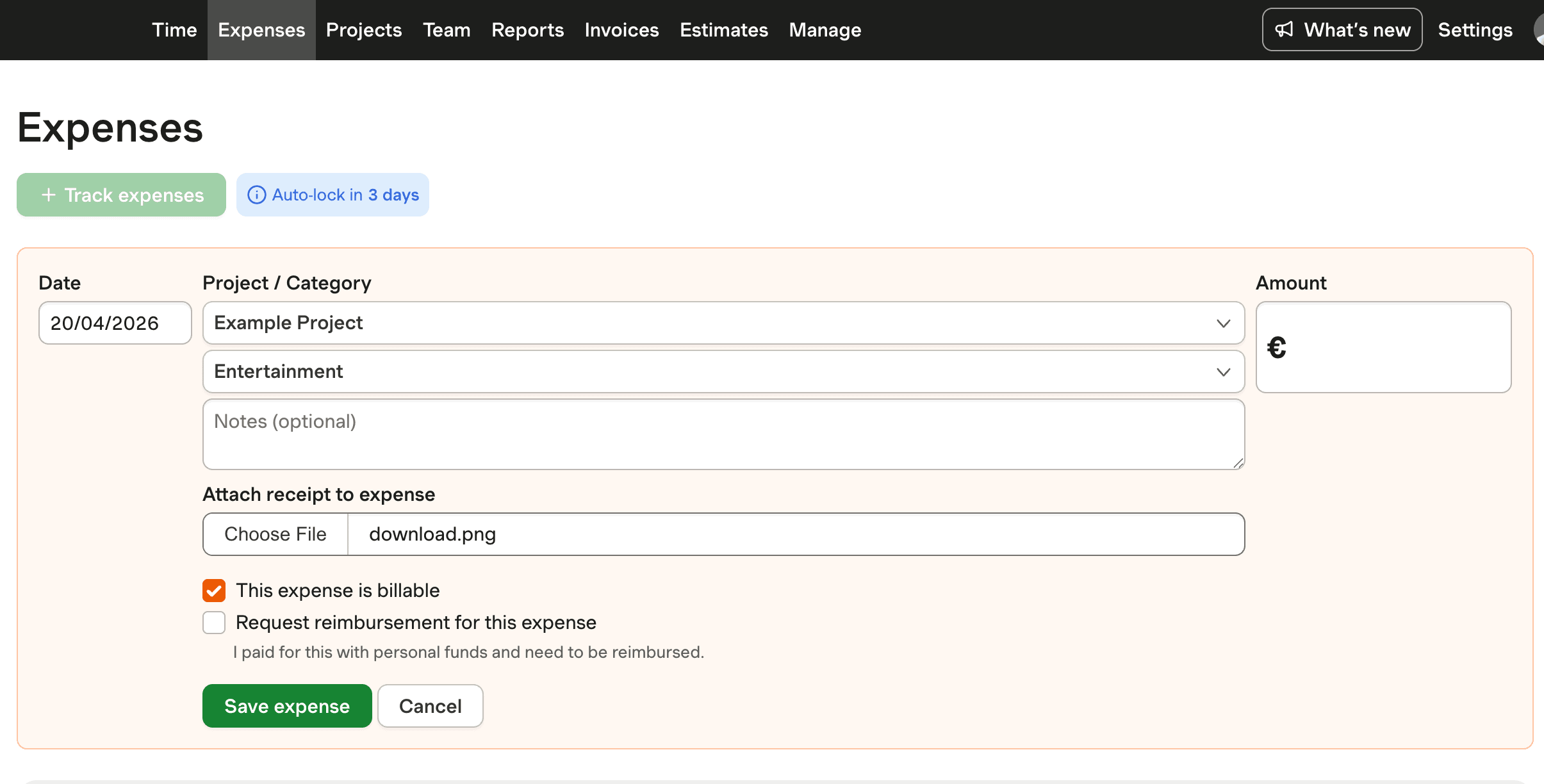
Harvest, although lacking full automation features like OCR, provides a robust platform for tracking expenses by allowing receipt uploads through its mobile app. By setting a per-mile rate, users can accurately track mileage expenses, a critical component for maximizing travel-related deductions. This feature is particularly useful for those whose work involves frequent travel, ensuring that all travel expenses are meticulously recorded.

Best Practices for Effective Expense Management

Implementing best practices in expense management is essential for the self-employed. Key strategies include immediate digitization of receipts, maintaining consistent categorization, and establishing a regular review routine. These practices prevent loss and ensure that all expenses are captured accurately, which is crucial for maximizing deductions.

For self-employed individuals, using Harvest offers the advantage of categorizing expenses by client or project. This approach not only streamlines the invoicing process but also provides a clear view of where funds are being spent. By dedicating time each week or month to review and reconcile expenses, freelancers can maintain accurate records and make informed financial decisions.

Leveraging Harvest for Comprehensive Expense Insights

Harvest offers self-employed individuals a comprehensive solution for managing business expenses. By allowing users to track expenses by project, Harvest helps freelancers maintain organized and detailed financial records. This capability is crucial for ensuring accurate billing and maximizing potential deductions.

In addition to project-based tracking, Harvest's ability to set a per-mile rate for tracking mileage expenses is invaluable for those who frequently travel for business. This feature simplifies the process of calculating travel-related deductions, ensuring that all expenses are documented in compliance with IRS guidelines. With Harvest, freelancers can gain a clearer understanding of their financial health, paving the way for more strategic business decisions.

Track Expenses with Harvest

Harvest offers project-based expense tracking for self-employed individuals, helping streamline financial management and maximize tax savings.

Harvest platform showing expense tracking features for self-employed users.

Self Employed Keeping Track of Expenses FAQs

  • Self-employed individuals can track expenses effectively by using digital tools that allow for real-time tracking and categorization. Implementing a regular review routine and using dedicated accounts for business transactions are also key strategies.

  • Common tax-deductible expenses for freelancers include office supplies, travel expenses, software subscriptions, and professional fees. Proper documentation and categorization of these expenses are essential for compliance and maximizing deductions.

  • Separating personal and business finances simplifies expense tracking, reduces the risk of errors during tax preparation, and minimizes the potential for IRS audits. It also provides a clearer picture of a business's financial health.

  • Harvest helps freelancers track mileage by allowing them to set a per-mile rate. This feature simplifies the process of calculating travel-related expenses and ensures compliance with IRS deduction guidelines.

  • Digitizing receipts for expense tracking prevents loss, fading, and provides easy storage and retrieval. It also often comes with automatic categorization features, saving time and reducing manual errors.

  • Automation improves expense management by reducing errors, saving time, and providing real-time financial insights. Automated tools help ensure that all expenses are captured accurately and categorized consistently.

  • Harvest assists with project-based expense tracking by allowing users to categorize expenses by client or project. This feature streamlines the invoicing process and ensures accurate financial records.

  • For expenses over $75, the IRS requires receipts, except for lodging, which always needs a receipt. For smaller expenses, a log entry detailing the date, amount, purpose, and vendor is sufficient.