
Harvest
Expenses
Sign up

Reimbursable Expenses on Official Travel

Harvest helps small businesses track reimbursable expenses on official travel through manual entry and receipt uploads, simplifying expense management.

  • Attach receipts to projects & tasks
  • Turn tracked expenses into client invoices
  • Free 30-day trial, no credit card needed

or drag & drop • Images and PDFs, max 10 MB

Understanding Reimbursable Expenses on Official Travel

Reimbursable expenses on official travel are those costs incurred during business trips that can be reimbursed by the employer. These typically include transportation, lodging, meals, and other incidental expenses. However, navigating the nuances of what qualifies can be challenging. For instance, while travel to a temporary workplace is often non-taxable, regular commuting costs usually aren't reimbursable. In the U.S., compliance with IRS guidelines is crucial; expenses must meet "accountable plan" criteria, including a business connection and adequate documentation within 60 days.

Understanding these regulations can prevent costly mistakes. For example, nearly 20% of manual expense reports contain errors, costing businesses an average of $52 and 18 minutes to correct each error. This highlights the importance of clear policies and proper documentation. Employers often use per diem allowances to simplify reimbursements, with the IRS updating rates annually. For 2024-2025, the high-cost city rate is $319 per day. These insights are essential for ensuring compliance and efficiency in expense management.
How Automation Transforms Expense Management

Switching from manual to automated expense management can drastically reduce errors and save time. Companies using automated systems reclaim over 13 hours weekly, while integrated solutions lead to a 26% reduction in operational costs. Automation not only eliminates the need for manual data entry but also enhances accuracy and compliance by using technologies like Optical Character Recognition (OCR) to scan and categorize receipts.

Real-world success stories, like Fever-Tree's adoption of an integrated expense platform, demonstrate how automation can streamline processes and provide real-time insights. Such systems improve workforce efficiency by 47% and expedite business trip approvals by 50%. By transitioning to automated solutions, businesses can prevent fraud by using AI-powered detection to flag anomalies, ensuring all expenses adhere to company policies.

Harvest's Role in Simplifying Travel Expense Tracking

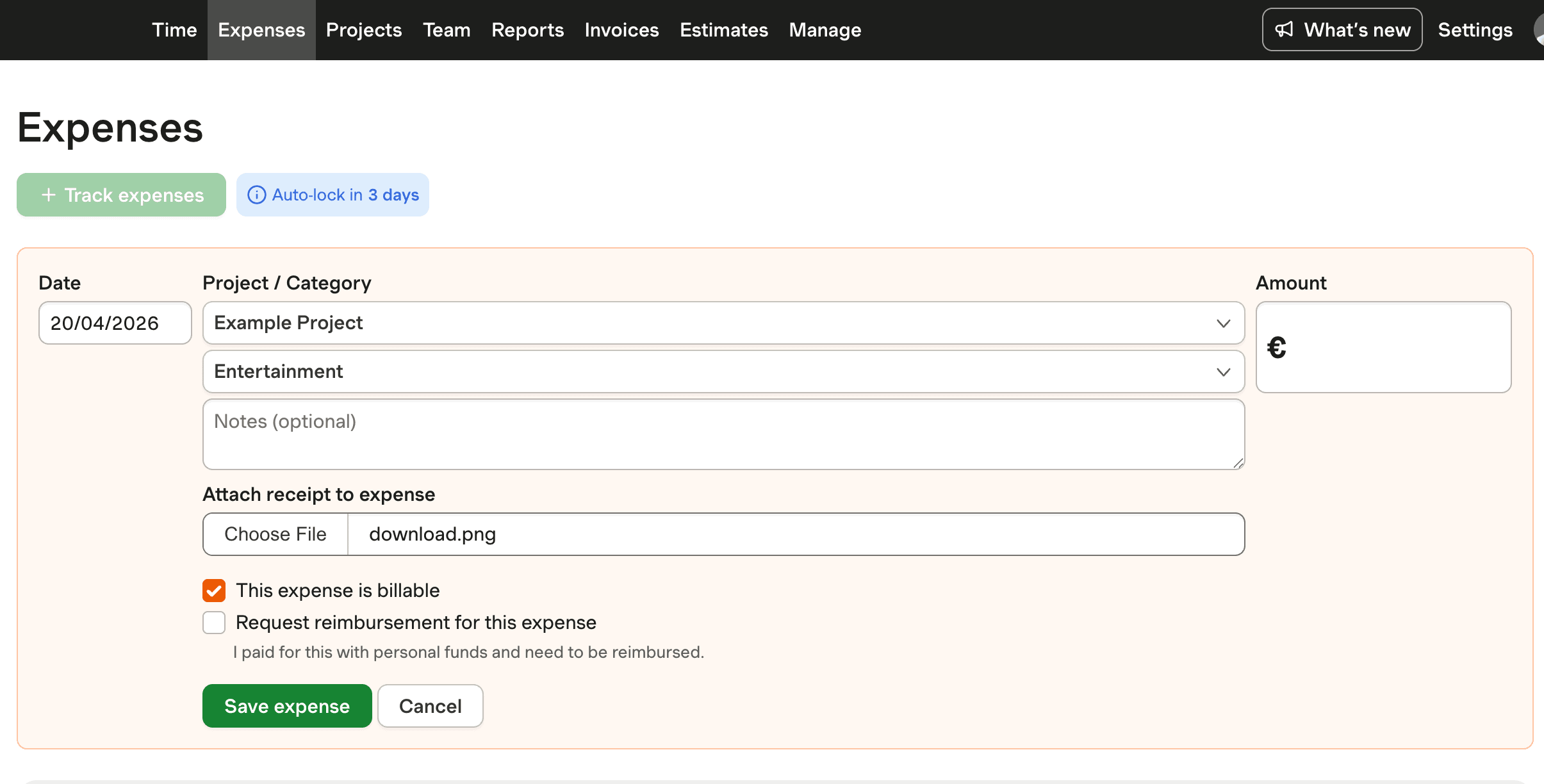
While Harvest does not automate per diem rates or enforce specific federal documentation requirements, it excels in tracking project-based expenses. Harvest allows users to manually enter expenses, upload receipts, and track mileage with customizable per-mile rates. This flexibility is ideal for small businesses focused on project-based tracking without the complexity of regulatory compliance.

Harvest's approach helps businesses maintain clear records and ensure accurate reimbursements. Employees can manually categorize expenses, upload receipts, and track mileage efficiently. This system supports clear expense documentation, which is crucial for audits and compliance. By simplifying these processes, Harvest enables teams to focus on their projects rather than getting bogged down by administrative tasks.

Best Practices for Ensuring Travel Expense Reimbursements

Ensuring travel expenses are reimbursed requires strict adherence to company policies and meticulous documentation. Employees should always collect itemized receipts for expenses like airfare, lodging, and meals. It's vital to submit detailed expense reports promptly, typically within 30-60 days post-travel, to ensure timely reimbursement.

Automating the expense reporting process can further enhance efficiency. Regular audits detect fraud and accounting irregularities, while policy updates ensure relevance to current travel norms. By integrating expense management solutions with payroll and accounting systems, businesses can centralize data and streamline workflows. These practices not only secure reimbursements but also optimize financial oversight, reducing the risk of errors and non-compliance.

Track Reimbursable Travel Expenses with Harvest

Harvest helps simplify tracking reimbursable travel expenses through manual entry and receipt uploads, perfect for small businesses.

Harvest interface showing reimbursable travel expenses tracking feature.

Reimbursable Expenses on Official Travel FAQs

  • Reimbursable expenses during official travel include costs for transportation, lodging, meals, and incidental expenses incurred for business purposes. These expenses must be documented and comply with company policies to qualify for reimbursement.

  • To ensure reimbursement, collect and submit all itemized receipts for travel-related expenses, and adhere to company policies. Submit detailed expense reports within the designated timeline, usually 30-60 days post-travel, for timely processing.

  • Automation in expense management reduces errors and saves time. It eliminates manual data entry, enhances accuracy, and provides real-time insights, helping finance teams reclaim over 13 hours weekly and reduce operational costs by 26%.

  • Harvest offers project-based expense tracking, allowing manual entry of expenses and receipt uploads. It is ideal for small businesses needing flexible tracking without the complexity of regulatory compliance.

  • Harvest allows teams to track mileage expenses by setting a customizable per-mile rate. This feature helps businesses accurately document and reimburse travel expenses related to the use of personal vehicles for official travel.

  • Integrating expense management systems with payroll and accounting centralizes data and streamlines workflows. This integration provides comprehensive financial insights and enhances oversight, reducing the risk of errors and non-compliance.

  • Documentation typically includes itemized receipts for airfare, lodging, meals, and other expenses. Detailed expense reports explaining the business purpose must be submitted within a set timeframe to ensure compliance and reimbursement.

  • Common mistakes include missing or incomplete receipts, inaccurate expense categorization, and foreign currency conversion errors. Clear policies and regular training help prevent these issues and ensure accurate reporting.