
Harvest
Expenses
Sign up

Microsoft Expense Report Template

Manual expense reporting can cost $20.65 to $58 per report. Harvest offers a streamlined solution for tracking business expenses efficiently.

EXPENSE REPORT DRAFT

Drop your receipts here or click to upload

Images and PDFs (max 10 MB each)

Date
Category
Merchant
Description
Amount
Total
$0.00

Customise report

Appearance

Show report title

Report settings

Finding the Right Microsoft Expense Report Template

When searching for a Microsoft expense report template, it's crucial to find one that is not only free but also customizable to meet specific business needs. A well-designed template can streamline the process of capturing and categorizing expenses, ensuring accuracy and compliance. This is particularly important as manual processing can cost businesses between $20.65 to $58 per report, with error rates of 19% leading to even higher costs. By selecting the right template, businesses can avoid these pitfalls and improve efficiency.

However, while Microsoft Excel templates can offer a starting point, they often lack integration capabilities that are vital for modern businesses. For example, Harvest provides a more comprehensive solution by allowing businesses to track expenses by date, project, and category, which is essential for detailed financial management. Although Harvest doesn't offer customizable templates, its structured tracking ensures expenses are recorded accurately, aiding in better financial oversight.
Key Features to Look for in an Expense Report Template

An effective Microsoft expense report template should include features that address common pain points in expense management. These features include fields for itemizing expenses, automatic calculations, and a clear layout for entering data. Given that correcting a single error in an expense report can cost $52 and take an additional 18 minutes, automated calculations and error-checking are critical elements.

Harvest enhances this experience by offering specific categories for work-related travel and other business expenses. This allows users to not only track but also differentiate between reimbursable and non-reimbursable expenses. Such capabilities help in reducing the time taken for approval and reimbursement, which can be over 8 days for 43% of organizations, and streamline compliance with company policies.

Customizing Your Expense Management Approach

Customization is key when it comes to expense reporting. While a Microsoft Excel template provides a basic framework, it often requires additional manual adjustments to fit unique business processes. This can lead to inefficiencies and increased risk of errors. In contrast, Harvest provides a flexible solution by allowing users to track expenses in a structured format, organizing them by projects and categories, thus maintaining organizational consistency without the need for cumbersome manual updates.

Moreover, by automating the expense management process, businesses can achieve a 30% reduction in processing costs and a 65% decrease in errors. This is particularly beneficial for small businesses that might not have the resources to manually reconcile expenses. Harvest's project-based categorization and expense tracking offer a streamlined approach that can save significant time and costs.

Streamlining Expense Reporting with Harvest

Streamlining expense reporting is essential for maintaining financial accuracy and reducing administrative burden. Manual processes not only slow down reimbursement times but also contribute to higher processing costs and error rates. With Harvest, businesses can automate much of the expense tracking process, thereby reducing time spent on administrative tasks and focusing more on strategic financial planning.

By providing detailed tracking of expenses by category and project, Harvest helps businesses maintain clarity and compliance. This is crucial as 71% of finance leaders report challenges with compliance and fraud prevention due to manual processes. Harvest's structured approach to expense management helps mitigate these issues, ensuring expenses are tracked accurately and efficiently.

Simplify Expense Reporting with Harvest

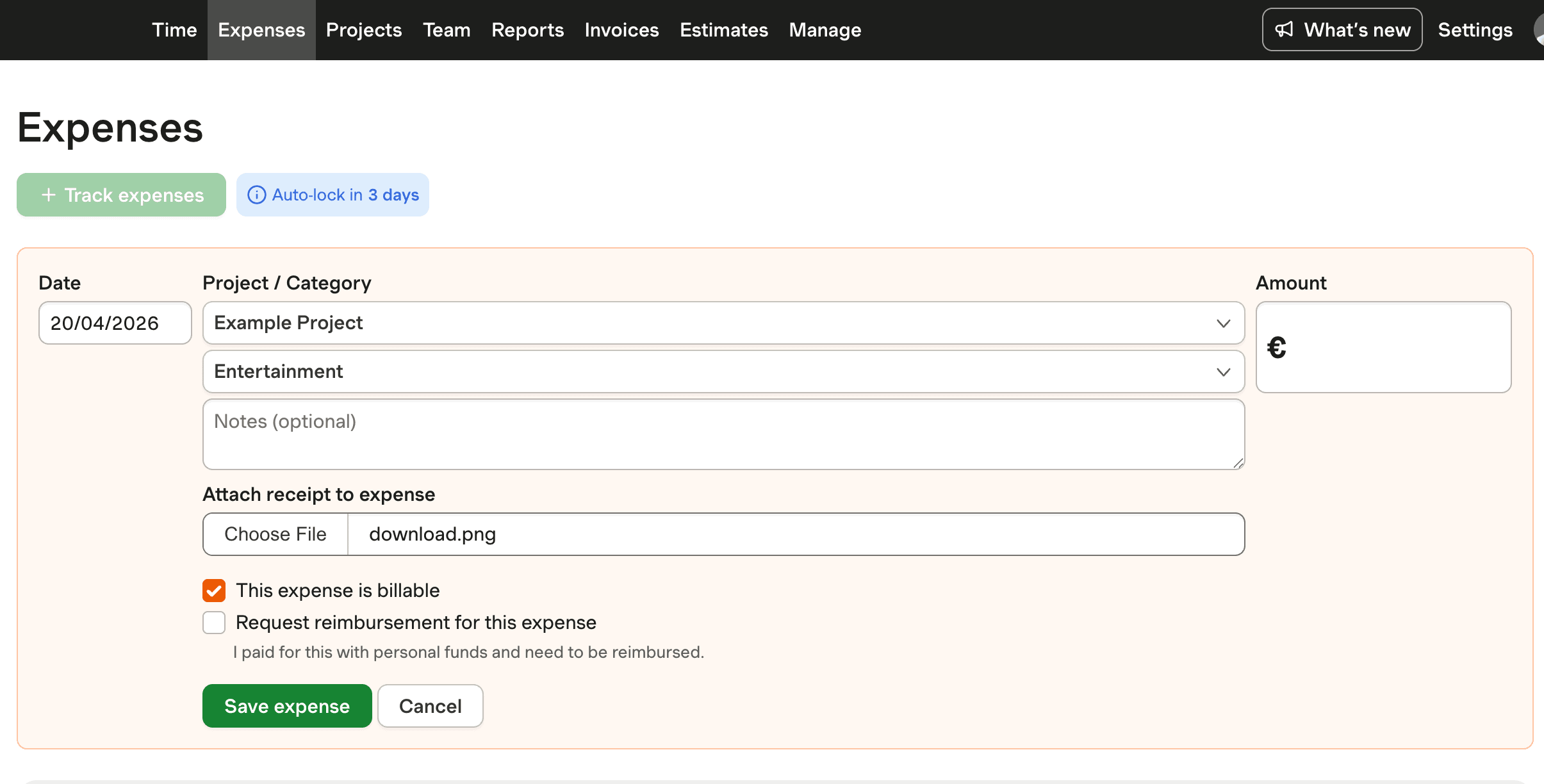
See how Harvest categorizes expenses by project, aiding in efficient tracking and reducing manual work.

Harvest interface showing project-based expense tracking

Microsoft Expense Report Template FAQs

  • A Microsoft expense report template should include fields for date, amount, category, and description of expenses. Automatic calculations for totals and taxes are also beneficial for reducing errors.

  • Harvest allows businesses to track expenses by specific projects and categories, making it easier to manage and allocate costs accurately. This helps in maintaining a clear financial overview.

  • Automation can reduce expense report errors by 65% and processing costs by 30%. It simplifies the workflow, from submission to approval, cutting down the time and effort involved in manual checks.

  • Distinguishing reimbursable from non-reimbursable expenses helps ensure accurate financial reporting and prevents discrepancies. Harvest's system allows users to mark expenses accordingly.

  • Harvest provides a structured way to track expenses by date, project, and category. This reduces manual entry errors, speeds up processing, and ensures compliance with financial policies.

  • While Harvest doesn't directly integrate expense reports with accounting software, it allows expenses to be included in invoices that can sync with QuickBooks or Xero, streamlining financial processes.

  • Manual expense reporting can lead to lost receipts, incorrect data entry, and policy misinterpretations. Automating the process helps minimize these errors and improves overall accuracy.