
Harvest
Expenses
Sign up

Nonprofit Expense Report Template

Nonprofits face scrutiny over financial transparency, but Harvest simplifies project-based expense tracking, enhancing accountability and donor trust.

EXPENSE REPORT DRAFT

Drop your receipts here or click to upload

Images and PDFs (max 10 MB each)

Date
Category
Merchant
Description
Amount
Total
$0.00

Customise report

Appearance

Show report title

Report settings

Essentials of a Nonprofit Expense Report

Nonprofit expense reports are crucial for maintaining transparency and accountability, reflecting how organizations allocate resources to advance their mission. One of the primary components of these reports is the functional expense categorization, which typically includes program services, management and general, and fundraising expenses. This categorization is essential for compliance with IRS requirements, specifically the Statement of Functional Expenses in Form 990, which nonprofits with gross receipts over $200,000 must file.

An effective expense report should detail each expenditure's purpose, amount, and date, ensuring that expenses like travel, office supplies, and event costs are appropriately classified. Misclassification can lead to audits and damage a nonprofit's credibility. Hence, having a clear and standardized expense reporting system is vital. Harvest offers project-based expense tracking that can be adapted for managing nonprofit programs and grants, ensuring accurate and transparent financial reporting.
Automating Nonprofit Expense Management with Harvest

Automating expense management can significantly enhance efficiency within nonprofit organizations. Manual systems often lead to a "data-silo nightmare," where receipts and records are scattered, increasing the risk of errors and compliance issues. By transitioning from spreadsheets to automated solutions, nonprofits can save an estimated 125 hours monthly and reduce error rates by 92%.

Harvest supports nonprofits by allowing them to track expenses by project, making it easier to manage grants and donations. This feature ensures that all financial activities are documented accurately, aiding in financial accountability and transparency. Harvest's integration capabilities with accounting software further streamline processes by synchronizing data, reducing administrative overhead, and keeping financial records consistent.

Best Practices for Expense Tracking in Nonprofits

Effective expense tracking in nonprofits involves several best practices to ensure compliance and financial health. Start by reviewing previous years' revenue and expenses to set realistic budgets. Prioritize personnel expenses, which typically account for 25-30% of costs, and categorize other expenses by their function and nature.

Ensure that donor-restricted funds are tracked separately to avoid legal issues. Harvest can assist with this by allowing for detailed project-based tracking, helping nonprofits allocate expenses correctly and maintain proper documentation for audits. Additionally, integrating financial systems to automate expense categorization and monthly reconciliations can prevent errors and detect any signs of fraud.

Key Legal and Compliance Considerations

Nonprofits must adhere to specific legal and compliance standards, such as those outlined by the IRS. Organizations are required to retain records supporting deductions for at least three years, with longer periods recommended for certain documents, like grant agreements (10 years) and corporate organizational records (permanently).

Noncompliance can lead to severe penalties, including fines and loss of tax-exempt status. While Harvest does not specifically support IRS Form 990 compliance, its detailed expense reporting capabilities can still play a role in maintaining the necessary level of transparency and accountability. By facilitating project-based tracking, Harvest helps nonprofits document expenses effectively, contributing to compliance efforts.

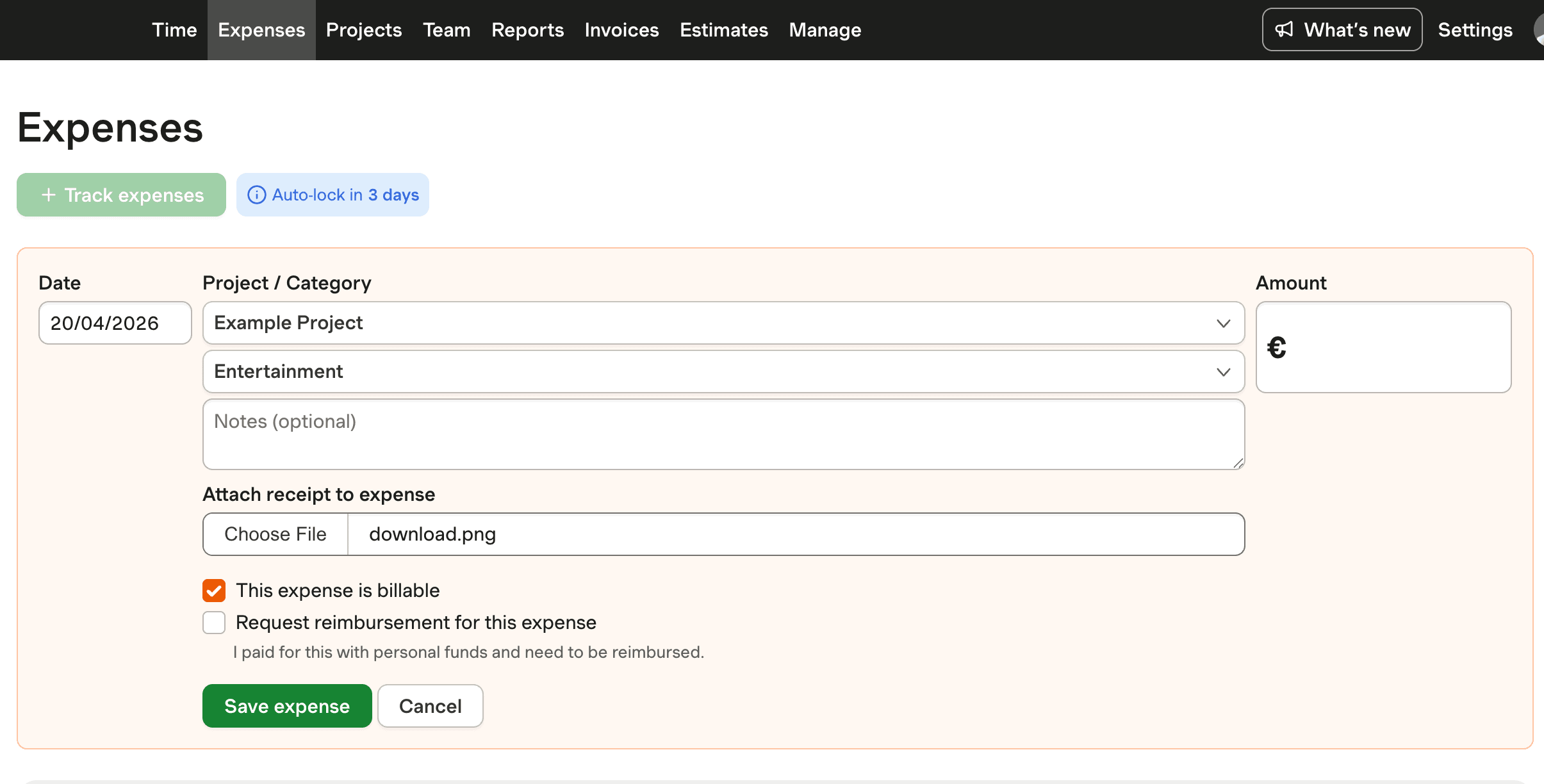
Nonprofit Expense Reporting with Harvest

Explore how Harvest helps nonprofits with project-based expense tracking, ensuring accurate reporting for grants and programs.

Screenshot of Harvest's nonprofit expense tracking interface.

Nonprofit Expense Report Template FAQs

  • A nonprofit expense report should include program services, management and general expenses, and fundraising costs. It should detail the purpose, amount, and date of each expenditure, ensuring accurate categorization for IRS compliance.

  • Yes, nonprofits must comply with IRS regulations, including filing Form 990 if their gross receipts exceed $200,000. They must also retain records for at least three years, with longer periods recommended for specific documents.

  • Customizing a template involves categorizing expenses by function, such as program services and fundraising, and ensuring compliance with legal requirements. Harvest's project-based tracking can assist in this customization by offering flexibility for grants and programs.

  • Best practices include maintaining separate records for donor-restricted funds, automating expense management, and conducting monthly reconciliations. Harvest supports these practices with project-based tracking and integration capabilities.

  • Harvest enables financial accountability by allowing administrators to track expenses for projects and programs, ensuring all financial activities are documented accurately and transparently.

  • Functional expense allocation is crucial for demonstrating how resources advance a nonprofit's mission. It involves categorizing expenses into program services, management, and fundraising, which is necessary for IRS reporting and donor trust.